
Brass Ball Valve Sizes: DN, Thread, Port & Pressure Guide
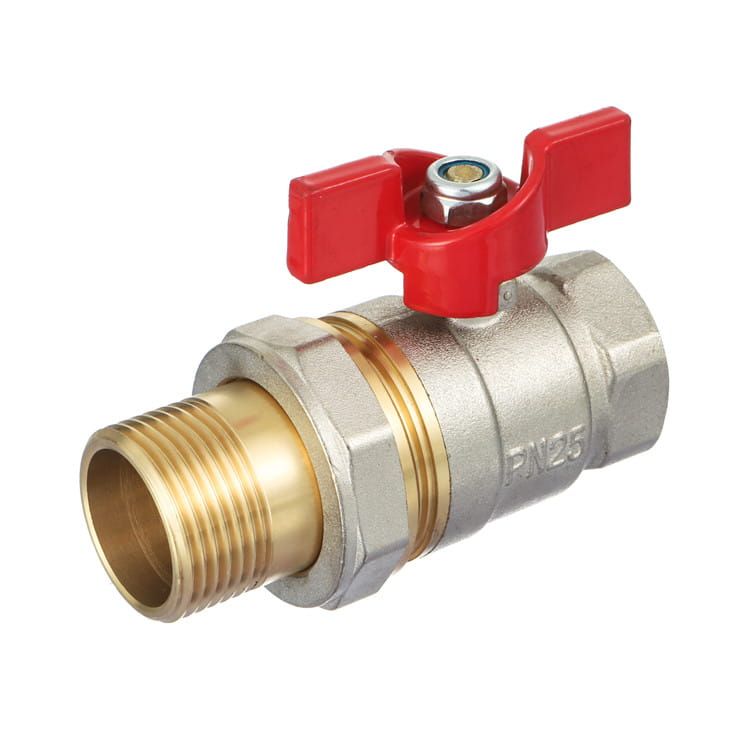
Ordering a brass ball valve by "size" alone is how the wrong valve ends up on site. A size is really four decisions bundled together: the nominal diameter (DN or inch), the thread standard (BSP or NPT), the port (full or reduced), and the pressure rating the size can carry. Get any one wrong and the valve either won't seal on your pipework, throttles your flow, or is under-rated for the line. This guide lays out the brass ball valve size range, the thread and port choices, and the pressure a given size holds — so you can write a complete, unambiguous spec instead of just a number.
For the wider decision — alloy, construction, certification — see the complete brass ball valve buyer's guide; this article focuses on getting the size and thread right.
Key Takeaways
- Brass ball valves run roughly DN8 (¼") to DN100 (4") for general water and heating.
- Thread standard (BSP vs NPT) is not interchangeable — match it to your market first.
- Full-port preserves flow; reduced-port is cheaper but throttles slightly.
- Pressure rating steps down as size goes up — confirm the PN for the exact model.
- Fix the connection type (FF/FM/MM/union) before the diameter.
- IFAN covers DN8–DN100, PN16/25/40, BSP or NPT, all connection types.

The Brass Ball Valve Size Range
General-purpose brass ball valves span roughly DN8 to DN100 — from a small appliance or instrument isolation valve up to a main-line shut-off. Sizes are quoted two ways: DN (nominal diameter in millimetres, the metric convention) and inch (the BSP/NPT thread size). The two map to each other on a standard ladder:
| DN | Thread size | Typical use |
|---|---|---|
| DN8–DN15 | ¼"–½" | Appliance, instrument, small service isolation |
| DN20–DN25 | ¾"–1" | Domestic risers, meters, branch lines |
| DN32–DN50 | 1¼"–2" | Sub-mains, plant, commercial distribution |
| DN65–DN100 | 2½"–4" | Main-line isolation, larger commercial/industrial |
Above DN100, isolation duty usually shifts to other valve types (gate or butterfly), where a brass ball valve stops being the economical choice.
Thread Standard: BSP vs NPT (Get This Right First)
The single most common ordering mistake is the thread standard. BSP (British Standard Pipe — used across Europe, the Middle East, Africa, Asia, and Australia) and NPT (National Pipe Thread — North America) have different thread angles and pitches, so they are not interchangeable: a BSP valve will not seal correctly on an NPT pipe even when the nominal sizes look identical. BSP splits further into parallel (BSPP / G) and tapered (BSPT / R) forms. Get this wrong and a whole shipment won't seal on the destination's pipework. Always state the thread standard explicitly — e.g. "½" BSP parallel" — and confirm it matches the market you're shipping to. A supplier that serves multiple regions should offer both BSP and NPT; ask which they're quoting.
Full-Port vs Reduced-Port
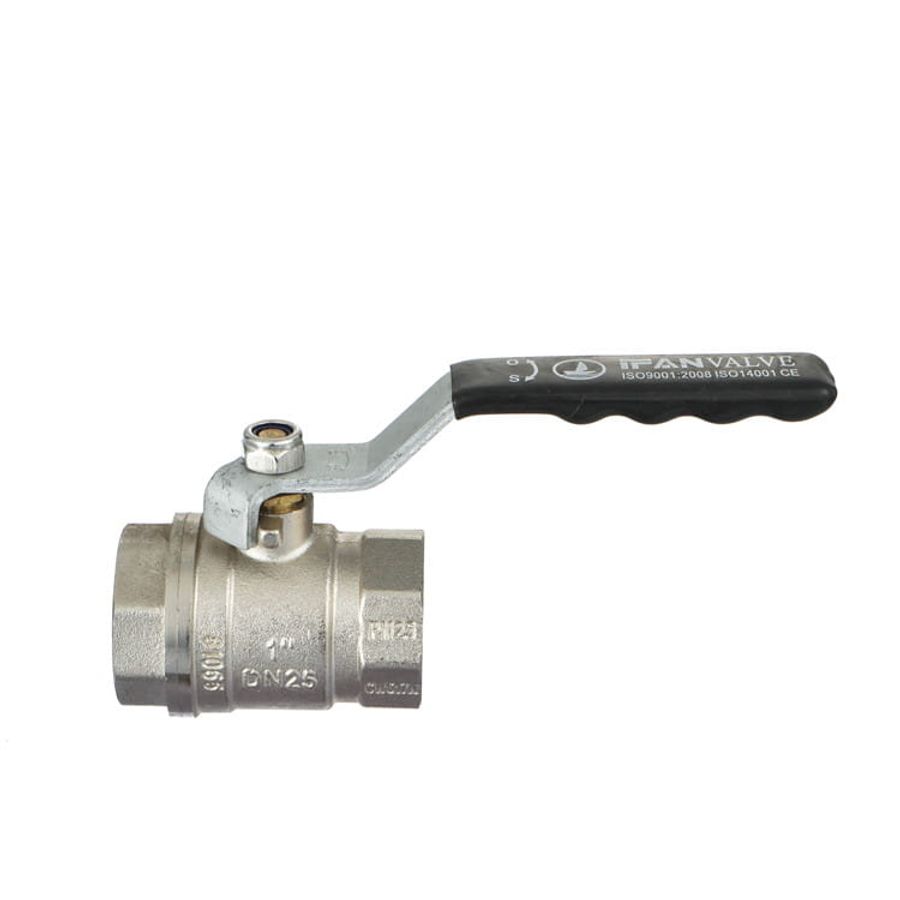
The bore through the ball comes in two sizes relative to the pipe. A full-port (full-bore) valve has a bore equal to the pipe's inner diameter, so it barely restricts flow — the choice for pump lines, high-flow duty, and anywhere pressure drop matters. A reduced-port (standard-port) valve has a smaller bore, is more compact and cheaper, and throttles the flow slightly. For most B2B water and heating work full-port is the safer default; reduce the port only where cost or space forces it and a small pressure drop is acceptable. Note that two valves of the same DN can have different actual bores depending on port type, so specify the port alongside the size.
Connection Types by Size
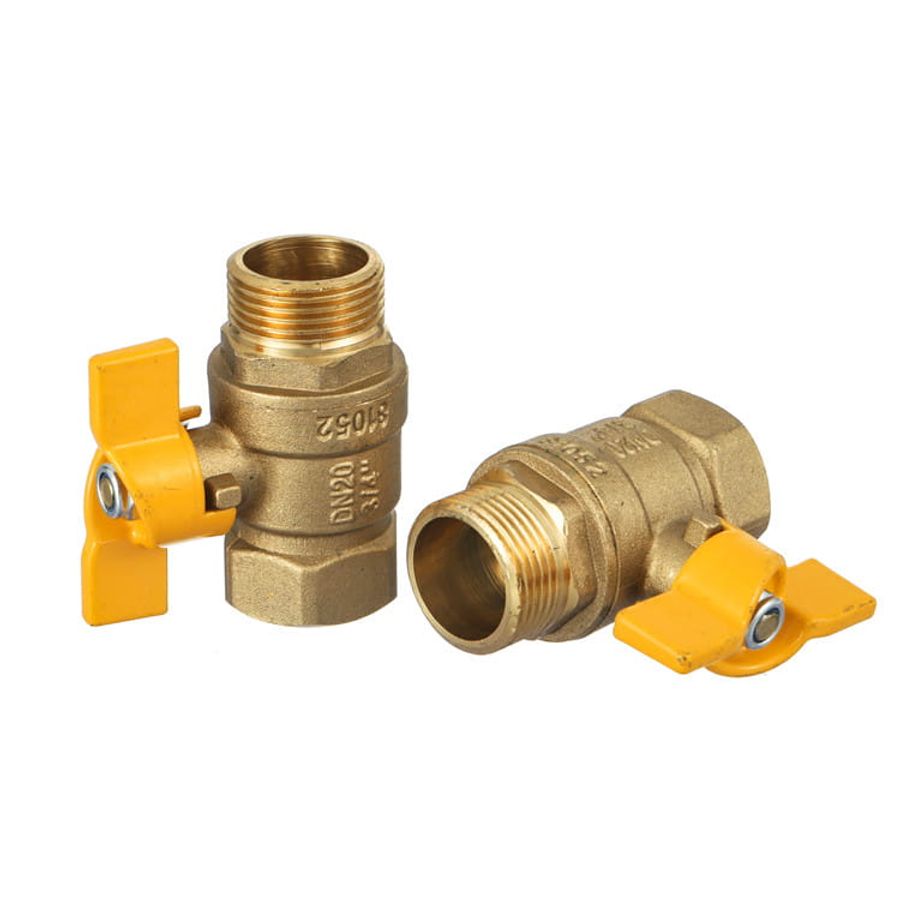
Fix the connection before the diameter, because it decides how the valve joins the line. The common configurations — all available across the size range — are:
| Type | Ends | Use |
|---|---|---|
| FF | Female × female | Inline between two male-threaded ends |
| FM | Female × male | Pipe to a female fitting/appliance |
| MM | Male × male | Joining two female-threaded components |
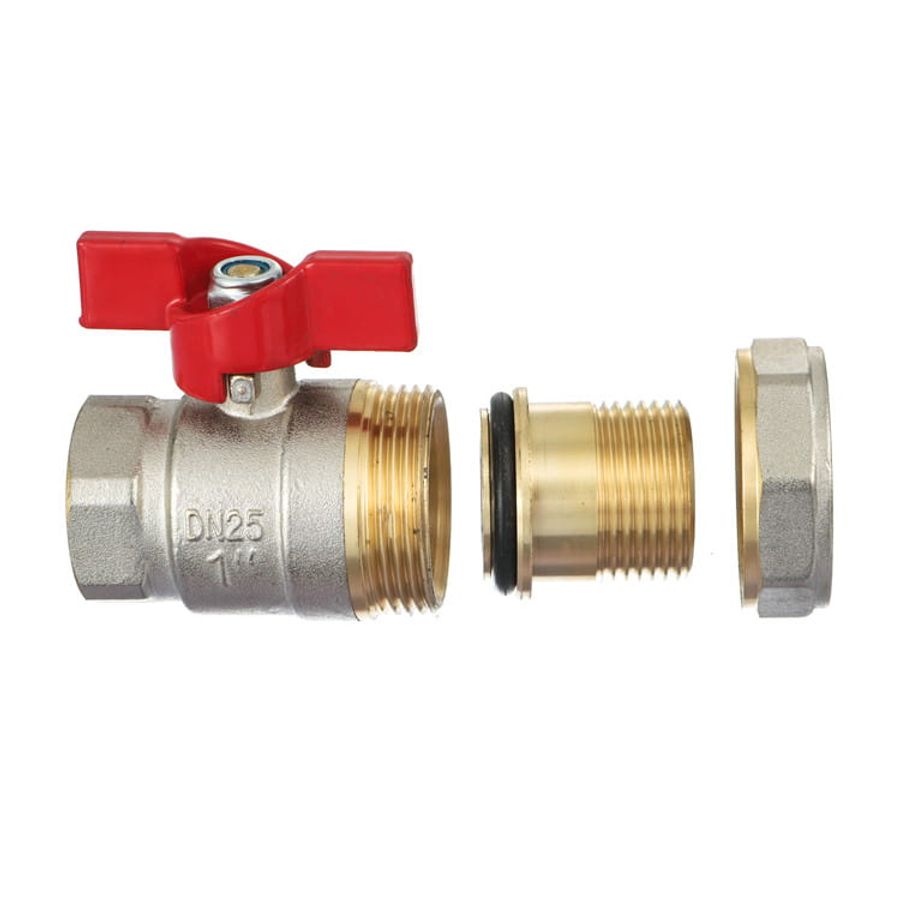
| Double-union | Union nuts both ends | Removable without cutting the line |
Need a full schedule of brass ball valve sizes?
Send your DN list, thread standard, and market — we'll quote matched sizes, ports, and certification.
Request a QuotePressure Rating by Size
Pressure rating (PN, in bar) is part of the size decision because it steps down as the valve gets larger — a small valve holds more pressure than a large one of the same range. The table shows the typical pattern; confirm the exact PN for the model you're quoting.
| Size band | Typical PN |
|---|---|
| DN8–DN25 (¼"–1") | Up to ~PN40 |
| DN32–DN50 (1¼"–2") | ~PN25–30 |
| DN65–DN100 (2½"–4") | ~PN16–25 |
Temperature de-rates pressure too: a valve on a hot-water or heating line carries less than its cold rating, so confirm both the pressure and the temperature limit for the exact model and rate it above your working pressure plus a surge margin.
Handle and Actuation by Size
The operator scales with the valve. Small and mid sizes take a lever handle for fast, obvious on/off, or a compact butterfly (T-bar) handle in tight spaces; both are comfortable to turn by hand up through the common sizes. As diameter and pressure rise, the torque to turn the ball rises too, so larger valves need a longer lever — and where a line calls for remote or automated operation, the manual handle is replaced by an electric or pneumatic actuator on the same valve body. A lockable handle (padlock hole) is available across sizes for safety isolation. If your schedule mixes hand-operated and actuated points, confirm the supplier offers the matching handle or actuator mounting at each size.
Reading the Valve Marking
A quality brass ball valve is stamped with its key specs, and that marking is your on-site check that the right valve arrived. Look for the size (e.g. DN20 or ¾"), the pressure rating (e.g. PN40), often the alloy (CW617N), and sometimes the standard or brand. When a delivery lands, check the marking on the actual valve against your order — size, thread, and pressure should all agree. A valve whose marking is missing, illegible, or contradicts the paperwork is unverified; don't fit it into a pressure line until the discrepancy is resolved.
DN, NPS, and What the Number Means
A size number is not the exact bore. DN (Diameter Nominal) and the imperial NPS (Nominal Pipe Size) are both nominal designations — a convenient label that groups a size, not a machined measurement. DN20 and ¾" refer to the same nominal size even though neither is literally 20 mm or 19.05 mm of bore; the actual bore also depends on whether the valve is full- or reduced-port. This is why you can't mix the label with the real flow area: two DN20 valves can pass different flow if one is reduced-port. Read the nominal size as "which size family," then pin down the port and, for flow-critical lines, the actual bore.
Common Sizing Mistakes
Ordering by diameter alone. "DN20" without thread standard, port, and pressure is an incomplete spec that invites a wrong or under-rated valve. Specify all four.
Mixing BSP and NPT. The most expensive size error — a container of valves that won't seal on the destination's pipework. State the thread standard on every line.
Reducing the port without meaning to. Fitting a reduced-port valve on a flow-critical line quietly throttles it; use full-port where flow matters.
Ignoring temperature de-rating. Sizing a valve to its cold PN on a hot line over-rates it — always de-rate for the working temperature.
How to Choose the Size — A Quick Framework
1. Match the pipe. The valve DN and thread should match the line it isolates — don't step down and throttle unless you mean to.
2. Set the thread standard to the destination market (BSP or NPT), stated explicitly.
3. Choose the port — full-port where flow matters, reduced-port to save cost/space.
4. Confirm the pressure rating above working pressure plus surge, de-rated for hot media.
5. Pick the connection (FF/FM/MM/union) for how it joins and whether it must be removable.
IFAN Brass Ball Valve Sizes
IFAN's brass ball valve range covers DN8–DN100 (¼"–4") in CW617N brass, rated PN16/25/40 by size, in BSP or NPT thread, with FF, FM, MM, and double-union connections and lever or butterfly handles — forged and cast options across the range. Because the size, thread, port, and connection are all specifiable from one source, a buyer can order a full mixed schedule matched and certified together, with no minimum order and stock held year-round. To go deeper on which construction to pick at each size, see forged vs cast brass valves, and confirm the certifications for your market before ordering.
Frequently Asked Questions
What sizes do brass ball valves come in?
General-purpose brass ball valves run from about DN8 (¼") to DN100 (4"), covering small appliance isolation up to main-line shut-off. Above DN100, isolation usually moves to gate or butterfly valves. Sizes are quoted in DN (mm) or the inch thread size.
Are BSP and NPT brass valves interchangeable?
No. BSP and NPT have different thread angles and pitches and won't seal on each other even at the same nominal size. BSP is used across Europe, the Middle East, Africa, Asia, and Australia; NPT in North America. Always state the thread standard on the order to match your market.
What's the difference between full-port and reduced-port?
A full-port valve's bore equals the pipe's inner diameter, so it barely restricts flow — best where flow rate matters. A reduced-port valve has a smaller bore, is cheaper and more compact, but throttles flow slightly. Two valves of the same DN can have different actual bores, so specify the port with the size.
What pressure can a brass ball valve hold?
It depends on size: smaller valves hold more, commonly up to around PN40 at DN8–DN25, stepping down toward PN16–25 at DN65–DN100. Temperature de-rates the figure, so a hot line carries less than the cold rating. Confirm the exact PN and temperature limit for the specific model.