
CPVC Pipe: Uses, Temperature Limits, Sizes & How to Buy
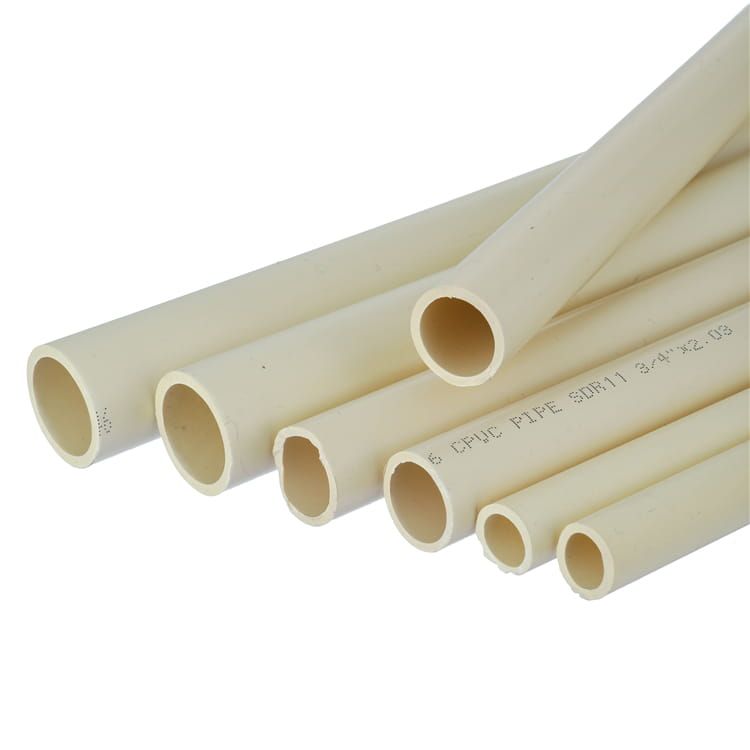
CPVC temperature limit / rating: continuous service up to 93°C (200°F) — against roughly 60°C for uPVC — with pressure ratings derating as water temperature rises. That ceiling is what puts CPVC on hot-water and industrial lines standard PVC cannot serve.
CPVC pipe is what you reach for when you want the economy and easy solvent-weld installation of PVC — but the line carries hot water. Chlorinated polyvinyl chloride handles temperatures ordinary PVC cannot, which makes it one of the two mainstream choices (with PEX) for hot potable plumbing. But CPVC has its own rules: its own cement, its own temperature and pressure limits, two different sizing systems, and a few chemical sensitivities that catch installers out. This guide covers what CPVC is, where it belongs, its real temperature and pressure behaviour, sizes and standards, how it joins, how it compares to the alternatives, and what to check when you buy it.
For how CPVC sits inside the wider vinyl family, see PVC vs UPVC vs CPVC; this article is the CPVC deep-dive.
Key Takeaways
- CPVC = PVC chemistry upgraded for heat — extra chlorination raises its temperature limit for hot potable water.
- Typical service: hot and cold potable lines, with a working limit around ~93°C / 200°F (product-specific).
- Joins by solvent-weld with CPVC cement — PVC cement will not correctly bond it.
- Two sizing systems: CTS (copper tube size, common for home plumbing) and IPS/Schedule 80 (industrial).
- Pressure rating de-rates as temperature rises — check the rating at your actual hot-water temperature.
- Rigid and brittle with age: no freezing, no sunlight, no incompatible chemicals (some oils, certain sealants).
What CPVC Is
CPVC (chlorinated polyvinyl chloride) is PVC that has been through an extra chlorination step, raising its chlorine content and — critically — its glass transition temperature. The practical effect: where ordinary PVC softens and loses its rating in hot water, CPVC keeps its strength at domestic hot-water temperatures. Everything else that makes PVC attractive carries over: it's rigid, corrosion-proof, scale-resistant, light to handle, and joins with fast solvent-weld sockets rather than heat fusion or threading. That combination — PVC's installability plus hot-water capability — is why CPVC became the rigid-pipe answer for hot potable plumbing, hot/cold distribution in warm markets, and some industrial hot lines. It is not a universal upgrade over PVC, though: CPVC costs more, so cold-only and drainage duty stays with PVC/UPVC, and CPVC's rigidity and freeze brittleness mean flexible PEX often wins in cold climates.
Temperature and Pressure: the Numbers That Matter
CPVC's headline capability is heat, but the rating works on a curve, not a single number. Most CPVC products are rated for continuous service up to roughly 93°C (200°F) — comfortably above domestic hot water, which typically runs 50–60°C. The catch is that the pressure rating de-rates as temperature climbs: a pipe rated for full pressure at 23°C may carry only a fraction of it at 80°C. So the right question is never "is CPVC rated for my pressure" but "is it rated for my pressure at my hot-water temperature." Two practical rules follow. First, keep the heater's output within the pipe's rated envelope — a misadjusted boiler pushing 90°C+ water shortens any plastic pipe's life. Second, on recirculating hot lines (which see hot water continuously rather than in bursts), spec conservatively: continuous hot duty is the hardest service a plastic pipe sees. Within its envelope, CPVC delivers decades of service without the corrosion, scale, or pinholes that eat metal hot lines.
Sizes and Standards: CTS vs Schedule 80
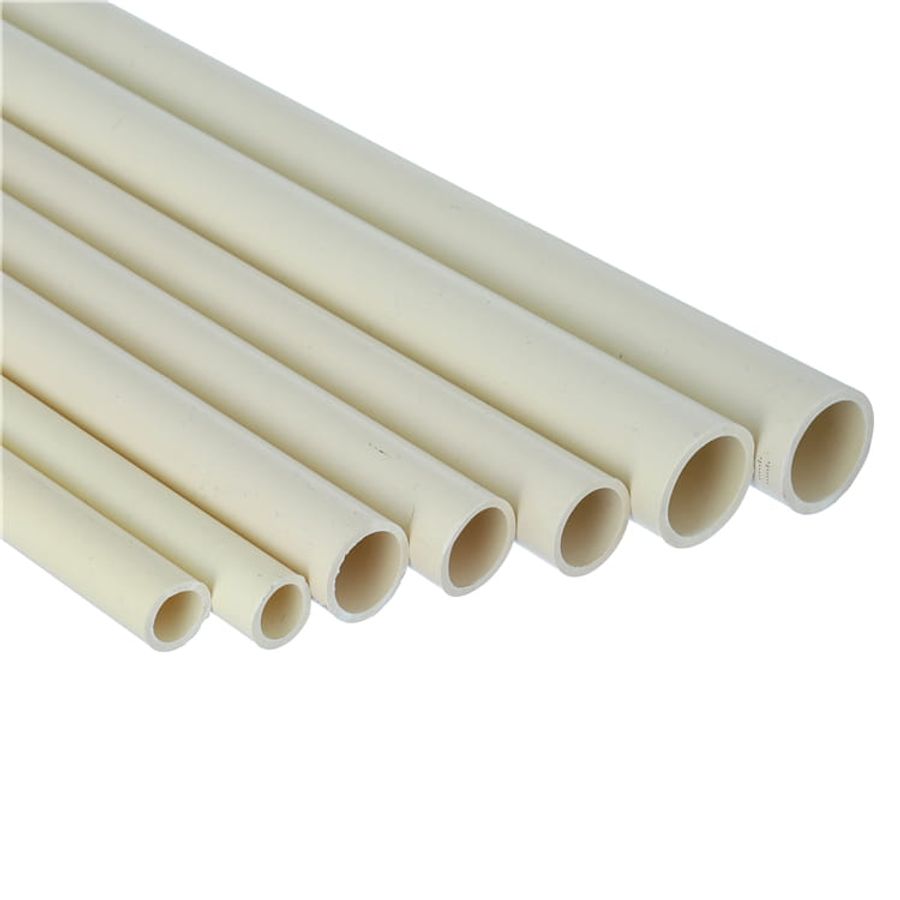
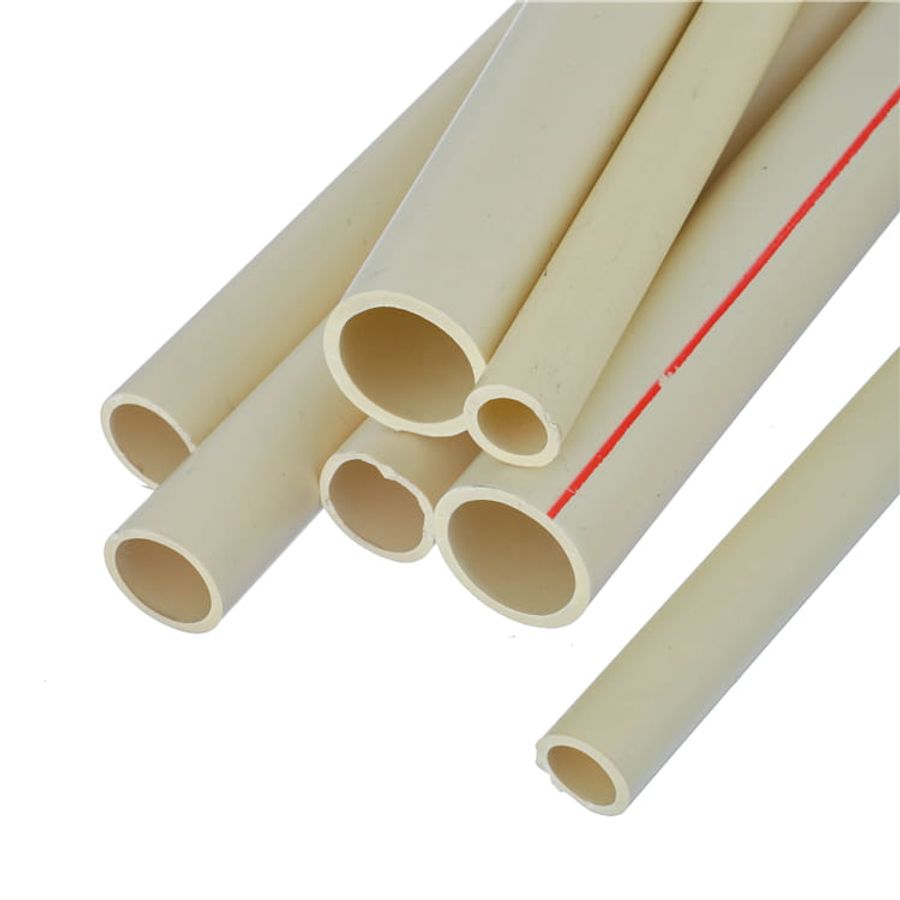
CPVC is sold in two distinct sizing families, and mixing them up is the most common ordering error. CTS (copper tube size) CPVC — the familiar cream/tan pipe in ½", ¾", and 1" — follows copper tubing dimensions and is the residential plumbing standard (ASTM D2846), with its own CTS fittings. Schedule 80 CPVC — usually grey, in iron pipe sizes (IPS) — is the industrial family (ASTM F441), with thicker walls, larger diameters, and Schedule 80 fittings. A CTS fitting will not fit IPS pipe or vice versa, even at the "same" nominal size, because the actual diameters differ. Metric markets have their own CPVC ranges sized by outer diameter. When ordering: state the family (CTS or Schedule 80/IPS or metric OD), the size, and the standard, and buy pipe and fittings from the same family. For potable duty, also confirm the drinking-water approval for your market — the same certification logic covered in our pipe certification guide.

Joining CPVC: Solvent Weld, With Its Own Cement
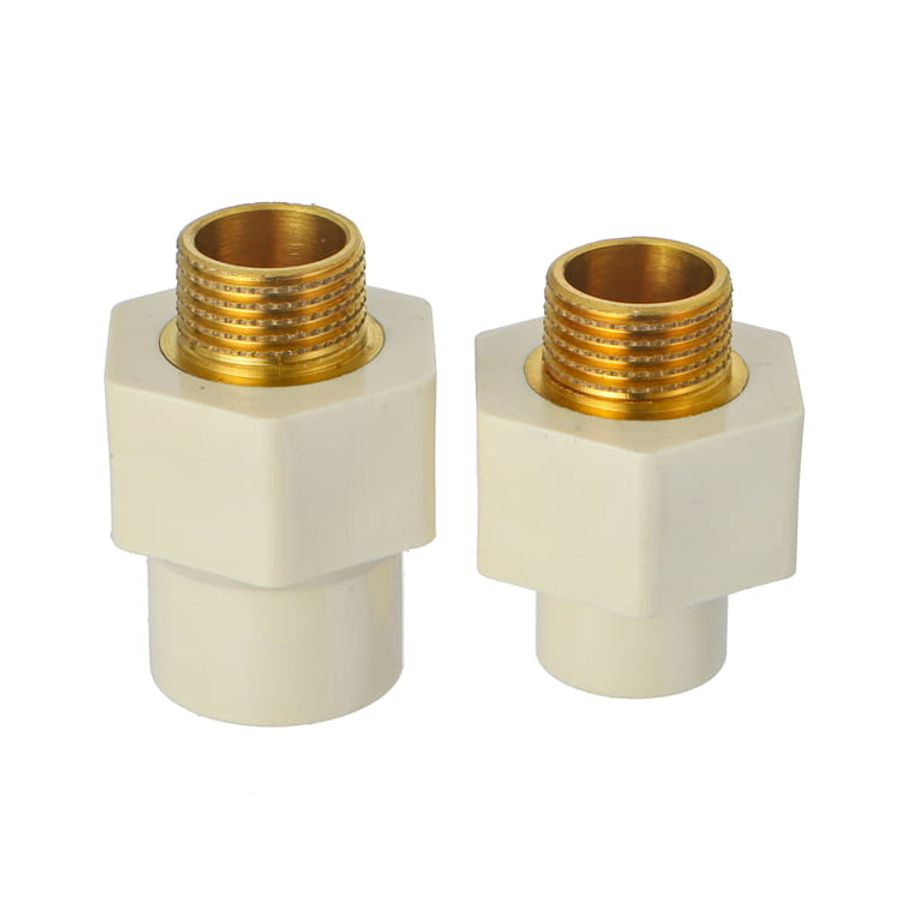
CPVC joins like PVC — cut square, deburr, dry-fit, prime, cement, insert with a quarter turn, hold — but with one non-negotiable difference: it needs CPVC-rated solvent cement. PVC cement does not develop full strength on CPVC, and a joint that looks fine at pressure test can fail later on a hot line. Use the cement (and primer where specified) rated for CPVC and for your pipe size and temperature, respect the cure times (longer when cold, longer for larger diameters), and don't pressurize early. Threaded connections are possible via molded adapters — hand-tight plus a modest turn, sealed with tape rated for plastics; overtightening cracks plastic threads. Two more installation habits matter on hot lines: allow for thermal expansion (CPVC grows noticeably with temperature — long straight hot runs need offsets, loops, or expansion room so the pipe doesn't stress its joints) and support it to spec, with closer hanger spacing at higher temperatures where the pipe is softer. Handled this way, a solvent-welded CPVC system is effectively one continuous piece of plastic.
CPVC's Weak Points — Know Them Before You Spec
An honest CPVC spec accounts for four limitations. Brittleness, especially with age and cold: CPVC gets more brittle over years in service and in cold weather — old CPVC can crack from an impact or from over-stress during later repairs, so cut old pipe with a fine saw rather than snap cutters. Freezing: like PVC, frozen water splits it; it has none of PEX's freeze tolerance. UV: sunlight degrades it — store it under cover and paint or shield any outdoor run with a compatible coating. Chemical sensitivity: certain oils, greases, plasticizers, and some thread sealants and firestop materials attack CPVC and cause environmental stress cracking — use only sealants, gaskets, and insulation the pipe maker lists as compatible. None of these rules out CPVC; they define where it belongs: indoor, above freezing, chemically clean hot/cold potable service. Where the environment violates those conditions, choose a different material rather than fighting the pipe.
CPVC vs PVC, PEX, and PPR
Where does CPVC actually win? Against PVC, it's simple: hot water. If the line is cold-only or drainage, PVC is cheaper and does the job; the moment the line carries hot water, PVC is out — the failure mode is covered in our CPVC vs PVC hot-water comparison. Against PEX, CPVC is the rigid option: neat straight runs, no special tools beyond a saw and cement, better UV tolerance than PEX, and no metal fittings to worry about — but PEX wins on freeze tolerance, fewer joints, and speed (see PEX vs PVC vs CPVC). Against PPR — the heat-fused hot/cold pipe that dominates many international markets — CPVC installs with cement instead of a fusion welder (lower tool cost, but joints depend on cement quality), while PPR gives fused joints and typically higher hot-water headroom. Regional codes and installer habits often decide: North America runs CPVC/PEX, much of Europe, the Middle East, Asia, and Africa runs PPR. The right answer follows the market, the climate, and the installer base.
How to Buy CPVC: a B2B Checklist
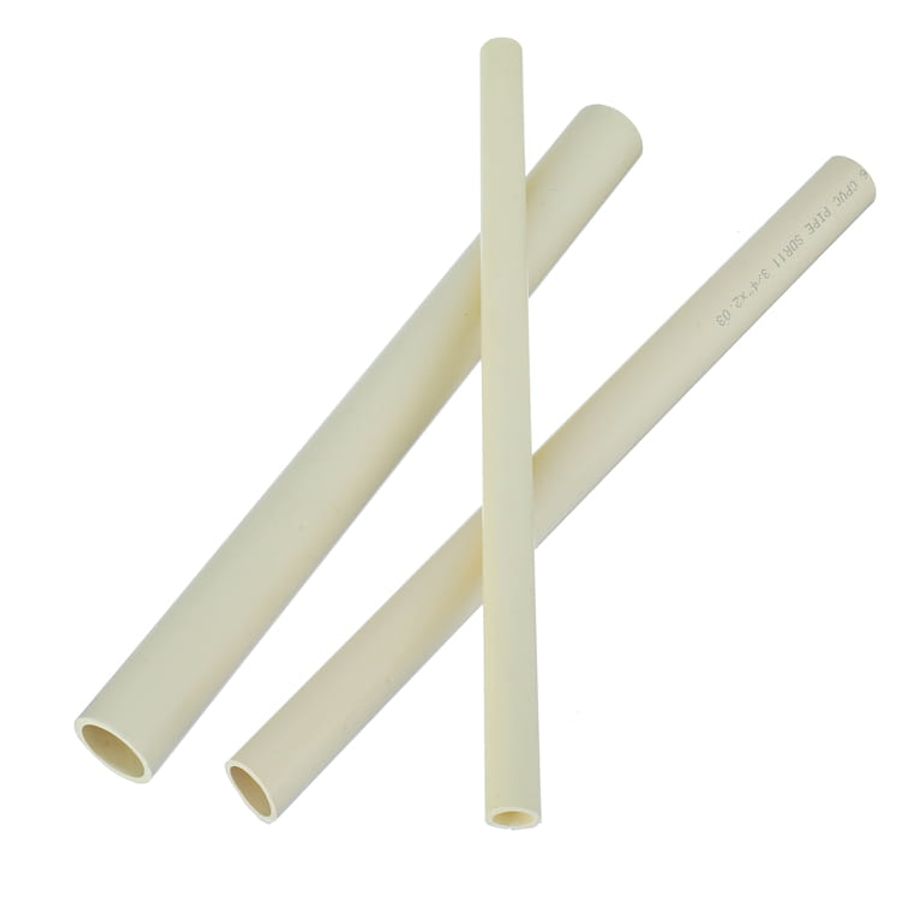
For a buyer specifying CPVC at volume, the checklist runs: Family and size — CTS, Schedule 80/IPS, or metric OD, matched between pipe and fittings. Standard and approval — ASTM D2846 or F441 (or the local equivalent) plus the potable certification for your market, with test certificates you can verify. Temperature/pressure envelope — the rating at your actual service temperature, not the cold figure. Material quality — virgin compound from a consistent extruder; reprocessed material shows up as brittleness and early failures on hot duty. The complete kit — pipe, every fitting shape, transition adapters, and the correct CPVC cement ordered together so nothing on site is the wrong family or the wrong glue. IFAN supplies CPVC pipe and fittings alongside the PPR, PEX, PVC, and brass lines in its full product catalog, which is exactly what makes the matched-kit approach practical: one source, one spec, no mixed-family surprises at install.
Need CPVC pipe and fittings as one matched kit?
Tell us the family (CTS / Sch 80 / metric), sizes, and market — we'll quote pipe, fittings, and the right cement from one source.
Request a QuoteCommon CPVC Mistakes
Using PVC cement. It won't develop full strength on CPVC — the classic delayed failure on a hot line. Use CPVC-rated cement, always.
Mixing CTS and IPS families. The diameters differ even at the same nominal size. Keep pipe and fittings in one family.
Ignoring thermal expansion. Long hot runs grow; without offsets or loops the stress lands on the joints.
Rating at the wrong temperature. The pressure rating at 23°C is not the rating at 80°C. Spec at service temperature.
Incompatible chemicals. Some sealants, oils, and insulation attack CPVC. Use only maker-listed compatible products.
Frequently Asked Questions
What is CPVC pipe used for?
CPVC is a rigid plastic pipe for hot and cold potable water. Its extra chlorination lets it handle domestic hot-water temperatures (continuous service up to roughly 93°C / 200°F, product-specific) that ordinary PVC cannot. It's used for home hot/cold distribution (CTS sizes) and industrial hot lines (Schedule 80), joined by solvent-weld with CPVC cement.
Can I use PVC cement on CPVC pipe?
No. PVC cement does not develop full strength on CPVC, and the joint can fail later in hot service even if it passes an initial pressure test. Use solvent cement specifically rated for CPVC (with primer where specified), respect cure times, and don't pressurize early. The cement must also suit the pipe size and service temperature.
What's the difference between CTS and Schedule 80 CPVC?
CTS (copper tube size) CPVC follows copper tubing dimensions — the cream-coloured ½"–1" pipe used for home plumbing (ASTM D2846). Schedule 80 CPVC uses iron pipe sizes with thicker walls for industrial duty (ASTM F441), usually grey. Their diameters differ even at the same nominal size, so fittings don't interchange — buy pipe and fittings from one family.
Is CPVC better than PEX?
They're both hot/cold potable pipes with different strengths. CPVC is rigid (neat straight runs), needs only a saw and cement, and tolerates UV better; PEX is flexible, tolerates freezing far better, installs faster with fewer joints, and suits retrofits. Cold climates and speed favour PEX; rigid installs and low tool cost favour CPVC. Regional codes and installer habits often decide.