

Gate Valve: Types, Sizing, and How to Specify One for Your Project
Gate Valve: Types, Sizing, and How to Specify One for Your Project
Key Takeaways
- A gate valve uses a rising or sliding wedge to start or stop flow; it is not designed for throttling.
- Specify body material by fluid type, temperature, and pressure: brass for potable water, cast iron for general service, ductile iron for higher pressure, stainless steel for corrosive media.
- Face-to-face dimensions are governed by DIN 3352 (PN valves), API 600 (steel gate valves), and BS 5163 (cast iron gate valves). Always confirm the standard before ordering replacements.
- PN16 is a frequent default pressure class in water distribution tenders across many African and Middle Eastern markets (always confirm the consultant's specification per project); Class 150 covers most general-purpose oil and gas applications.
- At larger sizes, gate valves are generally the more economical isolation option compared with ball valves; the exact price gap depends on bore, pressure class, and supplier, so confirm it with your project quotations. This keeps them the preferred isolation choice for large-bore water and wastewater lines.
What Is a Gate Valve?
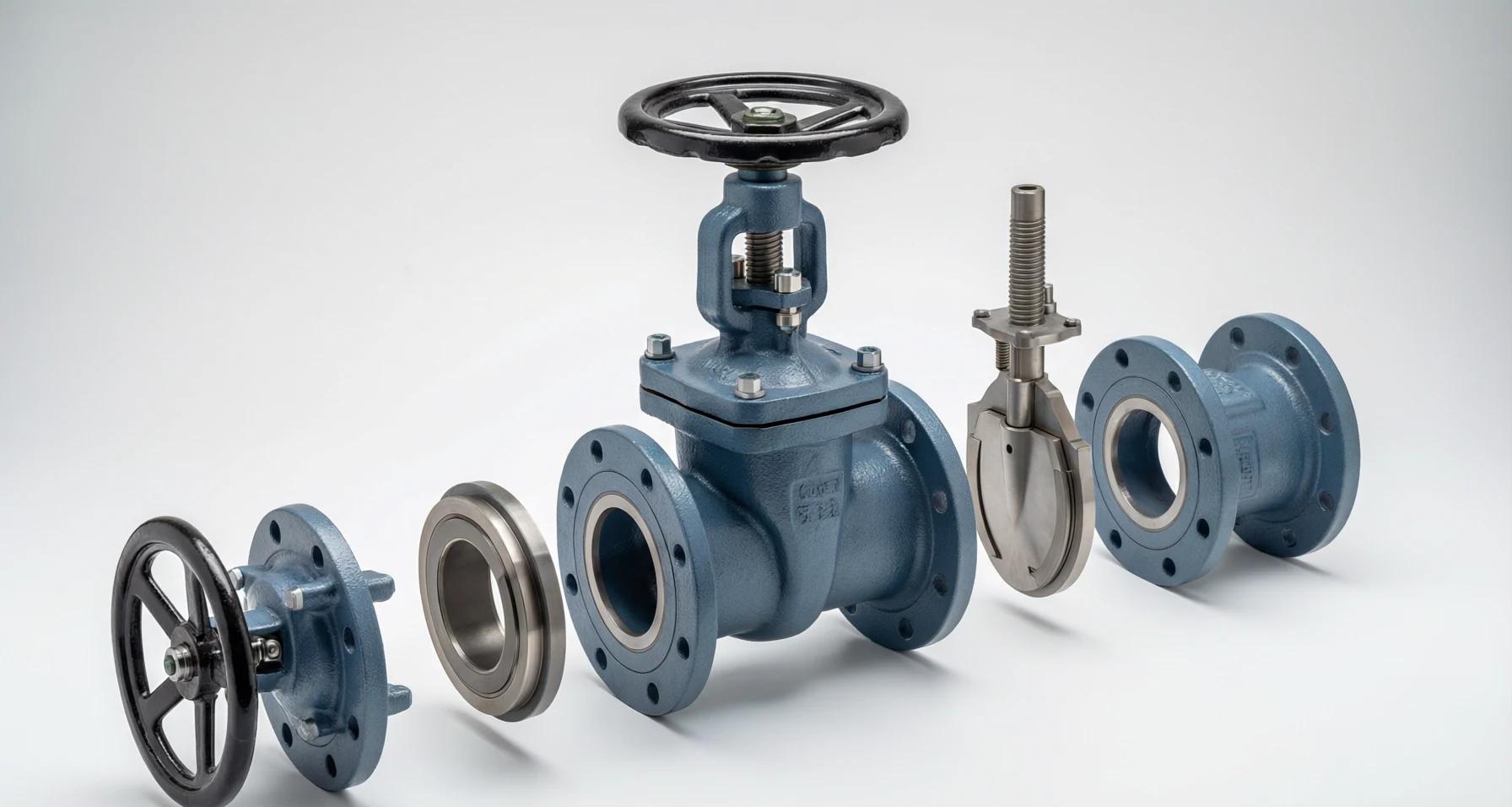
A gate valve is a linear-motion valve designed to start or stop fluid flow with minimal restriction. Inside the valve body, a flat or wedge-shaped gate moves perpendicular to the flow path. When fully open, the gate retracts completely into the bonnet, and the bore is unobstructed, producing very low pressure drop across the valve. When fully closed, the gate seats against two parallel or angled seat surfaces, creating a tight shutoff.
Gate valves are used in nearly every industrial and municipal piping system. You will find them on water transmission mains, fire protection risers, cooling water circuits, fuel oil lines, and process piping in chemical plants. The valve is not intended for throttling. Operating a gate valve in a partially open position causes seat and gate erosion, which leads to premature leakage.
The design is governed by several international standards depending on the material and service: API 600 covers steel gate valves with flanged or butt-weld ends for petroleum and gas industry use. BS 5163 covers cast iron gate valves for water applications. EN 1074 addresses iron gate valves for water supply in Europe. DIN 3352 defines face-to-face dimensions and testing for PN-rated gate valves. API 602 covers compact steel gate valves (typically socket-weld or threaded) for sizes DN15 through DN50.
Types of Gate Valves
Gate valves are classified in several ways: by stem movement, by bonnet design, and by gate shape. Each combination suits different installation and service conditions.
Rising Stem (OS&Y) vs. Non-Rising Stem (NRS)
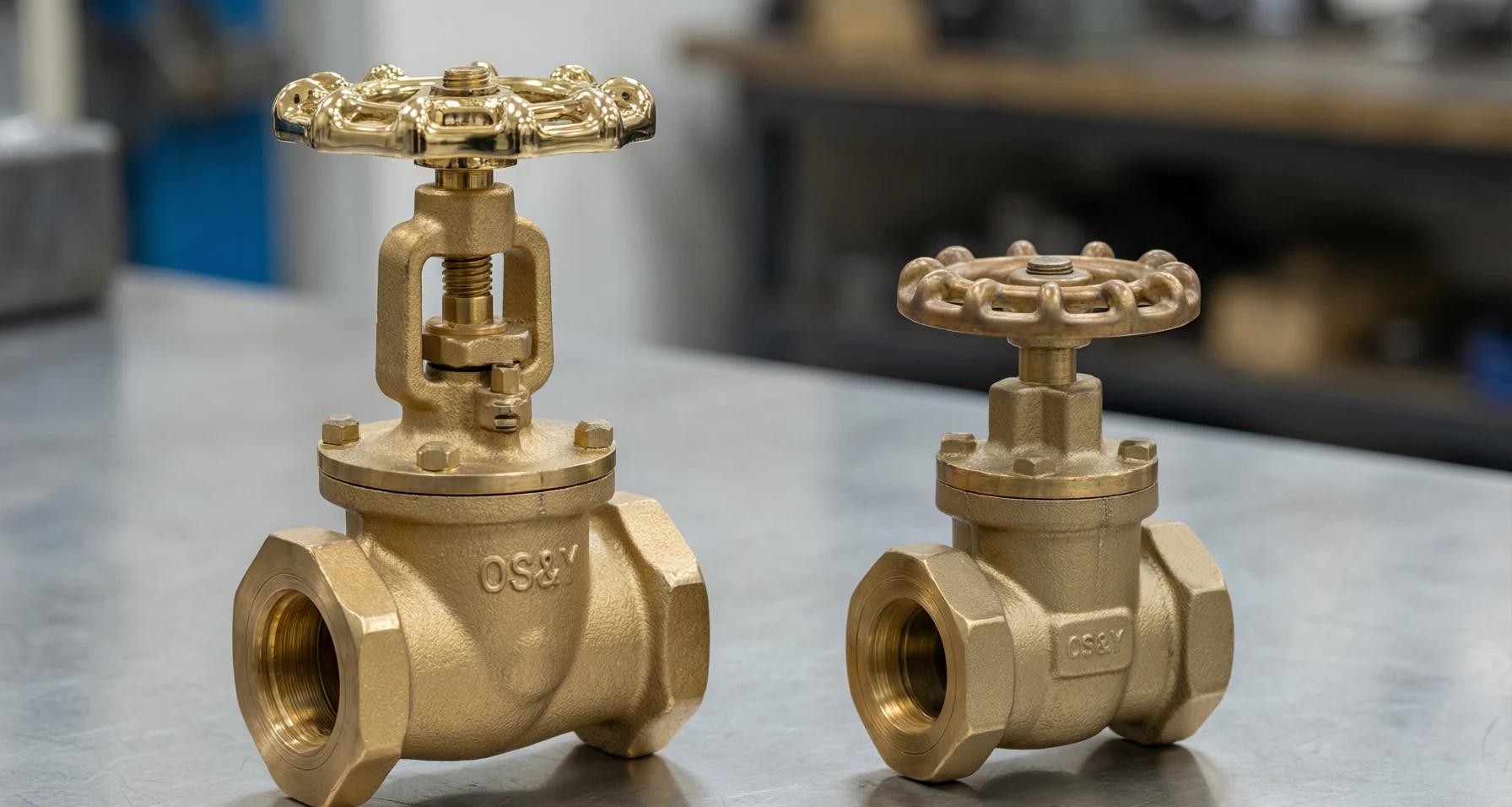
In a rising stem gate valve, also called an outside-screw-and-yoke (OS&Y) valve, the stem threads are located outside the valve body in the yoke. As the handwheel turns, the stem rises above the handwheel when the valve opens. This gives a clear visual indication of valve position from a distance, which is critical in fire protection systems and process plants where operators must confirm line status at a glance.
In a non-rising stem (NRS) gate valve, the stem threads are inside the valve body, in contact with the fluid. The handwheel and stem rotate together, and the gate travels up or down on the internal threads. The stem does not rise. NRS valves are preferred where vertical space is limited, such as underground installations, valve chambers, and below-grade vaults. The trade-off is that you cannot visually confirm position from the stem.
Wedge Gate vs. Parallel Slide Gate
A wedge gate valve uses a tapered gate that fits between two angled seat surfaces. The wedge jams tightly into the seats as the valve closes, which produces reliable shutoff even at low differential pressure. Wedge gates come in three variants: solid wedge (one-piece, most common), flexible wedge (a single piece with a cut around the perimeter that allows slight flex to compensate for seat misalignment), and split wedge (two pieces that self-adjust to the seat surfaces).
A parallel slide gate valve uses a flat gate that slides between two parallel seat surfaces. Shutoff is achieved by line pressure pushing the gate against the downstream seat. Parallel slide valves are common in low-pressure water systems and are the standard design under BS 5163 for potable water service. They require less operating torque than wedge valves at larger sizes.
What are the two main types of gate valves?
By stem: rising stem (OS&Y) and non-rising stem (NRS) — that is the split most catalogues, and AWWA C509/C515, use first. By gate shape the two families are wedge and parallel slide. In practice a water-utility order specifies both at once ("NRS, resilient-seated wedge") plus the seat type, so the table below lists all five classification axes and the standard that fixes each one. The stem and seat trade-offs are covered in depth in the gate valve types guide (NRS vs OS&Y vs resilient-seated).
Which gate valve type is the most common?
For water, the non-rising stem, resilient-seated ductile iron wedge valve (AWWA C509/C515 or EN 1074-2) is the default from DN50 to DN300: it buries without a chamber, seals drop-tight at low pressure, and needs no seat lapping. For building services below DN50 the most common is the brass solid-wedge NRS valve with threaded ends. Metal-seated and OS&Y designs remain the norm only where a code demands them — fire mains (NFPA 24 requires an indicating valve, OS&Y or post indicator) and API 600 process piping.
| Axis | Options | Governing standard (current edition) | Rated pressure (bar / psi) | Pick when |
|---|---|---|---|---|
| Stem | Rising (OS&Y) / non-rising (NRS) | AWWA C509-15 (NRS & OS&Y); NFPA 24 for fire service | 13.8 / 200 (C509) | OS&Y where position must be visible; NRS buried or in vaults |
| Gate shape | Solid wedge / flexible wedge / split wedge / parallel slide | API 600, 14th ed. 2021 (Errata 2024) for steel; BS 5163-1:2004 for parallel-slide waterworks valves | Class 150–2500 (API 600); PN10–PN16 (BS 5163) | Solid wedge by default; flexible wedge on steam / thermal cycling; parallel slide on large low-pressure water |
| Seat | Resilient (rubber-encapsulated wedge) / metal-seated | AWWA C515-20 (reduced-wall resilient); EN 1074-2:2000+A1:2004 | 13.8 / 200 (C515); PN10–PN16 (EN 1074-2) | Resilient for potable water and sewage; metal-seated above 80 °C or abrasive media |
| Body material | Brass / grey iron / ductile iron / cast steel / stainless | EN 1254 (brass); EN 1563 & A536 (ductile); A216 WCB, A351 CF8M (steel castings, A351/A351M-24) | PN16–PN25 brass; PN16 ductile; Class 150–300 steel | See the materials table below |
| End connection | Threaded / flanged / butt-weld / socket (PVC, PPR) | ISO 7-1 or ASME B1.20.1 threads; EN 1092-2 or ASME B16.1/B16.5 flanges | Per flange / thread rating | Threaded ≤DN50; flanged ≥DN50; weld for API 600 process lines |
Materials: When to Specify Brass, Cast Iron, Ductile Iron, or Stainless Steel
The body and bonnet material determines the valve's pressure-temperature envelope, corrosion resistance, and cost. Here is a practical selection guide based on common project conditions.
| Material | Pressure Range | Temperature Range | Best For | Avoid When |
|---|---|---|---|---|
| C37700 / CZ122 Brass | PN20-PN25 | -20 °C to +150 °C | Potable water, hot and cold domestic supply, compressed air | Seawater, ammonia, high-chloride water, steam above 150 °C |
| Cast Iron (GG25 / A126 Cl. B) | PN10-PN16 | -10 °C to +120 °C | Municipal water, irrigation, general industrial water, drainage | High-pressure steam, water hammer service, seismic zones (brittle) |
| Ductile Iron (GGG40 / A536 65-45-12) | PN16-PN25 | -10 °C to +150 °C | Higher-pressure water mains, fire protection, wastewater, oil and gas | Strong acids, undiluted seawater without lining |
| Stainless Steel (CF8 / CF8M / 304 / 316) | PN16-Class 150 to Class 300 | -40 °C to +400 °C | Chemical process, seawater, food and beverage, pharmaceutical, high-purity water | Budget-sensitive projects where carbon steel or iron suffices |
Procurement note: For projects in West Africa (Ghana, Nigeria, Cameroon) and East Africa (Kenya, Tanzania), ductile iron gate valves with epoxy coating (minimum 250 microns DFT) are the most common specification for water utility tenders. Brass gate valves in sizes DN15-DN50 dominate the building-services and domestic plumbing market. Always confirm that the valve body material certificate meets EN 1074-1 or BS 5163 as required by the consulting engineer's specification.
Gate Valve Sizing and Pressure Classes
Gate valves are available from DN15 (½”) through DN600 (24”), and larger sizes are available for major transmission projects. The most commonly stocked sizes for building services and water distribution are DN15 through DN300.
Pressure classes follow two naming conventions, and the two are not directly convertible. The PN system (used in Europe, Africa, and the Middle East) marks a nominal pressure in bar at ambient temperature: PN10 (10 bar), PN16 (16 bar), PN25 (25 bar). The ASME B16.5 Class system (used in the Americas and in oil and gas globally) works differently: designations such as Class 150 and Class 300 are pressure-temperature ratings, not fixed bar values. The allowable working pressure depends on the valve's material group and the operating temperature; a Class 150 carbon-steel valve, for example, is rated for about 19.6 bar at ambient temperature, but that rating falls as the temperature rises. Because the two systems rate valves in different ways, a PN figure cannot simply be swapped for a Class figure; always specify the complete designation that the project piping class requires.
The table below shows common sizes with face-to-face dimensions per DIN 3352 (for PN valves) and approximate weights. These values are representative; always confirm exact dimensions with the manufacturer's datasheet before ordering.
| Size (DN) | Size (inches) | Face-to-Face (mm) DIN 3352 | Approx. Weight (kg) | Cv (approx.) |
|---|---|---|---|---|
| DN15 | ½” | 130 | 1.2 | 12 |
| DN20 | ¾” | 150 | 1.6 | 22 |
| DN25 | 1” | 160 | 2.1 | 36 |
| DN32 | 1¼” | 180 | 3.0 | 58 |
| DN40 | 1½” | 200 | 3.8 | 75 |
| DN50 | 2” | 250 | 5.5 | 120 |
| DN65 | 2½” | 265 | 8.2 | 195 |
| DN80 | 3” | 280 | 11.5 | 270 |
| DN100 | 4” | 300 | 17.0 | 440 |
| DN150 | 6” | 350 | 38.0 | 1,000 |
| DN200 | 8” | 400 | 65.0 | 1,800 |
| DN250 | 10” | 450 | 105.0 | 2,800 |
| DN300 | 12” | 500 | 155.0 | 4,100 |
Note: Weights shown are for ductile iron, flanged-end, PN16 gate valves. Brass, cast iron, and steel valves will differ. Cv values assume full-open position.
End Connections: Threaded, Flanged, and Welded
The end connection must match the piping system. Three types dominate the market.
Threaded ends (BSP or NPT). Small-bore gate valves (DN15-DN50) are commonly supplied with threaded ends. BSP (British Standard Pipe) threads are standard in the UK, Africa, the Middle East, and most Commonwealth countries. NPT (National Pipe Taper) threads are standard in North America and parts of Latin America. Threaded valves are quick to install and do not require welding. Always use thread sealant or PTFE tape on NPT connections; BSP connections rely on the taper or a bonded seal.
Flanged ends. Gate valves from DN50 upward are almost always flanged. Flange drilling follows EN 1092-2 (iron valves) or ASME B16.1 / B16.5 (steel valves). Flanged valves bolt directly between pipe flanges with a gasket in between, which makes them easy to remove for maintenance. For projects in Africa, confirm whether the consultant specifies DIN/EN flanges or ASME flanges, as both are in use and they are not interchangeable.
Butt-weld ends. Steel gate valves per API 600 are supplied with butt-weld ends for permanent installation in high-pressure or high-temperature piping. Weld-end valves eliminate potential leak paths at the body-to-pipe joint. They are standard in oil and gas, power generation, and high-pressure steam service.
Gate Valve vs. Ball Valve: Which One to Specify
This is one of the most common questions from project specifiers. Both valves provide on/off isolation, but they differ in design, cost, and performance characteristics.
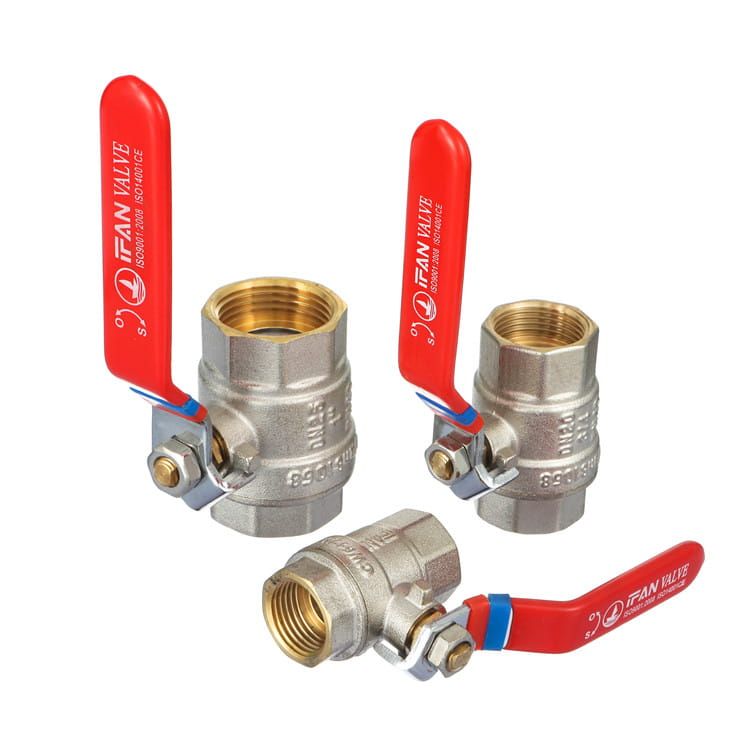
A ball valve uses a rotating ball with a bore through it. A quarter-turn (90 degrees) moves the valve from fully open to fully closed. Ball valves provide quick shutoff and are naturally suitable for throttling in V-port designs. They are compact, lightweight, and generally less expensive at small sizes (DN15-DN50).
A gate valve uses a linear gate movement and requires multiple handwheel turns to operate. It provides lower pressure drop when fully open because the bore is straight through with no obstruction. At sizes above DN150, gate valves are generally the more economical isolation option compared with full-bore ball valves, though the exact price gap depends on bore, pressure class, and supplier and should be confirmed with project quotations. This is why water utilities and civil engineers default to gate valves for large-diameter transmission mains.
| Feature | Gate Valve | Ball Valve |
|---|---|---|
| Operation | Multi-turn (linear) | Quarter-turn |
| Pressure drop (full open) | Very low | Low (reduced bore) to very low (full bore) |
| Throttling | Not recommended | Acceptable (V-port) |
| Cost at DN200+ | Lower | Higher (full bore) |
| Space requirement | Longer face-to-face | Compact |
| Typical standard | API 600, BS 5163, EN 1074 | API 608, API 6D, EN 1171 |
Rule of thumb for specifiers: Use gate valves for isolation on large-bore water, wastewater, and general-service lines where pressure drop matters and space allows. Use ball valves for small-bore instrument isolation, quick-acting shutoff, and applications where throttling is required.
What's the difference between a butterfly valve and a gate valve?
A butterfly valve isolates with a quarter-turn disc that stays in the flow path; a gate valve lifts the gate completely out of the bore. That single difference sets everything else: the butterfly is shorter (wafer or lug body, roughly a fifth of a gate valve's face-to-face at DN200), lighter, cheaper above DN150, and can throttle — but it always leaves a disc in the stream, so pigging is impossible and pressure drop is higher at full open. The gate valve gives a straight-through bore and the lowest pressure drop of any isolation valve, at the cost of multi-turn operation, more weight, and no throttling. Water utilities use resilient-seated gate valves on distribution mains where a full bore matters, and butterfly valves on large transmission lines, pump stations and treatment plants where space and cost dominate. Details and a DN-by-DN comparison are in the butterfly valve guide.
What are the 7 types of valves?
The seven types every specification vocabulary rests on are gate, globe, ball, butterfly, check, plug and diaphragm valves. The first four isolate or regulate by hand, the check valve works automatically on flow reversal, and plug and diaphragm valves cover abrasive or hygienic duties. Safety-relief and pressure-reducing valves are usually listed as control devices rather than in the seven. A gate valve is the isolation choice of the seven whenever pressure drop must be lowest and the valve will sit fully open or fully closed for long periods. The full comparison, with a selection matrix by duty, is in the types of valves guide.
Applications by Industry
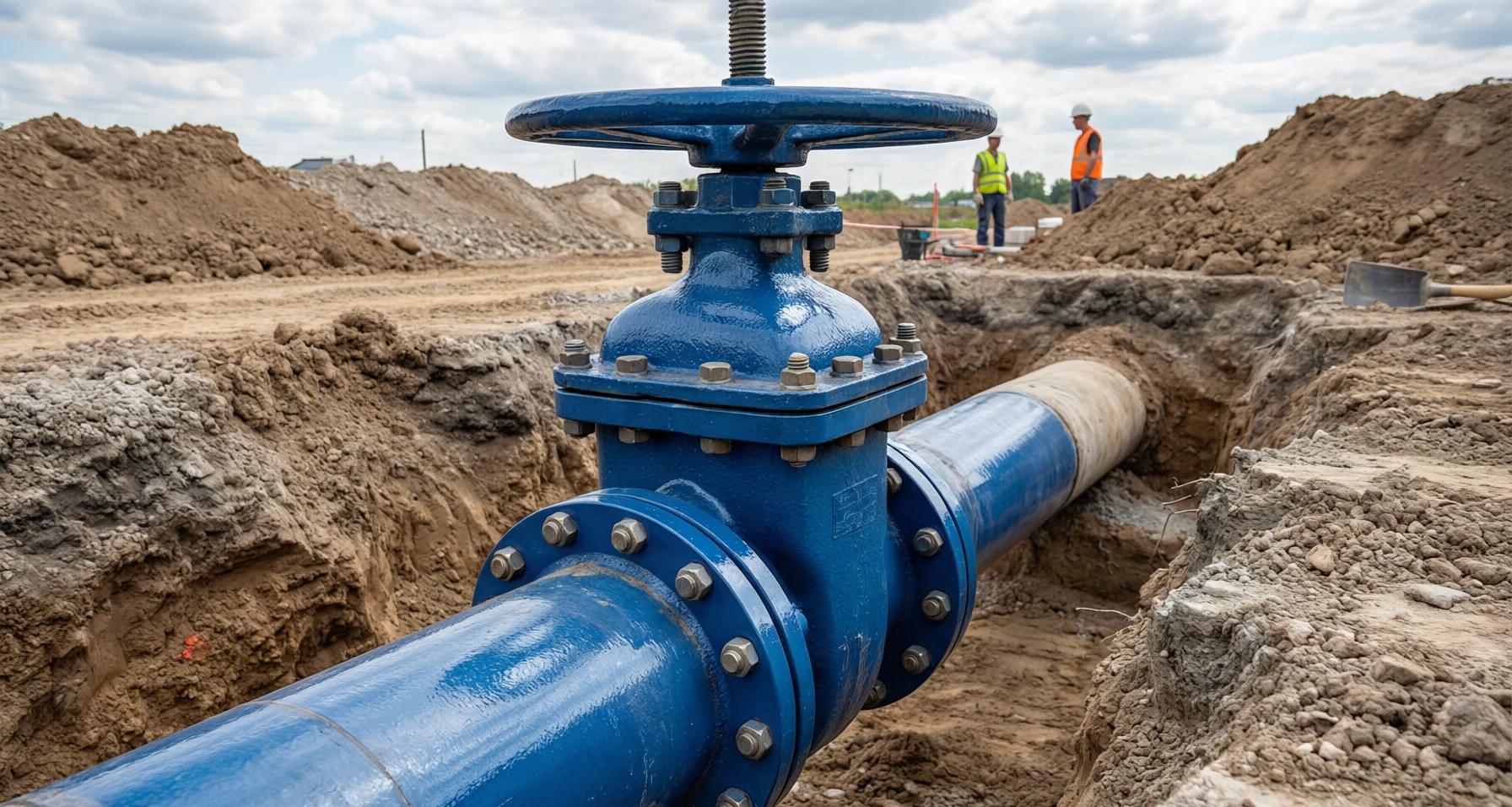
Municipal water supply. Gate valves are the standard isolation valve for water transmission and distribution mains. Ductile iron gate valves per EN 1074-1 with fusion-bonded epoxy (FBE) coating are specified by most water utilities worldwide. Sizes DN100-DN600 are common on trunk mains.
Fire protection. OS&Y gate valves are required by NFPA 13 and NFPA 24 on fire protection system risers and underground fire water mains. The rising stem provides visual confirmation that the valve is open, which is a code requirement for fire service.
Building services and plumbing. Brass gate valves in DN15-DN50 are used for domestic water isolation in commercial buildings, hospitals, and residential towers. Forged brass bodies per EN 1254-4 or equivalent are standard.
Oil and gas / petrochemical. API 600 steel gate valves in carbon steel (WCB) or stainless steel (CF8M) are used on process lines, wellhead piping, and tank farm manifolds. Class 150 and Class 300 are the most common pressure ratings.
Irrigation and agriculture. Cast iron or ductile iron gate valves in PN10 or PN16 are used at pump stations, reservoir outlets, and mainline connections in large-scale irrigation schemes across sub-Saharan Africa.
How to Specify a Gate Valve for Your Project
When writing a gate valve into a project specification or RFQ, include the following data points to avoid back-and-forth with suppliers:
- Valve type: Rising stem (OS&Y) or non-rising stem (NRS); wedge or parallel slide.
- Body material: Brass (C37700/CZ122), cast iron (GG25/A126 Cl.B), ductile iron (GGG40/A536), or stainless steel (CF8/CF8M).
- Size: DN designation (e.g., DN100) or inch equivalent.
- Pressure class: PN10, PN16, PN25, Class 150, or Class 300.
- End connection: Threaded (BSP or NPT), flanged (EN 1092-2 or ASME B16.5), or butt-weld.
- Design standard: BS 5163, EN 1074, API 600, or DIN 3352.
- Coating: Epoxy type, minimum DFT (e.g., 250 microns), color if specified.
- Testing: Shell test and seat test per the applicable standard (e.g., EN 12266-1 for seat leakage rate A or B).
- Quantity: State total quantity and any size breakdown. Suppliers price more competitively on consolidated orders.
- Certification: Specify whether you need a material certificate (EN 10204 3.1), a witness test, or a third-party inspection (SGS, Bureau Veritas, Intertek).
IFAN Group manufactures gate valves in brass, cast iron, and ductile iron across sizes DN15 to DN300, with over 3,000 SKUs in our valve and fittings range. Our factory in Zhuji, China has been in operation since 1993, and we export to more than 120 countries with a strong presence across West Africa and East Africa. We supply project-spec valves with full material traceability and third-party inspection support.
Frequently Asked Questions
1. What is the difference between a gate valve and a globe valve?
A gate valve moves a gate perpendicular to the flow to start or stop it, producing very low pressure drop when open. A globe valve moves a plug or disc down onto a seat to restrict flow, which creates higher pressure drop but allows precise throttling. Gate valves are used for isolation; globe valves are used for flow regulation. They serve fundamentally different purposes in a piping system.
2. How long does a gate valve last?
A properly specified and installed gate valve in clean water service can deliver decades of reliable operation. Exact service life varies widely and depends on water chemistry, cycle frequency, and maintenance, so any year figures you may see quoted are rules of thumb from field experience rather than guarantees. The main failure modes to watch are seat erosion (from throttling or abrasive media), stem corrosion, and packing degradation. Regular packing adjustment and avoiding partial-open operation extend service life.
3. Can a gate valve be used for throttling?
No. Gate valves are designed for full-open or full-closed service only. Operating a gate valve in a partially open position causes the gate and seats to vibrate, which leads to wire-drawing erosion of the seating surfaces. Once the seats are eroded, the valve will not seal tightly when closed. For throttling applications, specify a globe valve, butterfly valve, or V-port ball valve instead.
4. What is the minimum order quantity for project gate valves?
IFAN Group supplies gate valves for projects of all sizes. For standard brass gate valves (DN15-DN50), typical minimum order quantities start at 500 pieces per size. For ductile iron and cast iron flanged gate valves (DN50-DN300), MOQs start at 50-100 pieces per size depending on the specification. Contact our sales team on WhatsApp at +86 173 6968 5997 with your size list and specification to receive a project quotation.
Need Gate Valves for Your Next Project?
IFAN Group has manufactured brass, cast iron, and ductile iron gate valves since 1993. We supply DN15-DN300 to projects across Africa, the Middle East, and beyond. Send us your specification and bill of quantities for a competitive project price.
Request a Gate Valve Quote WhatsApp UsRelated Briefings
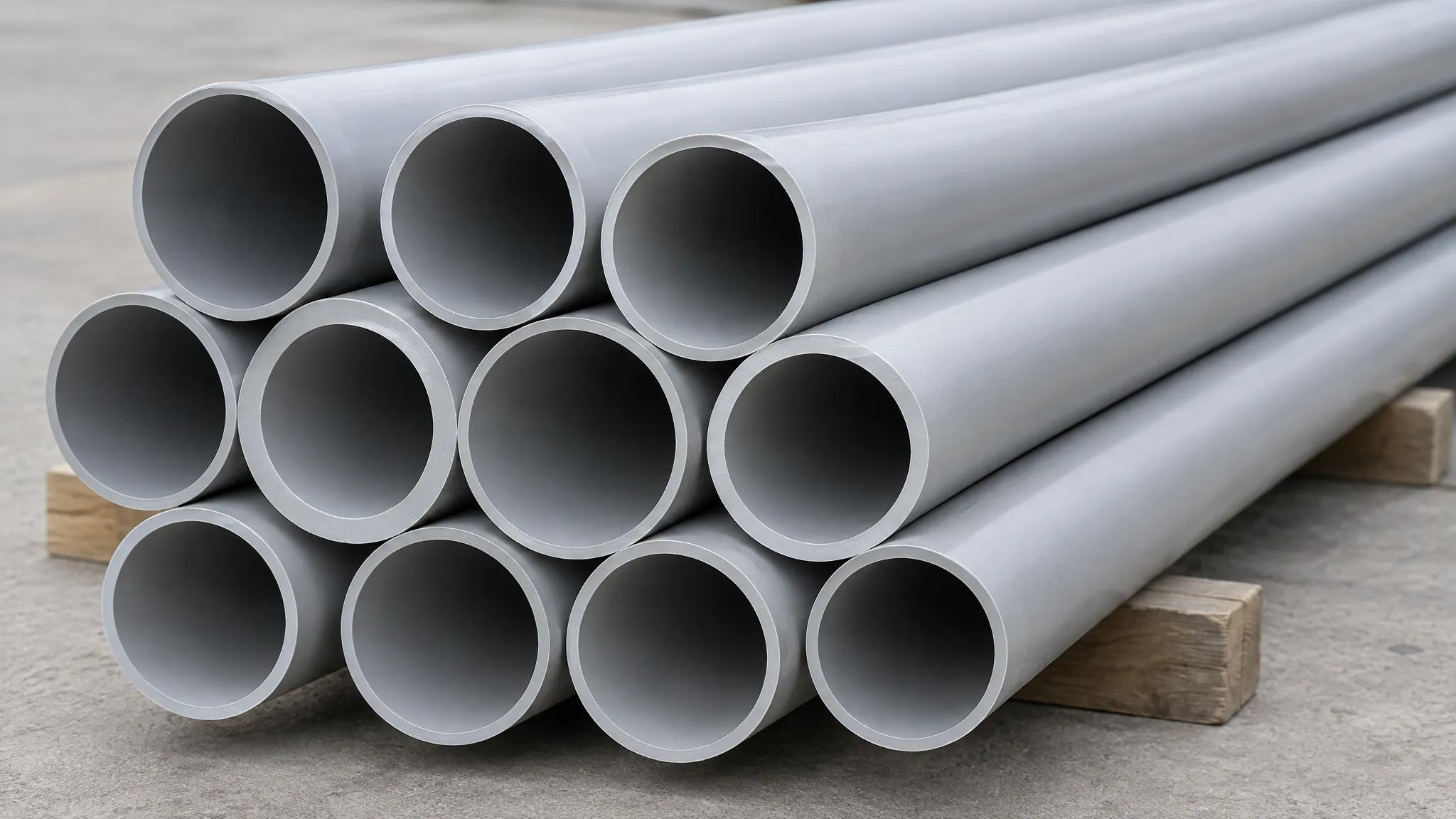
uPVC Pressure Pipe Class B, C, D and E: What the BS 3505 Classes Mean in East and West African Tenders, and How They Map to PN

Importing PP-R Pipe to Tanzania: TBS PVoC, TZS 2344 and the TRA Levy Stack