
P-Trap: How It Works, Why Drains Smell & How to Size One
Under every sink, behind every shower, beneath every floor drain sits the humblest life-safety device in the building: a U-shaped bend holding about an inch or two of water. That water plug — the P-trap's seal — is the only thing standing between the room and the sewer's gases, odors, and pests, 24 hours a day, powered by nothing. When a bathroom smells of drains, a trap has almost always lost its water; when a fixture gurgles, a trap is fighting for its seal. This guide explains how a P-trap actually works, the sizes and types (and what an S-trap is doing wrong), why traps lose their seal — evaporation, siphonage, wind effect — how venting protects them, and how to specify trap assemblies that stay sealed and serviceable for decades.
Key Takeaways
- A P-trap holds a water seal (typically 50–100 mm deep) that blocks sewer gas while letting waste flow through.
- Drain smell = lost seal. The causes: evaporation (unused fixture), siphonage (bad venting), leaks, or wind effect.
- Venting is the trap's bodyguard — without air behind the flow, a full-bore discharge sucks the trap dry.
- Common sizes: 32 mm (1¼") basins, 40 mm (1½") sinks/showers, 50 mm (2") floor drains.
- S-traps are banned in modern codes — they self-siphon; that's why the P shape exists.
- Buy traps with access (union or cleanout) — the trap is also the system's catch-point for dropped rings and hair.

How a P-Trap Works
A P-trap is geometry doing chemistry's job. The pipe dips into a U and rises into a horizontal outlet — trace it and it draws a "P" lying on its face. Every discharge refills the U; between discharges, the water sitting in the bend — the trap seal — completely plugs the pipe's air path. Wastewater passes through freely (it simply displaces the seal and replaces it), but air cannot: sewer gases — hydrogen sulfide's rotten-egg smell, methane, and whatever the network breathes — stop at the waterline. The critical dimension is seal depth: the vertical distance between the U's outlet dip and its overflow, typically 50 mm and up to 100 mm in modern codes. Deeper seals survive more evaporation and stronger pressure swings; shallower ones die faster. That's the whole machine — no moving parts, no power, reset by every use — which is why the failure stories are never about the trap breaking, and always about the water leaving.
The trap is half of a code-compliant fixture drain — the other half at the toilet is the PVC toilet flange, its height rule and anchoring.
P-Trap vs S-Trap vs Bottle Trap
The letters matter. An S-trap drops straight down after the U — and that geometry is its crime: a full-bore discharge down the vertical leg keeps pulling like a syphon after the flow ends, sucking the seal out with it. S-traps self-destruct their own protection, which is why modern plumbing codes ban them in new work; millions survive in old buildings, announcing themselves with a post-drain gurgle and a whiff. The P-trap's horizontal outlet breaks that syphon — the flow decelerates along the horizontal and (with venting behind it) air re-enters before the seal follows the water. The bottle trap packs the seal into a compact cylinder — invaluable in tight vanity cabinets and easy to open for cleaning, at the cost of a flow path some codes treat less kindly; check local acceptance. There are also running traps, drum traps, and HepvO-style waterless valves in the wider family, but for fixtures the modern default is simple: P shape, vented, right size. If you're replacing an S-trap during a renovation, converting to a vented P-trap is the once-in-decades chance to fix the gurgle for good.
Why Traps Lose Their Seal
Four thieves take trap water, and diagnosing the smell means naming the thief. Evaporation — the patient one: an unused guest-bath or floor drain loses its seal to dry air in a few weeks (faster with heating or wind across the outlet); the fix is ritual, not repair — run water monthly, or use trap primers on floor drains that never see use. Induced siphonage — the violent one: a slug of water from the fixture itself (self-siphonage) or from another fixture upstream creates negative pressure that pulls the seal down the pipe; this is a venting defect wearing a trap costume. Back-pressure — the reverse: a discharge from above compresses air in the stack and burps the seal up into the room, classic in tall buildings near the stack base. Leaks and capillary action — a weeping joint below the waterline, or a wick of hair and lint slowly conducting the seal over the edge. Notice that three of the four are really system problems — pressure and venting — which is why the trap's best friend isn't a better trap: it's the vent behind it, designed as part of the whole DWV layout.
Venting: the Trap's Bodyguard
A trap seal is a fragile inch of water facing a pipe network that swings pressure every time anything flushes. Venting equalizes those swings: an air path behind the trap lets the atmosphere push back, so a discharging fixture pulls air down the vent instead of water out of the trap. The design rules that matter at trap level: keep the trap-to-vent distance inside your code's limit for the pipe size (too far, and the trap effectively becomes an S-trap); keep the trap arm sloped but not plunging (about 1–2% fall — a steep arm outruns its own air); and where a real vent can't reach — island sinks, some retrofits — use an air admittance valve (AAV), the one-way valve that admits air on negative pressure and stays shut otherwise, where the local code accepts it. A system vented right lets every trap do its silent job for decades; a system vented wrong replaces trap water hourly and smells anyway. The stack-and-vent architecture behind all this is covered in the complete PVC drainage guide.
Installing or Replacing a P-Trap, Step by Step
Fixture traps are built for hand service — the whole assembly uses slip joints (a nut compressing a tapered washer onto the pipe) precisely so no tools or cement are needed. The sequence: 1. Bucket under, old trap off — loosen both slip nuts by hand or with gentle channel-lock pressure, and expect the trap to arrive full. 2. Dry-assemble the new trap: slide nut then washer onto each pipe end, tapered face of the washer pointing into the joint it seals. 3. Set the geometry before tightening — the trap arm should reach the wall fitting with a gentle fall (about 1–2%), the tailpiece should drop into the U without side-load, and nothing should be stretched or sprung into place; slip joints seal compression, not tension. 4. Hand-tighten every nut, then at most a quarter turn more on plastic — over-tightening splits plastic nuts and distorts washers, the number-one rookie leak. 5. Test wet: fill the basin, release a full slug, and run a dry tissue under every joint — a weep you can't see soaks paper instantly. Two upgrade notes while you're there: if the old assembly was an S-trap, this is the moment to convert (add the wall fitting and vent path rather than re-installing the banned geometry), and if the trap lacked a cleanout access, fit the version with one. The job is fifteen minutes; the geometry check is the part that decides whether it's fifteen minutes once or fifteen minutes monthly.
Sizes, Materials, and What to Buy
| Fixture | Typical trap size | Note |
|---|---|---|
| Wash basin | 32 mm (1¼") | Bottle trap where cabinet space is tight |
| Kitchen sink | 40 mm (1½") | Grease-prone — buy the cleanout version |
| Shower / bath | 40–50 mm (1½–2") | Low-profile shallow-seal designs exist — mind seal depth |
| Floor drain | 50 mm+ (2"+) | Evaporates fastest — prime or top up on schedule |
| Toilet | Integral | The trap is molded into the bowl — never add another in line |
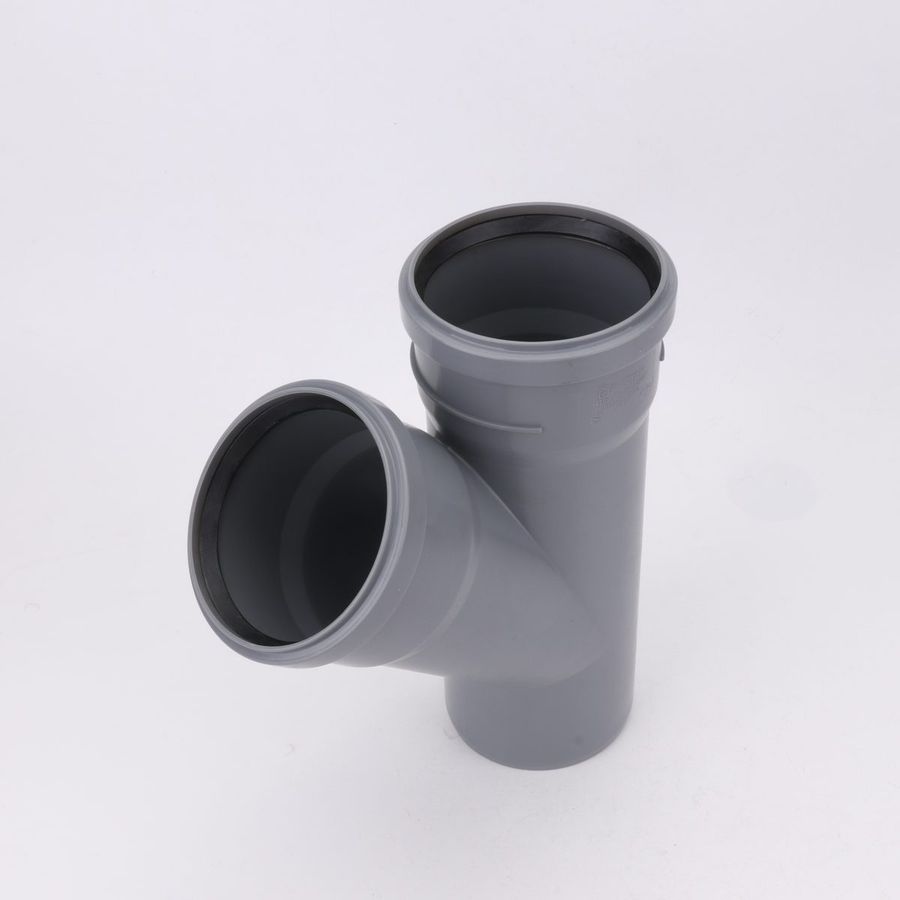
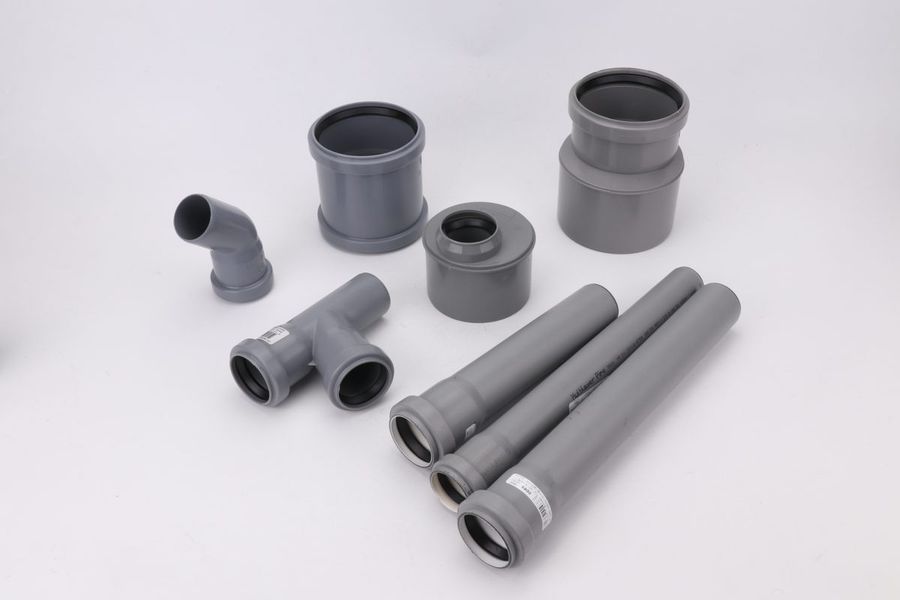
Material-wise the fixture trap world runs on UPVC and polypropylene — corrosion-proof, smooth-bored, cheap to make well — with chrome-on-brass surviving where the trap is on display. What separates a good trap assembly from a callback: a real union or cleanout (the trap is where rings, hair, and grease collect; you will open it), washers seated in machined grooves rather than floating on luck, full seal depth honestly molded (shallow "space-saver" traps trade away evaporation margin), and sockets that match your waste-pipe system — solvent-weld or ring-seal, in the same standard as the rest of the drainage run, exactly the socket-precision story told by IFAN's seal-ring water test. IFAN supplies trap assemblies alongside the UPVC drainage pipe, wyes, and bends they connect to in the full drainage catalog — one system, one standard, sockets that grip.
Building out bathrooms at project scale?
IFAN quotes complete UPVC drainage schedules — traps, wastes, bends, wyes, and stacks — as one matched system.
Request a QuoteCommon P-Trap Mistakes
Double-trapping. Two traps in series trap air between them and drain worse, not safer. One trap per fixture.
Ignoring the unused fixture. A guest bath or floor drain dries out in weeks. Run water on a schedule or fit a primer.
Stretching the trap arm. Past the code's trap-to-vent distance, a P-trap behaves like a banned S-trap.
Buying trap by looks. Shallow-seal space-savers give away evaporation margin; check the seal depth number.
No access. A trap without a union or cleanout turns a five-minute ring rescue into a hacksaw job.
Frequently Asked Questions
What does a P-trap actually do?
It holds a plug of water — the trap seal, typically 50–100 mm deep — in a U-bend under the fixture. Wastewater flows through and refreshes the plug, but air can't pass it, so sewer gases, odors, and pests stop at the waterline. It's a passive barrier reset by every use, protecting the room around the clock.
Why does my drain smell even though it has a trap?
The trap has lost its water seal. The usual thieves: evaporation in an unused fixture (run water monthly), siphonage from poor venting (the gurgle after draining is the tell), back-pressure near a busy stack, or a slow leak below the waterline. Refill the trap first; if the smell returns with a gurgle, the real fix is venting, not the trap.
What's the difference between a P-trap and an S-trap?
The outlet direction. A P-trap exits horizontally, which (with venting) breaks the syphon after each discharge. An S-trap exits straight down and keeps siphoning after the flow ends, sucking out its own seal — which is why modern codes ban S-traps in new work. Old S-traps announce themselves with a gurgle and a drain smell; renovation is the moment to convert.
What size P-trap do I need?
Match the fixture's waste size: 32 mm (1¼") for wash basins, 40 mm (1½") for kitchen sinks and most showers, 50 mm (2") for floor drains and heavy-duty showers. Toilets have the trap molded into the bowl and never take another in line. Keep the trap, waste pipe, and fittings in one system and standard so sockets actually match.