
PVC Pipe Fittings: Types, Joints, Schedules & How to Choose
A PVC system is only as good as its fittings — the elbows, tees, couplings, and adapters that turn straight pipe into a working network. But "PVC fittings" covers a lot of ground: different shapes for different jobs, three different ways of joining, two pressure schedules, a drainage family and a pressure family that look alike but aren't interchangeable, and three related materials (PVC, UPVC, CPVC) with their own fittings. Order the wrong one and it either won't fit, won't hold pressure, or won't meet code. This guide lays out the common PVC fitting types, how they join, the schedule and drainage-versus-pressure distinctions that trip buyers up, and how to match fittings to your pipe — so what arrives actually assembles into a leak-free system.
For the wider PVC picture, see the complete PVC guide; this article focuses on the fittings.
Key Takeaways
- Common shapes: elbows, tees, couplings, reducers, unions, caps/plugs, wyes, and adapters — each for a specific job.
- Three joining methods: solvent-weld (glued), threaded, and gasketed/push-fit.
- Schedule 40 and Schedule 80 fittings share the OD but differ in wall — match the fitting schedule to the pipe.
- DWV (drainage) fittings are not pressure fittings — their sweeps and ratings differ; don't mix them.
- PVC, UPVC, and CPVC each have their own fittings — CPVC for hot water, UPVC/PVC for cold and drainage.
- Match fitting size, schedule, and standard to the exact pipe, and use the right cement for the material.
The Common PVC Fitting Types
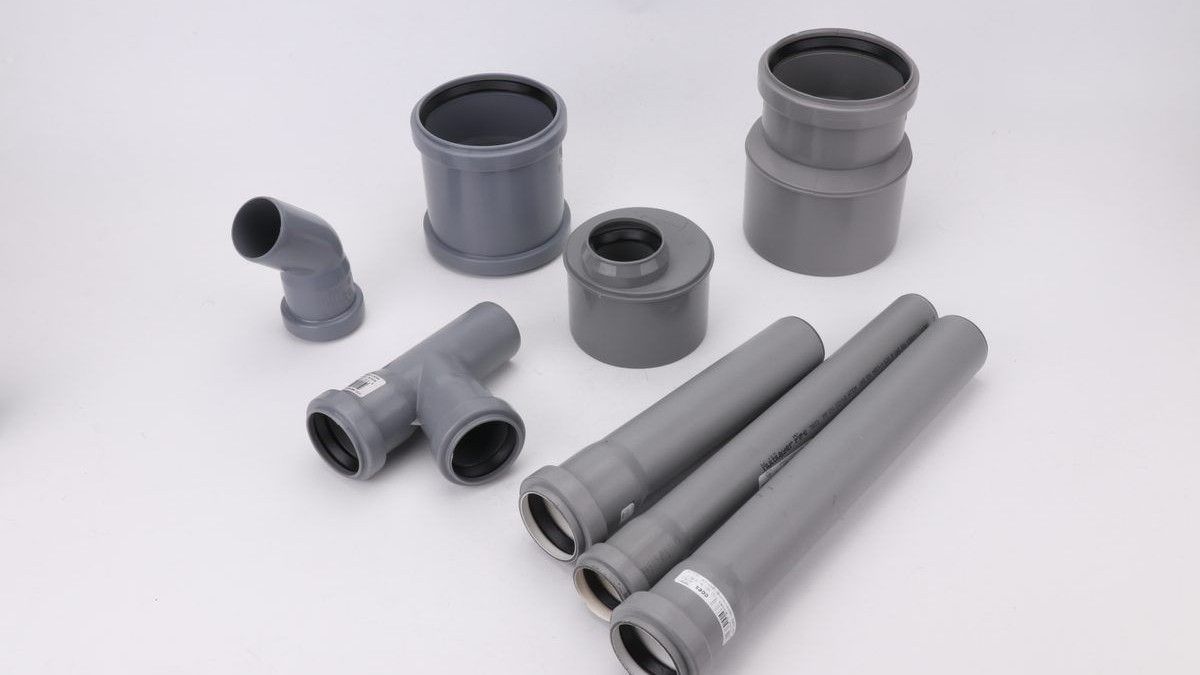
PVC fittings are named by what they do to the pipe run — change direction, split it, join it, reduce it, or close it off. Knowing the vocabulary makes ordering precise instead of guesswork.
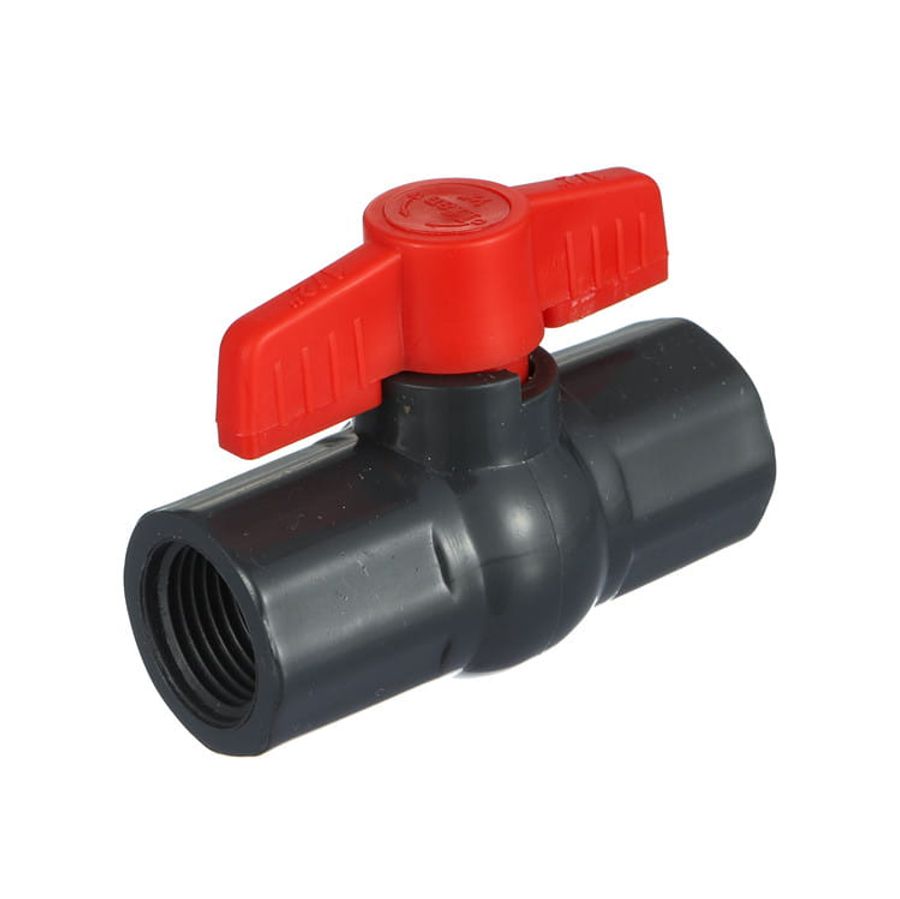
| Fitting | What it does |
|---|---|
| Elbow (45°, 90°) | Changes the pipe's direction |
| Tee | Adds a branch at 90° to the run |
| Wye (Y) | Angled branch for smooth drainage flow |
| Coupling | Joins two pipes in a straight line |
| Reducer / bushing | Connects two different pipe sizes |
| Union | A demountable joint for service access |
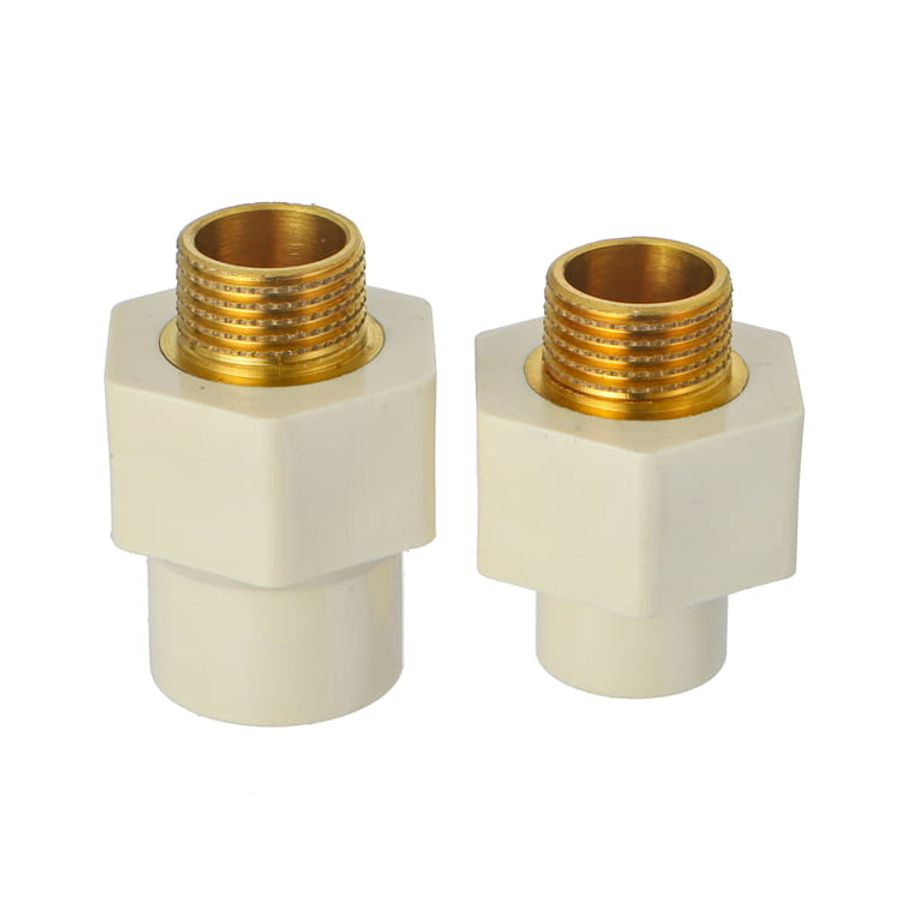
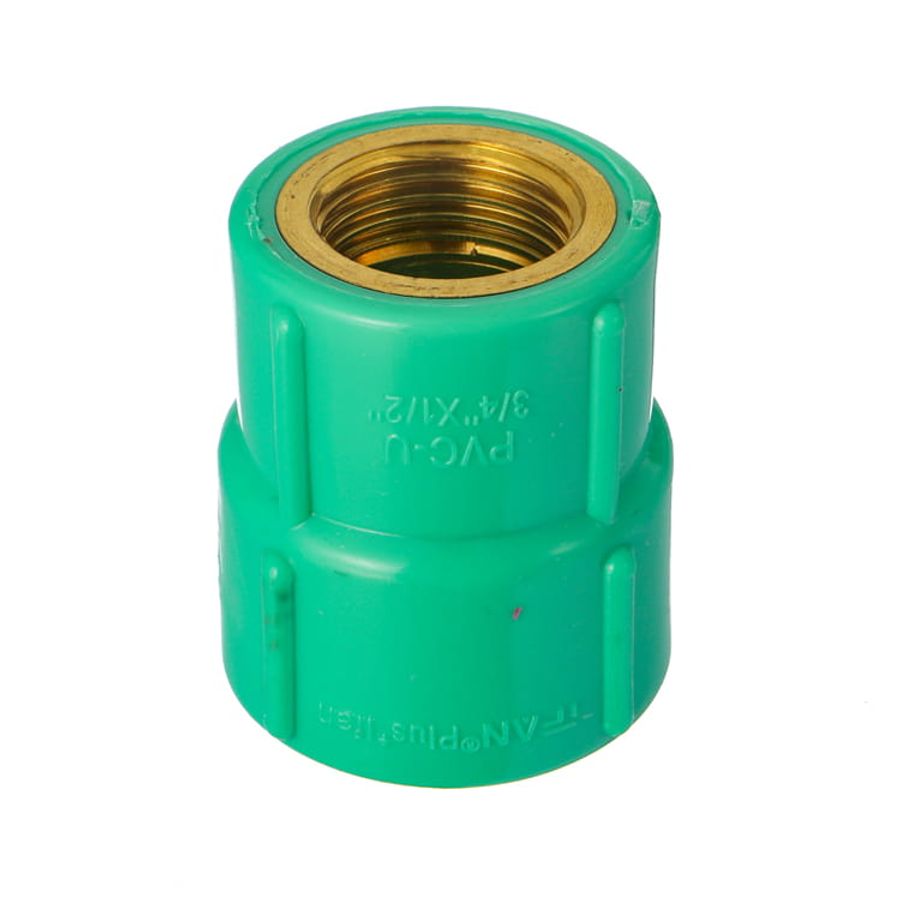
| Adapter (MPT/FPT) | Transitions solvent-weld to threaded |
| Cap / plug | Closes off a pipe end or a fitting port |
How PVC Fittings Join: Three Methods
There are three ways a PVC fitting connects to pipe, and the socket type tells you which. Solvent-weld (slip / glued) is the most common: the pipe slides into a smooth socket and PVC cement chemically fuses the two into one piece — a permanent, leak-free joint when done with primer and the right cement. Threaded (MPT/FPT) fittings screw together, used where a connection must be demountable or to join to metal or valves; threaded PVC joints need thread-sealant tape and are typically hand-tightened plus a small turn, never over-torqued, since PVC threads can crack. Gasketed / push-fit (rubber-ring) fittings use an elastomeric seal and are common on larger drainage and sewer pipe, allowing some movement and fast assembly without cement. Most potable and pressure PVC uses solvent-weld; drainage uses solvent-weld or gasketed; threaded adapters bridge to valves and equipment. Match the fitting's socket to the joining method you intend to use.
Schedule 40 vs Schedule 80 Fittings
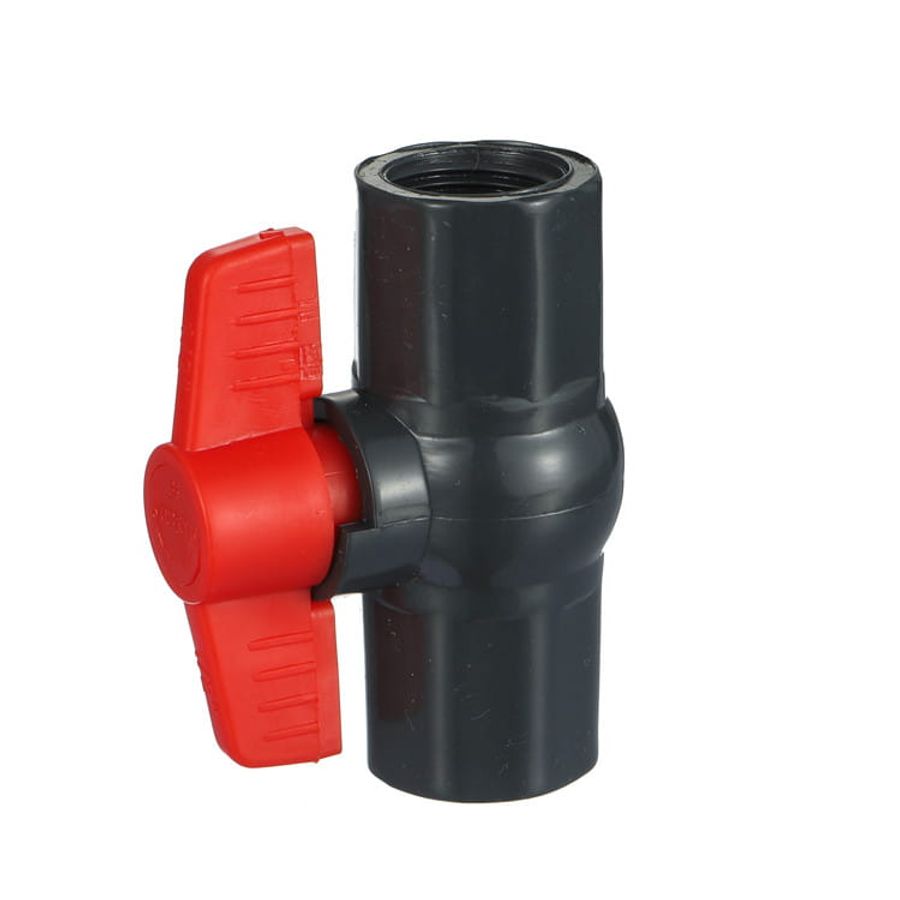
Fittings carry a schedule just like pipe does. Schedule 40 fittings (usually white) suit general cold-water, drainage, and lower-pressure work; Schedule 80 fittings (usually dark grey) have thicker walls for higher-pressure and industrial duty. Because Schedule 40 and 80 share the same outer diameter at a given size, the fittings physically interchange — but you should match the fitting schedule to the pipe's rating so the joint isn't the weak point in a pressure line. Using a Schedule 40 fitting on a Schedule 80 pressure line undercuts the pressure rating at every joint. For how the schedule system works and how pressure rating falls with size, see PVC Schedule 40 vs 80. As a rule, buy pipe and fittings in the same schedule for pressure applications.
DWV vs Pressure Fittings — Not Interchangeable
This is the single biggest PVC fitting trap. DWV (drain-waste-vent) fittings are designed for gravity drainage, not pressure: their internal shape uses long, smooth sweeps and directional flow so waste runs freely and doesn't snag, and they are not rated to hold pressure. Pressure fittings are built and rated to contain water under pressure. They can look confusingly similar, but a DWV tee has a directional sweep and a pressure tee doesn't, and a DWV fitting used on a pressure line is unrated and unsafe. Conversely, using a sharp-cornered pressure fitting in a drain can create a spot where waste catches. The rule is simple: use DWV fittings for drainage and pressure fittings for pressure, and don't substitute across. When ordering, state the application — drainage/DWV or pressure — so the right family ships. This distinction matters even more than the schedule, because a mismatch here is a code and safety failure, not just an efficiency loss.
PVC vs UPVC vs CPVC Fittings
The material matters as much as the shape. UPVC (unplasticized PVC) is the rigid material most "PVC" pipe and fittings are actually made of — used for cold water and drainage. CPVC is chlorinated PVC, which handles hot water and higher temperatures, so hot-water potable systems use CPVC pipe and CPVC fittings with CPVC cement — you cannot mix CPVC pipe with PVC fittings or the wrong cement. Ordinary PVC fittings are for cold and drainage duty. The practical consequence: decide the material for the job first (cold/drainage → PVC/UPVC; hot potable → CPVC), then buy pipe, fittings, and solvent cement all in that same material. Using PVC cement on a CPVC joint, or a PVC fitting on a hot line, is a failure waiting to happen. For the full material comparison, see PVC vs UPVC vs CPVC.
Sizing and Matching Fittings to Pipe
A fitting has to match the pipe on size, schedule, standard, and joining method. Size: PVC fittings are sold by nominal pipe size (½", ¾", 1"…) or metric OD depending on the market — order in the same system as the pipe, since a nominal fitting and a metric fitting of loosely similar size won't seal. Schedule: match Sch 40 to Sch 40, Sch 80 to Sch 80 for pressure work. Standard: the fitting should meet the same product standard as the pipe (e.g. ASTM D2466 for Sch 40 socket fittings, the relevant DWV or ISO standards elsewhere). Socket type: slip (solvent-weld) or threaded, matched to how you're joining. Reducers and bushings handle the size steps within a run. Get these four right and the fitting drops onto the pipe and cements into a clean joint; miss one and you're back at the supplier. The safest route on a project order is to buy pipe and fittings together, in one schedule and standard, from one source.
How to Choose and Order PVC Fittings
For a buyer specifying fittings, work in this order. Application first: cold water, hot water, or drainage — this sets material (PVC/UPVC, CPVC, or DWV) and rules out the wrong family immediately. Then pressure and schedule: a pressure line needs pressure-rated fittings in the matching schedule; a drain needs DWV fittings. Then size and standard: list every shape and size you need (elbows, tees, couplings, reducers, adapters, caps) against the pipe size and standard. Then joining method and cement: solvent-weld needs the correct primer and cement for the material, threaded needs thread tape, gasketed needs the right lubricant. Order the cement with the fittings so the material matches. On a bulk order, the money-saver isn't the cheapest fitting — it's a complete, correctly-specified kit where pipe, every fitting shape, and the cement all belong to the same material, schedule, and standard, so nothing on site is the wrong part. That completeness is what keeps an install moving instead of stalling on a missing reducer or the wrong cement.
Need a complete PVC fitting kit matched to your pipe?
Send your application, schedule, and sizes — we'll quote matched PVC, UPVC, or CPVC pipe, every fitting shape, and the right cement from one source.
Request a QuoteCommon PVC Fitting Mistakes
Using DWV fittings on a pressure line. DWV fittings aren't pressure-rated — a code and safety failure. Use pressure fittings for pressure, DWV for drainage.
Mixing schedules on a pressure run. A Sch 40 fitting on a Sch 80 line undercuts the rating at every joint. Match schedules for pressure work.
Wrong cement for the material. PVC cement won't correctly bond CPVC. Use the cement made for the material, with primer where specified.
Over-tightening threaded fittings. PVC threads crack if over-torqued. Hand-tighten plus a small turn, with thread tape.
Mixing sizing conventions. A nominal fitting on metric-OD pipe won't seal. Keep pipe and fittings in one sizing system.
PVC Fitting End Connections: Slip, Spigot, Street, Hub, MPT and FPT
Fitting shape (elbow, tee, coupling) tells you what the fitting does. The end connection tells you how it mates to the next part, and mismatching ends is the most common reason a bag of fittings will not go together on site. Every PVC fitting end is one of the types below. Learn to read them and you can specify or verify an order without a photo.
| End type | Gender | How it joins | Mates to |
|---|---|---|---|
| Slip / Socket / Hub | Female | Pipe slides in, solvent-welded | Plain pipe or a spigot end |
| Spigot | Male | Same OD as pipe; glued into a socket | A slip/socket fitting |
| Street (slip x spigot) | One of each | Plugs one fitting straight into the next | Saves a coupling between two fittings |
| MPT (male thread) | Male | Threads in, sealed with tape/dope | An FPT female thread |
| FPT (female thread) | Female | Receives a male thread | An MPT valve, nipple or fixture |
| Slide (repair) | Telescoping | Extends to bridge a cut-out gap, then glued | Repairs in a fixed pipe run |
Two rules cover most mistakes. A slip end and a threaded end of the same nominal size are not interchangeable, so a 1" slip tee will not accept a 1" MPT nipple. And "street" simply means one slip end plus one spigot end on the same fitting, letting you chain a street elbow directly into another elbow without a coupling in between. When you order, name the shape and both ends, for example "1-1/2" slip x FPT 90 elbow."
How Far PVC Pipe Goes Into a Fitting: Socket Depth Chart
Every slip fitting has a machined socket that stops the pipe at a set depth. That depth is the glued contact length, so it decides both joint strength and how much pipe each fitting "eats" in a layout. Under ASTM D2466 the socket is tapered, gripping the pipe partway before it bottoms out. Use the figures below as your take-up allowance when cutting pipe to length; measure your actual fitting for a critical run, as brands vary a few millimetres.
| Nominal size | Pipe OD (in) | Approx. socket depth (in) | Socket depth (mm) |
|---|---|---|---|
| 1/2" | 0.840 | 0.69 | 17.5 |
| 3/4" | 1.050 | 0.75 | 19 |
| 1" | 1.315 | 0.94 | 24 |
| 1-1/4" | 1.660 | 0.94 | 24 |
| 1-1/2" | 1.900 | 1.00 | 25.5 |
| 2" | 2.375 | 1.19 | 30 |
| 3" | 3.500 | 1.50 | 38 |
| 4" | 4.500 | 1.75 | 44.5 |
To find the cut length between two fittings, add the pipe you need visible plus the socket depth at each end. For a 2" run that needs 500 mm of exposed pipe between two elbows, cut it at roughly 560 mm (500 + 30 + 30). Push the pipe fully home while the cement is wet, since a joint that bottoms out only halfway loses much of its rated strength.
PVC Fitting Names List and Metric vs Inch Sizing
Buyers sourcing across regions hit the same wall: a North American catalogue lists fittings in inch nominal sizes (NPS) while most of Europe, the Middle East, Africa and Asia buy PVC in metric outside diameter (mm) to ISO/EN standards. The names of the fittings are the same, but the size call-outs are not. This chart pairs the everyday fitting name with its function and gives the metric-to-inch size crossover so you can read either catalogue.
Common fitting names and jobs
- Coupling / socket – joins two pipes in a straight line
- Reducing coupling / reducing bush – steps down to a smaller size
- 90° and 45° elbow (bend) – turns the line
- Tee and reducing tee – adds a branch at 90°
- Wye (Y) and cross – branch at 45°, or a four-way junction
- Union – a demountable joint for service access
- Male/female adaptor (threaded transition) – moves between glue and thread
- Flange and flange adaptor – bolted connection to valves or pumps
- End cap and plug – closes a socket or a threaded port
| Metric OD (mm) | Nearest inch NPS | Typical use |
|---|---|---|
| 20 mm | 1/2" | Small supply / irrigation branch |
| 25 mm | 3/4" | General supply |
| 32 mm | 1" | Risers / mains |
| 40 mm | 1-1/4" | Small waste / mains |
| 50 mm | 1-1/2" | Waste / distribution |
| 63 mm | 2" | Mains / soil |
| 75 mm | 2-1/2" | Soil / drainage |
| 90 mm | 3" | Drainage |
| 110 mm | 4" | Soil stack / main drain |
The crossovers are close but not exact: 110 mm and 4" pipe do not share an OD, so a metric socket will not glue to an inch pipe of the "same" size. Standardise on one system per project. Because the systems are separate, a single mixed container is the practical way to stock a full range of shapes and both size families in one order.
Frequently Asked Questions
What are the main types of PVC pipe fitting?
The common shapes are elbows (45° and 90°) to change direction, tees and wyes to add branches, couplings to join two pipes, reducers and bushings to change size, unions for demountable joints, adapters to transition between solvent-weld and threaded, and caps or plugs to close a line. Each comes in the schedule and material to match your pipe.
Can I use DWV fittings for a pressure line?
No. DWV (drain-waste-vent) fittings are designed for gravity drainage and are not pressure-rated — their internal sweeps direct waste flow, not contain pressure. Using them on a pressure line is unsafe and fails code. Use pressure-rated fittings for pressure applications and DWV fittings only for drainage, and don't substitute across the two families.
Are Schedule 40 and Schedule 80 fittings interchangeable?
They share the same outer diameter at a given size, so they physically fit together, but Schedule 80 has thicker walls for higher pressure. For pressure work, match the fitting schedule to the pipe — a Schedule 40 fitting on a Schedule 80 line lowers the pressure rating at every joint. Schedule 40 is usually white; Schedule 80 is usually dark grey.
Can PVC fittings be used with CPVC pipe?
No. CPVC handles hot water and needs CPVC fittings joined with CPVC cement; PVC fittings and PVC cement are for cold and drainage duty. Mixing PVC fittings or cement onto a CPVC hot-water line is a failure risk. Decide the material by the application — cold/drainage uses PVC/UPVC, hot potable uses CPVC — and keep pipe, fittings, and cement in that same material.
What is the purple stuff that plumbers use on PVC?
That is PVC primer, dyed purple so an inspector can see it was applied. Primer softens and cleans the pipe and socket surface just before cement, giving a deeper chemical weld. Many codes require the purple primer on pressure and potable lines. The clear cement bonds the joint; the purple only marks that the surface was prepared.
What are the four types of PVC fittings?
If you group by job rather than by shape, the four families are: connectors that join in a straight line (couplings, unions), directional fittings that turn or branch the line (elbows, tees, wyes, crosses), transition fittings that change size or method (reducers, bushings, threaded adaptors), and terminations that close an end (caps and plugs). Every PVC fitting falls into one of these.
What is the difference between a slip and a spigot fitting end?
A slip (or socket) end is female: the pipe or a spigot slides inside it and is solvent-welded. A spigot end is male and has the same outside diameter as the pipe, so it glues into a slip socket. A "street" fitting has one slip end and one spigot end, letting you plug one fitting straight into another without a coupling.
Are metric PVC fittings compatible with inch-sized pipe?
No. Metric fittings are sized by outside diameter in millimetres to ISO/EN standards, while inch fittings follow NPS nominal sizes, and the outside diameters do not match even when the labels look close (110 mm is not 4"). A metric socket will not seal on inch pipe. Pick one measurement system for the whole project and order pipe and fittings in that system.