
PVC Schedule 40 vs 80: Wall, Pressure & Which to Use
"Schedule 40" and "Schedule 80" are the two numbers that decide how much pressure a PVC pipe holds and how much it costs — yet plenty of buyers order by diameter alone and never think about the schedule. The schedule is the pipe's wall thickness: same outer diameter, thicker wall, higher pressure rating. Get it wrong and you either over-pay for Schedule 80 on a low-pressure line or under-spec Schedule 40 where the pressure needs 80. This guide explains what the schedule actually means, how Schedule 40 and 80 compare on pressure, dimensions, and cost, when to use each, and how the North American schedule system relates to the metric pressure-class pipe used elsewhere.
For the wider PVC picture, see the complete PVC guide; this article focuses on schedules and pressure.
Key Takeaways
- Schedule = wall thickness. Same OD; a higher schedule has a thicker wall.
- Schedule 80 holds more pressure than Schedule 40 at the same size.
- Sch 40 and Sch 80 share the same OD, so fittings interchange — but Sch 80's thicker wall narrows the bore.
- Sch 40: general cold water, drainage, irrigation, DWV. Sch 80: higher pressure, industrial.
- Pressure rating drops as diameter rises at a given schedule.
- Elsewhere, metric pressure-class (PN) pipe does the same job by a different system.
What "Schedule" Actually Means
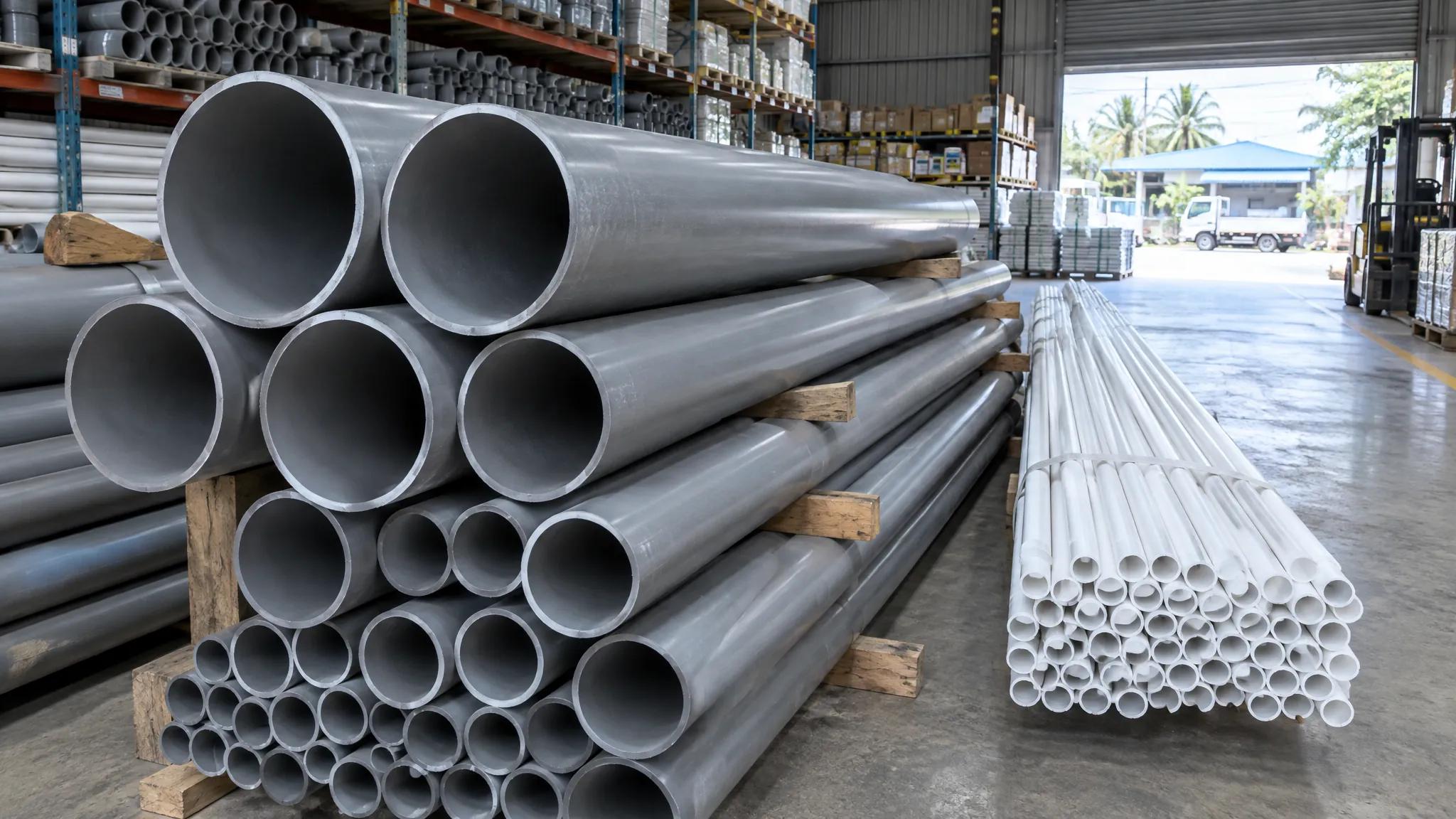
Schedule is a wall-thickness designation carried over from the steel-pipe world into PVC. The key thing to understand: at a given nominal size, all schedules share the same outer diameter — what changes is the wall thickness, and therefore the inner bore and the pressure rating. Schedule 40 is the standard, thinner-walled pipe; Schedule 80 has a thicker wall for higher pressure. Because the OD is identical, Schedule 40 and Schedule 80 of the same size use the same fittings and the same solvent-cement jointing — you can even mix them in a system. The trade-off with Schedule 80 is that the thicker wall eats into the bore, so a Schedule 80 pipe has slightly less internal flow area than a Schedule 40 of the same nominal size. More wall means more pressure and more material cost, but a little less flow.
Schedule ratings apply to rigid PVC — which is really uPVC; the uPVC vs PVC naming trap explains why the two names describe the same pipe.
Schedule 40 vs Schedule 80 — Side by Side
| Factor | Schedule 40 | Schedule 80 |
|---|---|---|
| Wall thickness | Thinner | Thicker |
| Outer diameter | Same as Sch 80 | Same as Sch 40 |
| Pressure rating | Lower | Higher |
| Internal bore / flow | Larger | Slightly smaller |
| Colour (common) | White | Grey (dark) |
| Cost | Lower | Higher |
A handy field cue: Schedule 40 PVC is commonly white and Schedule 80 is commonly dark grey, though colour is a convention, not a rating — always read the printed marking for the actual schedule and pressure.
Pressure Falls as Size Rises
One point that catches out first-time buyers: at a given schedule, the pressure rating decreases as the pipe gets larger. A ½" Schedule 40 pipe holds far more pressure than a 4" Schedule 40 pipe, because the same relative wall thickness carries less pressure on a bigger diameter. So "Schedule 40" is not a single pressure number — it's fundamentally a wall-thickness rule, and the actual pressure rating always depends on the specific pipe size. When you spec pressure PVC, don't just say "Schedule 40"; check the pressure rating for the specific diameter against your line's working pressure plus a surge margin. Temperature de-rates it too: PVC's pressure rating falls as temperature rises, and PVC is a cold-water material, so keep it well within its temperature limit.
When to Use Schedule 40 vs Schedule 80
Schedule 40 covers the vast majority of everyday jobs: cold-water supply and distribution, drainage and DWV, irrigation, rainwater, pool and spa lines, and electrical conduit — anywhere the pressure is moderate and cost matters. Schedule 80 steps in where the pressure is higher, or the line needs the extra mechanical strength and impact resistance the thicker wall gives: higher-pressure water, industrial and chemical process lines (within PVC's chemical range), and applications exposed to more physical stress. The decision is pressure-and-duty driven: use Schedule 40 unless the working pressure, the mechanical demand, or a spec calls for Schedule 80. Paying for Schedule 80 on a low-pressure drain is wasted money; using Schedule 40 where the pressure exceeds its rating is a failure waiting to happen.
Sourcing PVC pressure pipe or fittings?
Tell us the pressure, size, and standard — we'll spec the right PVC/UPVC pressure system with matched fittings.
Request a Quote
Impact, Burial, and Physical Strength
Pressure isn't the only reason to step up a schedule. Schedule 80's thicker wall also gives more impact resistance and mechanical strength, which matters where a pipe is exposed to knocks, vibration, or physical stress — an above-ground industrial run, a plant environment, or a line that gets handled roughly. For buried pipe, the soil load and burial depth factor in: Schedule 40 is fine for typical buried cold-water and drainage duty with proper bedding, while heavier loading or deeper burial may point to a thicker wall. As always with plastic pipe, sharp stones against the wall are the enemy — bed and surround the pipe with fine, stone-free material regardless of schedule. Choose the schedule for the pressure first, then confirm it also meets the mechanical and burial demands of where the pipe actually runs.
Common Schedule Mistakes
Reading "Schedule 40" as a pressure number. It's a wall-thickness rule; the actual pressure depends on the diameter. Always check the size-specific rating.
Running PVC on hot water. No schedule makes plain PVC a hot-water pipe — heat de-rates it sharply and it's cold-only. For hot lines use CPVC (PVC vs UPVC vs CPVC).
Over-spec'ing Schedule 80 everywhere. On a low-pressure drain or irrigation line, Schedule 80 is wasted money and less flow — use Schedule 40.
Mixing schedule and metric systems. A schedule fitting and a metric-class fitting have different dimensions; keep the whole run in one system.
Schedule vs Metric Pressure-Class (PN) Pipe
The schedule system is North American. Much of the rest of the world sizes pressure PVC by metric pressure class (PN) instead — PN10, PN16, and so on, where the number is the maximum working pressure in bar, and the wall thickness is set to achieve that pressure at a given diameter (an SDR-style relationship). The two systems solve the same problem — matching wall thickness to pressure — by different conventions. A Schedule 40 pipe and a PN-rated pipe are not directly interchangeable by name; you compare them by actual OD, wall, and pressure rating. When you source across regions, state which system you're working in — "Schedule 40" or "PN16 metric" — and match pipe and fittings within that system, because a schedule fitting and a metric fitting have different dimensions.
Jointing and the Marking
Both schedules join the same way — solvent cement welding with primer and PVC cement, which fuses pipe and fitting into one piece (see the wider PVC guide for technique). Because Schedule 40 and 80 share the OD, the same fittings and cement work for both. Always check the printed marking along the pipe: it states the material (PVC), the schedule (or pressure class), the size, the pressure rating, the standard, and — for potable lines — the approval. That marking is your on-site confirmation that the right schedule arrived; don't rely on colour alone, since colour is a convention. Read the marking against your order, especially on a pressure line where an under-rated pipe is a real hazard.
Sourcing PVC Pressure Pipe and Fittings
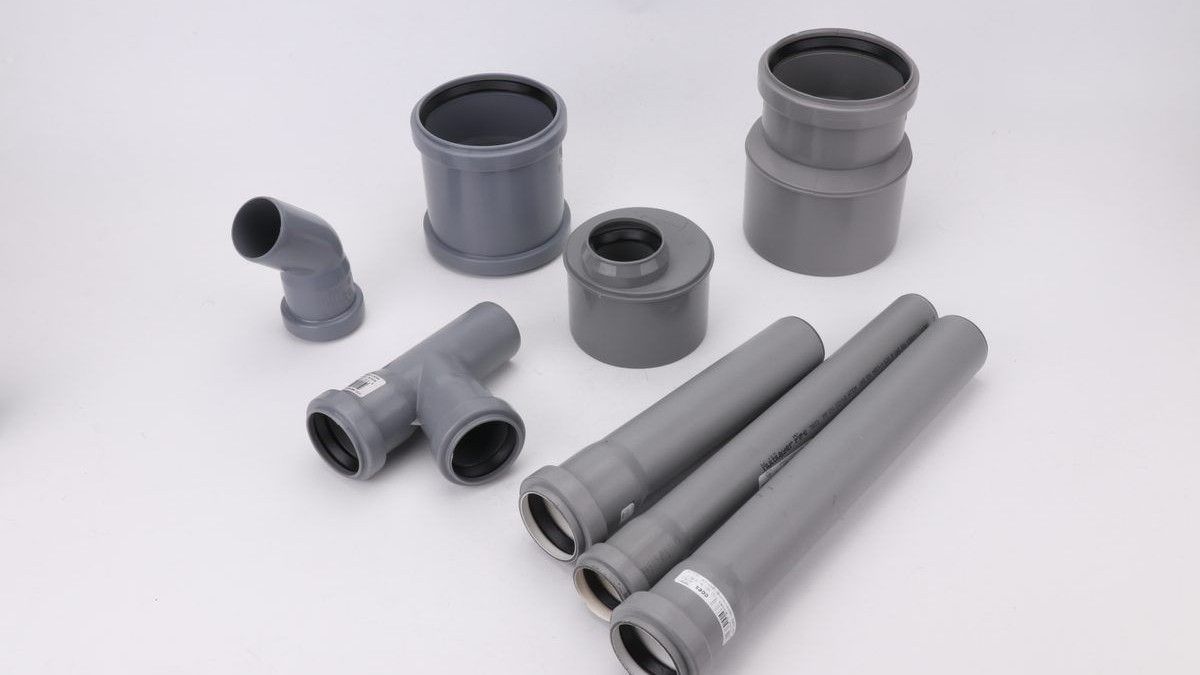
Whether your project works in schedules or metric pressure class, source the pipe and fittings as a matched, certified system so dimensions and pressure ratings agree. IFAN manufactures PVC and UPVC fittings and pressure components, alongside CPVC for hot lines and PPR, HDPE, PEX, and brass valves — so a whole cold-water, drainage, or pressure system can come from one factory, matched and certified, with no minimum order. Before ordering, confirm the pressure rating for your exact size and the certifications your market requires, and state clearly whether you need schedule or metric-class pipe so pipe and fittings match.
Frequently Asked Questions
What does Schedule 40 mean on PVC pipe?
Schedule 40 is a wall-thickness designation — the standard, thinner-walled PVC. At a given nominal size it shares the same outer diameter as Schedule 80 but has a thinner wall, a larger bore, and a lower pressure rating. It's the common choice for cold water, drainage, and irrigation.
Is Schedule 80 stronger than Schedule 40?
Yes — Schedule 80 has a thicker wall at the same outer diameter, so it holds more pressure and resists impact better. The trade-off is a slightly smaller bore (less flow) and higher cost. Use Schedule 80 where pressure or mechanical demand requires it, Schedule 40 for general cold and drainage lines.
Do Schedule 40 and 80 use the same fittings?
Yes — at the same nominal size they share the same outer diameter, so the same fittings and solvent cement work for both, and you can join them in one system. The difference is wall thickness and pressure rating, not the OD or the fitting interface.
Does Schedule 40 PVC have one pressure rating?
No — the pressure rating falls as the diameter increases. A small Schedule 40 pipe holds much more pressure than a large one. Always check the pressure rating for the specific size against your working pressure, and remember temperature de-rates PVC further.