
PVC Drainage Pipe Sizes: DN75 to DN315 — When to Use Each
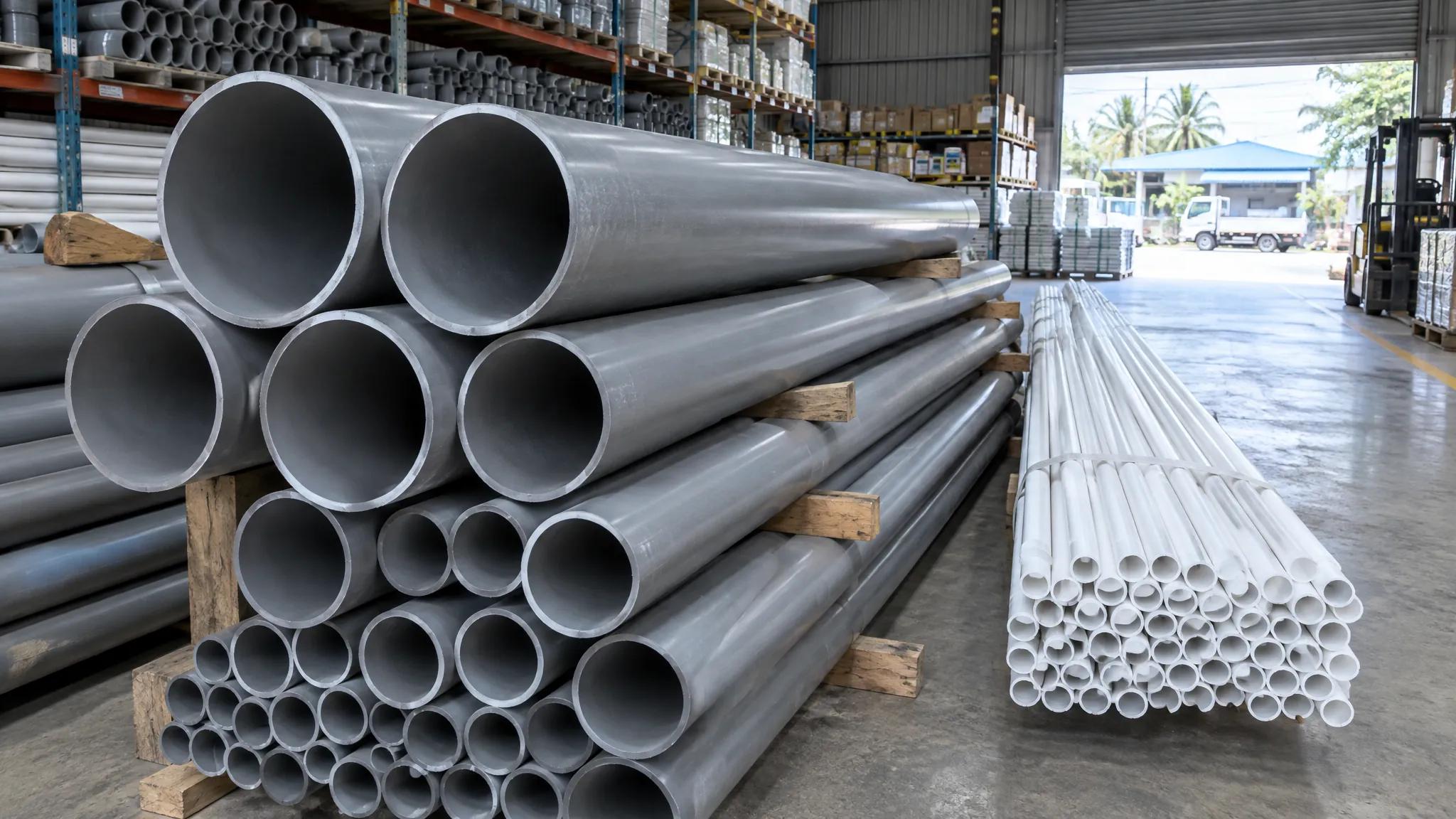
PVC drainage pipe is sold in a handful of standard diameters — DN75 through DN315 in metric markets, 2-inch through 12-inch in US-code jobs — and picking the wrong one costs more than picking the wrong material. This guide walks through every diameter actually made, the fixture load it handles under EN 12056 and IPC, the stiffness class that matters for buried runs, and the trade-offs that decide when 160 mm beats two 110 mm branches.
PVC drainage pipe is sold in a handful of standard diameters — 75, 110, 125, 160, 200, 250, 315 millimetres in metric markets, and 2, 3, 4, 6 and 8 inches in US-code jobs — and picking the wrong one costs more than picking the wrong material. Undersize a stack and it siphons every trap in the building; oversize a lateral and solids drop out and clog it inside a year. Either way the contractor gets the callback, not the manufacturer.
This guide walks through every PVC drainage size actually made — what each diameter is designed for, the fixture load it handles under EN 12056 and IPC, the wall thickness and stiffness class that matter for buried runs, and the trade-offs that decide when 160 mm beats two 110 mm branches. Use it as the pipe-sizing sheet before you place the container order — this article is the sizing spoke inside the complete PVC drainage guide.

Key Takeaways
- In metric standards DN = outside diameter in millimetres — a DN110 pipe measures 110 mm on the outer wall, not the bore.
- DN110 (4-inch nominal) carries a single WC, its branch, and up to 3–4 floors of stack drainage — it is the standard for residential and small commercial vertical runs.
- For a building drain leaving the property, jump to DN160 (6-inch) — the extra bore prevents the pipe filling more than half full at peak load.
- Buried pipe carries a stiffness class (SN2, SN4, SN8, SN16) — pick SN8 or higher under driveways, SN4 under gardens, never SN2 outside a shallow trench.
- Fittings are size-locked — a DN110 socket does not accept a DN125 spigot, and there is no adapter that makes both perform to spec.
- Order pipe in 4 or 6 metre lengths when the site allows — the joint count drops by a third versus 3 m, and every joint is a failure point.
How PVC Drainage Sizes Are Named
PVC drainage runs on two size systems and they do not agree with each other. Metric markets — Europe, most of Africa, Latin America outside Mexico's US-oriented zones, and China — use DN, and for drainage pipe DN equals the nominal outside diameter in millimetres. A DN110 pipe measures 110 mm across the outer wall; the bore depends on the wall thickness, which is set by the stiffness class. US-code jobs run on nominal pipe size in inches under ASTM D2665, where a "4-inch" DWV pipe is actually 114 mm outer diameter and a "3-inch" is 88 mm. The names line up loosely — DN110 ≈ 4-inch — but the pipes are not interchangeable, and the fittings never are.
Correct drain sizing only works with a properly sized trap — see how a P-trap seals against sewer gas and how to size it by fixture.
Not sure which vinyl family you are actually working with? Start with the PVC vs uPVC vs CPVC differences — temperature limits, cost order, and which cement each one needs.
The second decision is class. Above-ground drain-waste-vent (DWV) pipe is thin-walled, typically SDR 34–41 for gravity flow, and rated by fixture load rather than pressure. Buried pipe is thicker and carries an SN stiffness class (kN/m²) — SN2, SN4, SN8, or SN16 — that describes how it resists soil load without buckling. A pipe stamped "DN160 SN8" is 160 mm OD, structural, and rated for burial under a driveway; the same DN160 stamped SN2 is not — put it under a slab and it flattens.
This matters at the order stage because a metric quote and an inch quote often list the same diameter under different names, and a buyer paying by weight can end up with the wrong wall thickness. Ask the supplier for OD, wall, and either SDR or SN in writing — the naming system alone is not enough to define what you are actually buying.
The Complete PVC Drainage Size Chart
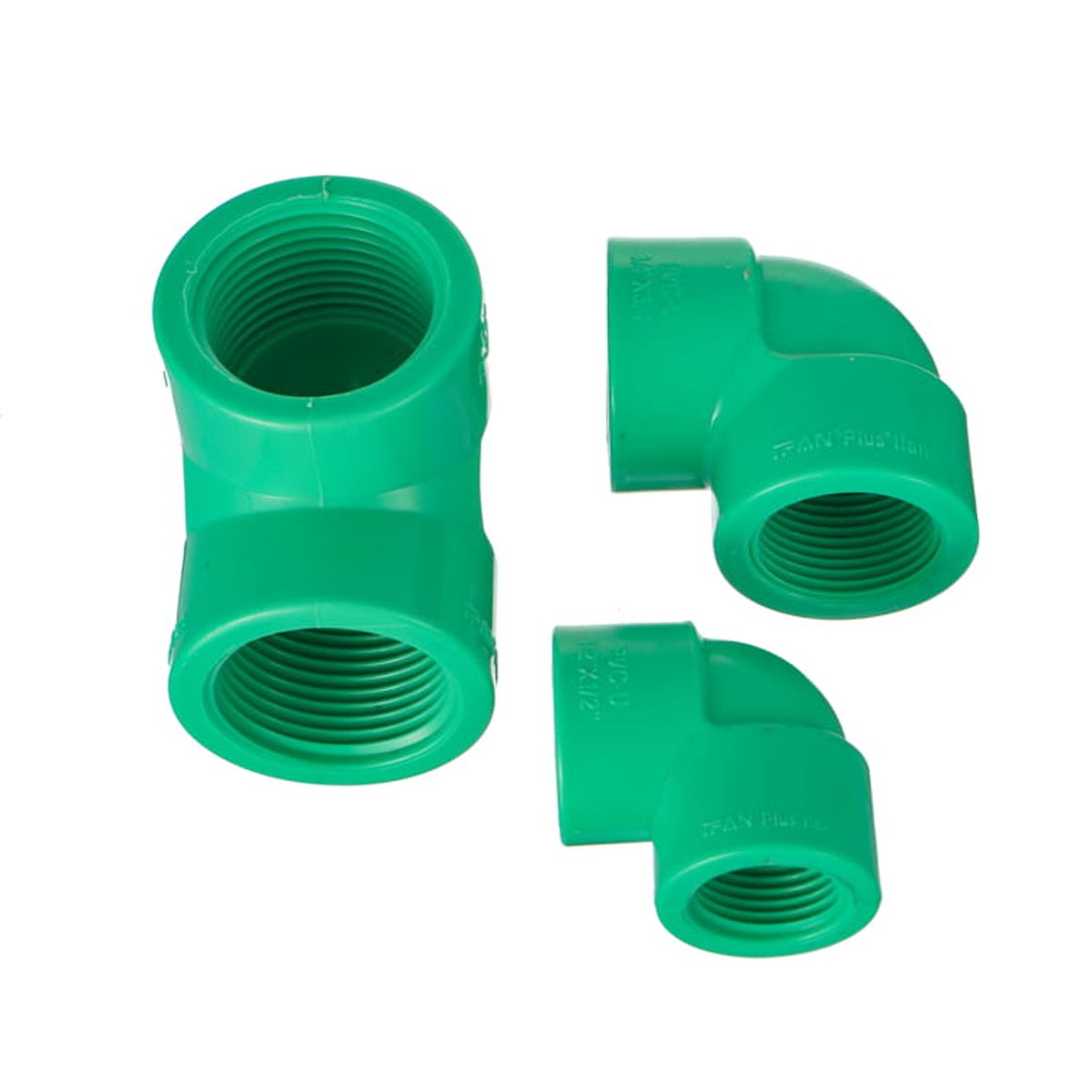
Below is the standard sizing table for uPVC drainage pipe under EN 1401 (buried sewer) and EN 1329 (interior DWV). The wall thicknesses shown are for the most common stiffness classes; heavier walls exist for deep burial. Weights are approximate for a 6 metre length in virgin uPVC at 1.42 g/cm³.
Standard uPVC drainage pipe dimensions (EN 1401 / EN 1329)
| DN (mm) | US nominal | Wall — SN4 buried | Typical use |
|---|---|---|---|
| DN50 / DN75 | 2" / 3" | 1.8 – 3.2 mm | Basin, shower and washing-machine branches; small-appliance stack |
| DN110 | 4" | 3.2 mm | Toilet run, vertical stack (up to ~4 floors), residential building drain |
| DN125 | – | 3.7 mm | Rare stack size; small commercial stack, less common than DN110/DN160 |
| DN160 | 6" | 4.0 mm | Building drain leaving the property; short sewer lateral |
| DN200 | 8" | 4.9 mm | Longer laterals; small-block collector; low-flow sewer main |
| DN250 | 10" | 6.2 mm | Municipal sewer, medium-density block; storm collector |
| DN315 | 12" | 7.7 mm | Main sewer, storm main, industrial effluent |
| DN400 – DN630 | 16" – 24" | 9.8 – 15.4 mm | Trunk sewer, storm trunk, industrial site drainage |
DN75 and DN125 sit outside most residential specifications, so distributors carrying a mixed container often skip them to keep SKU count low. Ordering DN110 and DN160 together covers 80 % of building drainage; adding DN200 covers most small municipal work.
Sizing by Fixture Load
Drainage sizing is not just about flow — it is about drainage fixture units (DFU), a code number that adds up the peak simultaneous discharge of every fixture on the run. Both the International Plumbing Code (IPC) Chapter 7 and EN 12056-2 use fixture-unit tables to decide the branch and stack diameter. Overshoot the DFU cap for a given diameter and the pipe fills more than half full, which slows the tail, backs up traps and pulls seals out.
A rough working set of fixture units under IPC: a lavatory basin is 1 DFU, a shower 2, a kitchen sink 2, a bathtub 2, a washing machine 3, and a water closet (toilet) 4. A single WC therefore uses up most of the DFU budget on a DN75 branch, which is why toilets always drop into DN110. Total the DFUs on the run and read against the table below.
Approximate DFU capacity by drainage diameter
| Diameter | Horizontal branch DFU | One-stack DFU (any floor) | Building drain DFU |
|---|---|---|---|
| DN50 (2") | 6 | 8 | 21 |
| DN75 (3") | 20 (no WCs) | 30 | 42 |
| DN110 (4") | 160 | 240 | 216 (¼" slope) |
| DN160 (6") | 620 | 960 | 700 |
| DN200 (8") | 1,400 | 2,200 | 1,600 |
Numbers rounded from IPC Table 710.1 and EN 12056-2. Local codes shift them slightly, so use these to specify the container mix and confirm the final size against the code the project files under. Anywhere the fixture count crosses a table row, jump to the next diameter — do not rely on running the smaller pipe fuller.
DN110 (4") — Toilet Runs and Building Stacks
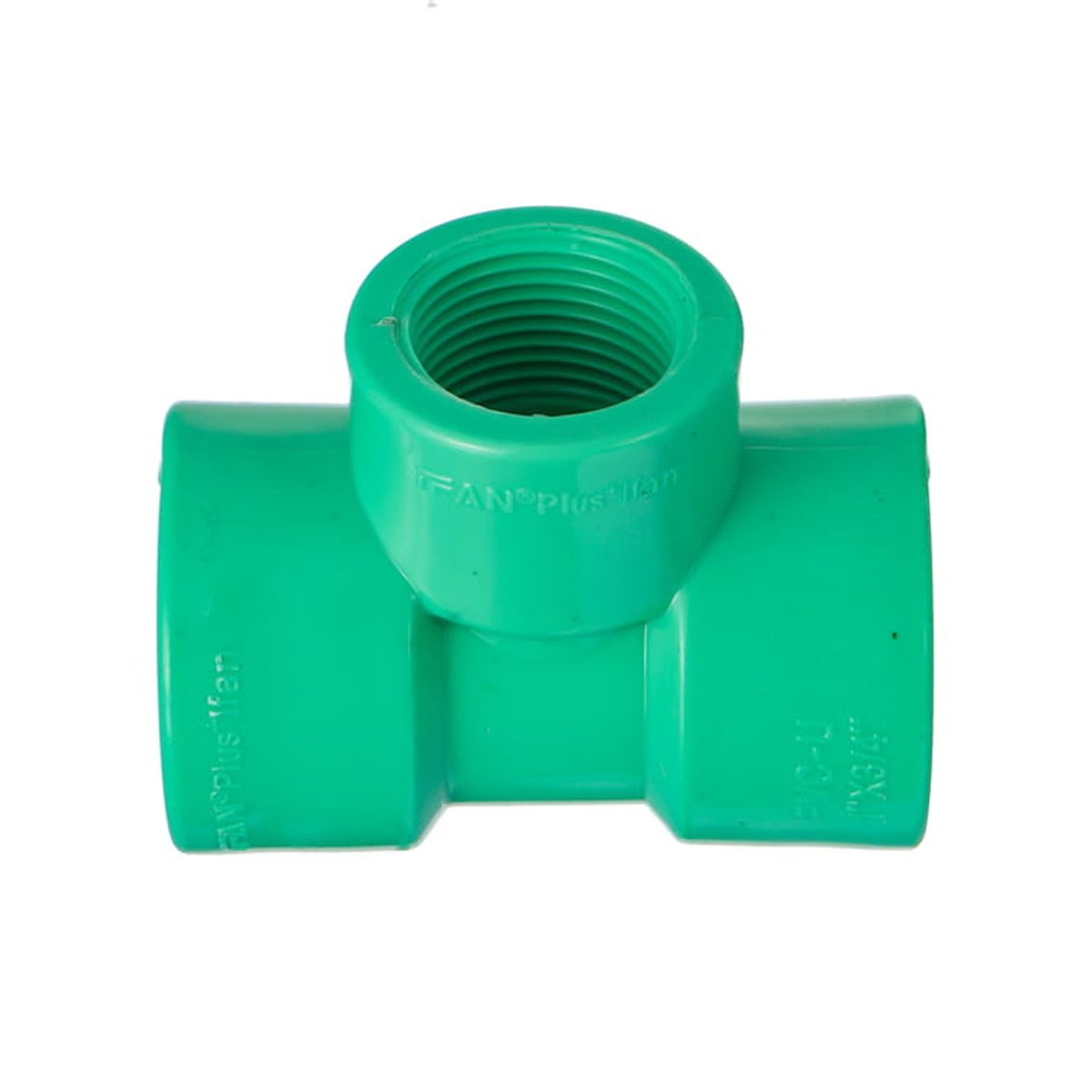
DN110 is the workhorse size in every drainage container that ships to a residential market. It carries a WC's discharge, the branches that combine into the stack, and the vertical stack itself for a typical three-to-four-floor building. Its DFU capacity leaves headroom — a two-bathroom flat rarely exceeds 20 DFU on the stack, so DN110 runs a fifth of full — which is why the tail cleans out reliably instead of glazing.
Where DN110 stops making sense is horizontally, once the run collects more than three floors of a mid-rise. At six floors the DN110 stack is still in code, but the horizontal building drain leaving the base needs to step up to DN160 to keep the water below half-depth. Buyers ordering for a container full of DN110 alone typically get a call two months later for DN160 offcuts — order both in the same shipment.
Ordering context: the container mix IFAN's export desk most often quotes for residential-market distributors runs weighted around DN110 and DN160 in a roughly 5-to-3 ratio, with DN200 for the sewer laterals and DN75 for appliance branches — that shape has matched the ten-year order pattern from African, Latin American and Southeast Asian wholesale customers. Landing a container without the DN160 sits the distributor with plenty of stack pipe and none of the pipe the sewer connection actually needs.
Ordering note: DN110 is the size where wall thickness variance quietly matters. A pipe stamped SN2 to save cost weighs about 15 % less than SN4 for the same length. On paper it is legal for interior DWV; installers welding it into a stack with fittings meant for SN4 walls report joints that back off on the first pressure test. If the container is going to a market where the same distributor sells for both above and below ground, order SN4 across the board and stop the substitution.
DN160 and DN200 — Building Drains and Small Laterals
Once the pipe leaves the building, sizes step up. DN160 handles the sewer lateral from the building drain to the municipal main for almost every residential and small commercial job under 700 DFU. Its cross-section is about 2.1 times DN110, which sounds moderate until you realise flow scales with the diameter to the 5/2 power — DN160 clears three to four times the discharge of DN110 at the same slope.
DN200 comes into play on longer laterals, on collectors that pick up two or three buildings, and on small industrial lines with high solids. On a lateral over roughly 30 m, the extra bore is worth the wall-thickness cost because grease and paper cake more slowly on the pipe wall, and the maintenance interval doubles compared to a DN160 pushed near its DFU cap. The trade-off is fittings: DN200 elbows are heavier, longer-radius, and take real space in a trench — a DN200 90° elbow is roughly 400 mm long against a DN160 elbow's 300 mm.
One buyer error worth naming: distributors ordering DN200 in the same wall spec as DN160 to keep the container weight balanced. The DN200 SN4 wall (4.9 mm) is heavier per metre than DN160 SN8 (6.2 mm looks bigger, but the shorter run of DN160 packs denser). Weight the container by length × wall, not by diameter alone, and the 40-foot payload comes out cleaner.
DN250, DN315 and Above — Sewer Main and Storm
DN250 and DN315 are the entry-level municipal sizes. They cover the collector under a residential street and the storm main leaving a small block, and they are where the specification switches from "drainage pipe" to "sewer pipe" in most tender documents. The size, wall and jointing are governed by ISO 4435 for unplasticised PVC sewer piping and, in the US, ASTM D3034 SDR 26 or SDR 35, both of which specify a heavier wall than DWV.
Above DN315, PVC starts losing to structured-wall pipe. A solid-wall DN400 SN8 is a thick, heavy piece that ships awkwardly and installs slowly; a structured-wall PVC or a PP-corrugated pipe at the same DN weighs half as much for the same stiffness, and municipal engineers know it. If your buyer segment is running networks above DN400, quote solid-wall PVC only for short runs where the tender specifies it, and offer structured-wall or HDPE for anything longer.
A container-loading note for these sizes: a 6 metre length of DN315 SN8 weighs roughly 40 kg. A 40-foot high-cube tops out at 26–27 tonnes of pipe before hitting road weight limits, so a container of nothing but DN315 lands well under volume — the rack shows 60 % empty. Mix diameters to fill the cube, and price the container on landed cost per metre by SKU rather than by weight.
Stiffness Class (SN) — What Matters for Buried Pipe
Above-ground DWV pipe carries no soil load, so wall thickness is a matter of pressure and impact resistance rather than structure. Below ground it flips: the pipe is a structural ring holding up whatever sits above it, and it is graded by ring stiffness in kN/m² — the SN class. EN 1401 defines four classes for buried sewer pipe:
- SN2 (2 kN/m²): shallow trenches, hand-dug, granular backfill, no traffic above. Rare in modern specifications — most engineers will not sign it.
- SN4 (4 kN/m²): gardens, footpaths, light-traffic residential streets. The default in most European and African municipal drainage specifications.
- SN8 (8 kN/m²): under driveways, car parks, medium-traffic streets, or wherever cover depth is shallow. The pipe rings survive point loads that flatten SN4.
- SN16 (16 kN/m²): heavy-traffic highways, industrial yards, deep burial over 4 m, or under load-transfer slabs. Specialist procurement — order to project only.
One position worth taking: if the same buyer distributes into both residential and commercial markets, stocking SN4 by default and running SN8 as a special order rarely holds up. Contractors mix specs, and the SN4 pipe ends up under a driveway. Distributors carrying two SKUs per diameter — SN4 for interior/backyard and SN8 for buried under any load — trade a little inventory complexity for a big drop in warranty claims.
Best For / Not For: Choosing the Right Size
| Diameter | Best for | Not ideal for |
|---|---|---|
| DN50 / DN75 | Basin, shower, kitchen sink, appliance branches | Any toilet run, any stack over 8 DFU |
| DN110 | WC branches, residential and small commercial stacks, short building drains | Building drain leaving a mid-rise, any sewer lateral over 15 m |
| DN160 | Sewer lateral to municipal main, mid-rise building drain | Interior stack (over-spec and hard to route); high-DFU commercial |
| DN200 | Long laterals, small collector, light industrial | Anywhere DN160 clears the DFU with margin — the fittings are heavier and cost more |
| DN250 / DN315 | Municipal collector, storm main, industrial effluent under 300 m | Trunk sewer over 500 m — structured-wall or HDPE ships and installs faster |
| DN400+ | Short heavy-flow runs where the tender specifies solid-wall PVC | Long municipal trunks — corrugated PP or HDPE wins on landed cost |
What IFAN Checks Before Loading a PVC Drainage Container
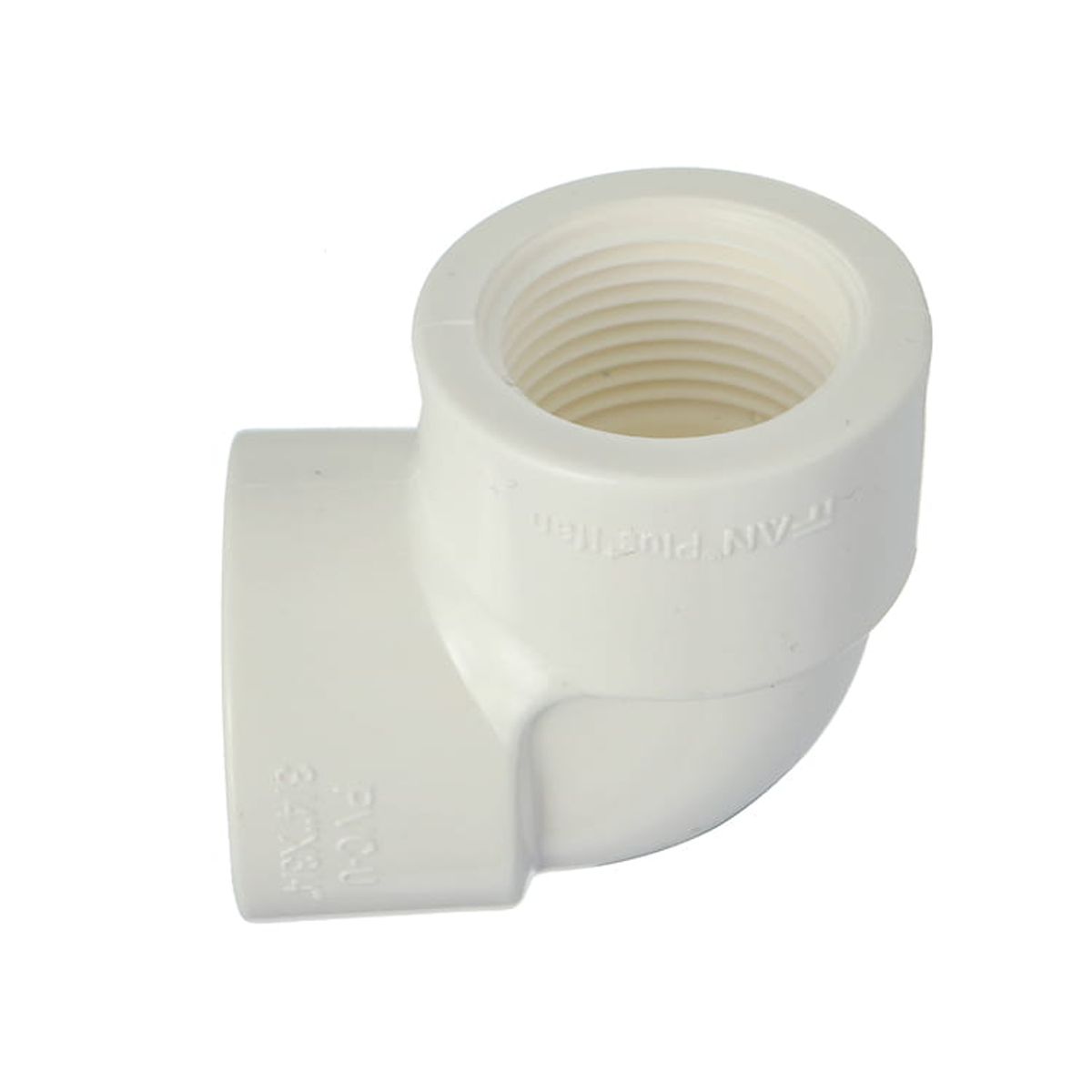
The uPVC / PVC Series at IFAN runs on the same batch-traceable QC as the pressure lines. Because drainage buyers usually order across many sizes in a single mixed container, the pre-shipment routine is set up around SKU-level verification rather than one hero test:
- OD, wall and length per SKU: outside diameter, wall at three clock positions, and effective length checked against EN 1401 for buried and EN 1329 for DWV, per sample under ISO 2859-1 Level II.
- Stiffness class stamped and verified: the print strip carries SN2 / SN4 / SN8 as ordered; SN class is confirmed by wall measurement against the class table, not just the pipe stamp.
- Socket geometry on fittings: elbow radii, socket depth and taper checked against the mating pipe OD to prevent field-day surprises with third-party pipe.
- Weight and packing per pallet: pipe bundles shrink-wrapped and end-capped; fittings crated and cross-referenced to the packing list so no SKU is silently under- or over-shipped.
- Container mix by cubic metres, not just weight: loading pattern designed to fill a 40-foot high-cube without overloading — the larger diameters are stacked on top of shorter bundles to reach payload without hitting road weight limits.
Third-party inspection from SGS, Bureau Veritas, or TÜV is welcomed on any order. For the general framework of what a per-shipment inspection report should show — sampling plan, dimensional data, material tests — the PPR pipe quality control checklist covers the same document, applied to drainage-grade uPVC.
Fittings Compatibility: Size Is Not Negotiable
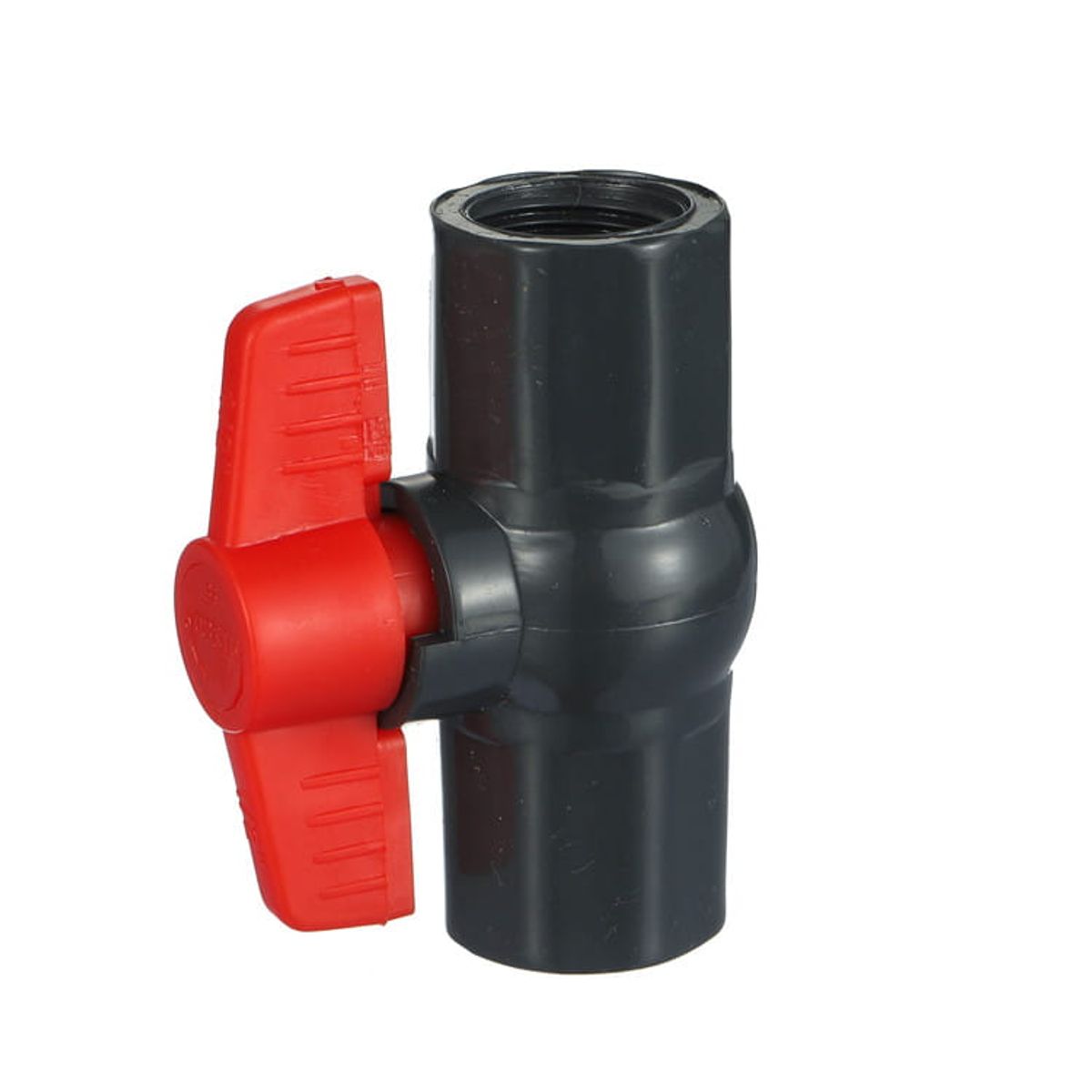
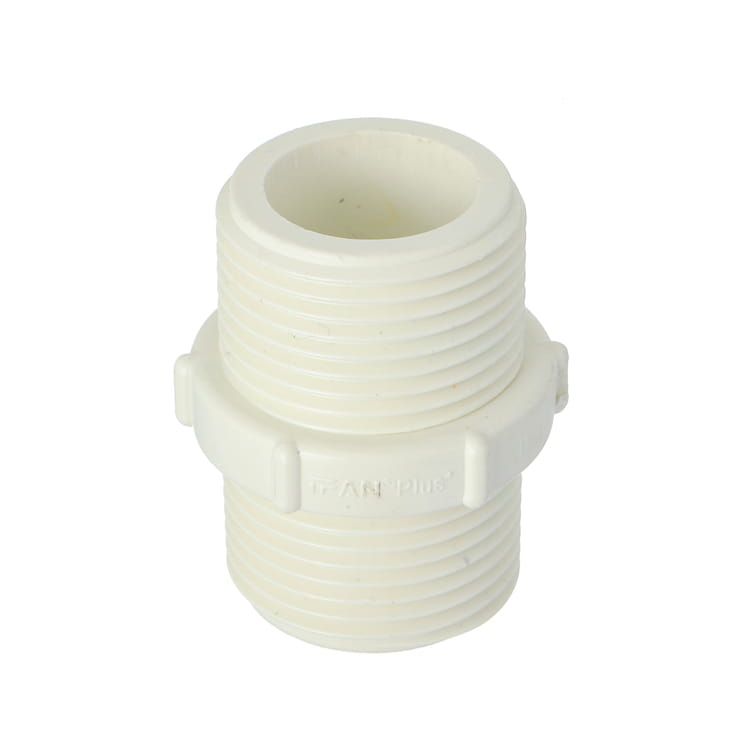
Every diameter of PVC drainage pipe has its own family of fittings — elbows, tees, wyes, couplings, reducers, cleanouts and traps — and they do not cross sizes. A DN110 socket accepts DN110 pipe (OD 110 mm within a plus-only tolerance) and nothing else. A DN125 reducer bridges DN125 to DN110, but there is no "close enough" fit between DN110 and DN125 sockets. Buyers hoping to save inventory space by dropping one intermediate size and using adapters usually end up with a stock of unused adapters and no time saved at the joint.
The elbow-radius question also matters for drainage. Long-radius elbows (roughly one and a half times the pipe diameter) slow flow less and clog less than the tight-radius elbows used in pressure systems. Any drainage line carrying solids — WC branches, kitchen sink laterals, industrial effluent — should be specified with long-radius elbows on the plan. Wyes (45° branches) beat sanitary tees at collecting side-fixtures for the same reason: the shallower angle keeps flow forward and reduces the pull on upstream trap seals.
On import, the fitting-to-pipe ratio in the container matters. A rule of thumb from mixed-order shipments: budget roughly one fitting per 1.2 metres of pipe on residential drainage, one per 1.8 metres on lateral and municipal work, and one per 2.5 metres on trunk main. Under-supply on fittings and installers cannibalise other sizes on site; over-supply and 20 % of the container sits in the warehouse for years.
Related in the PVC Drainage Cluster
Getting the diameter right is one decision in a longer chain. The related guides in this cluster cover the ones next to it:
- PVC DWV system design guide — the slope, venting, trap-arm limits and cleanout rules that turn a sized network into a working one.
- PVC vs concrete vs HDPE for sewer mains — where uPVC wins over concrete and HDPE (and where it does not) once diameter and depth are set.
- PVC drainage pipe installation — solvent cement, cure times, rubber-ring bell-and-spigot, and the joint tests that catch a bad fitting before the walls close.
Conclusion
PVC drainage sizing is not a spec sheet — it is a decision chain. Pick the diameter by fixture units, the stiffness class by burial depth, the fittings by the pipe you are actually specifying, and the container mix by the SKU spread your market will pull in the next quarter. Mix DN110 and DN160 as the backbone, add DN75 for appliance branches and DN200+ for the sewer lateral, and match wall thickness to the load the pipe will actually carry.
Before the next order, walk your last three project drawings and count the DFU on each stack and drain. If the pipe you shipped is running above half full at any stage, size up on the next container rather than hoping the schedule slows down — pipe that fills clean cleans itself, and pipe that runs at capacity does not.
Frequently Asked Questions
What size PVC pipe is used for toilet drainage?
A single toilet drops into a DN110 (4-inch) branch under both EN 12056 and the IPC. Smaller diameters carry solids poorly and stall on the first wax-seal replacement. DN110 also runs the vertical stack it feeds into.
Is a 4-inch PVC pipe the same as DN110?
Close, but not identical. DN110 is 110 mm outside diameter; ASTM 4-inch DWV is 114 mm outside diameter. The pipes look interchangeable and the fittings are not — a DN110 socket does not seat 114 mm pipe correctly and the joint leaks.
What stiffness class should I order for buried PVC sewer pipe?
SN4 for gardens, footpaths and light-traffic residential streets; SN8 under driveways and medium-traffic roads; SN16 for highways or deep burial. If the buyer distributes into more than one segment, stock SN4 and SN8 in parallel and never SN2.
Can I mix DN110 pipe with DN125 fittings?
Not directly. Use a DN125-to-DN110 reducer between the two. Any "close-fit" installer trick between the sockets fails on the first pressure test and leaks slowly for months before it shows.
What length should I order PVC drainage pipe in?
Six-metre lengths where the site allows — the joint count falls by a third versus 3 m, cutting failure points and install time. Use 3 or 4 m only where routing tight corridors or when handling equipment on site cannot take 6 m straights.
How do I calculate the right PVC drainage size for a project?
Sum the drainage fixture units (DFU) of every fixture on the run, look them up against the diameter table in IPC 710.1 or EN 12056-2, and pick the smallest diameter that keeps the pipe below half full at peak load. Any borderline case, size up.