
Pipe Fittings: Every Type, Material System & How to Order
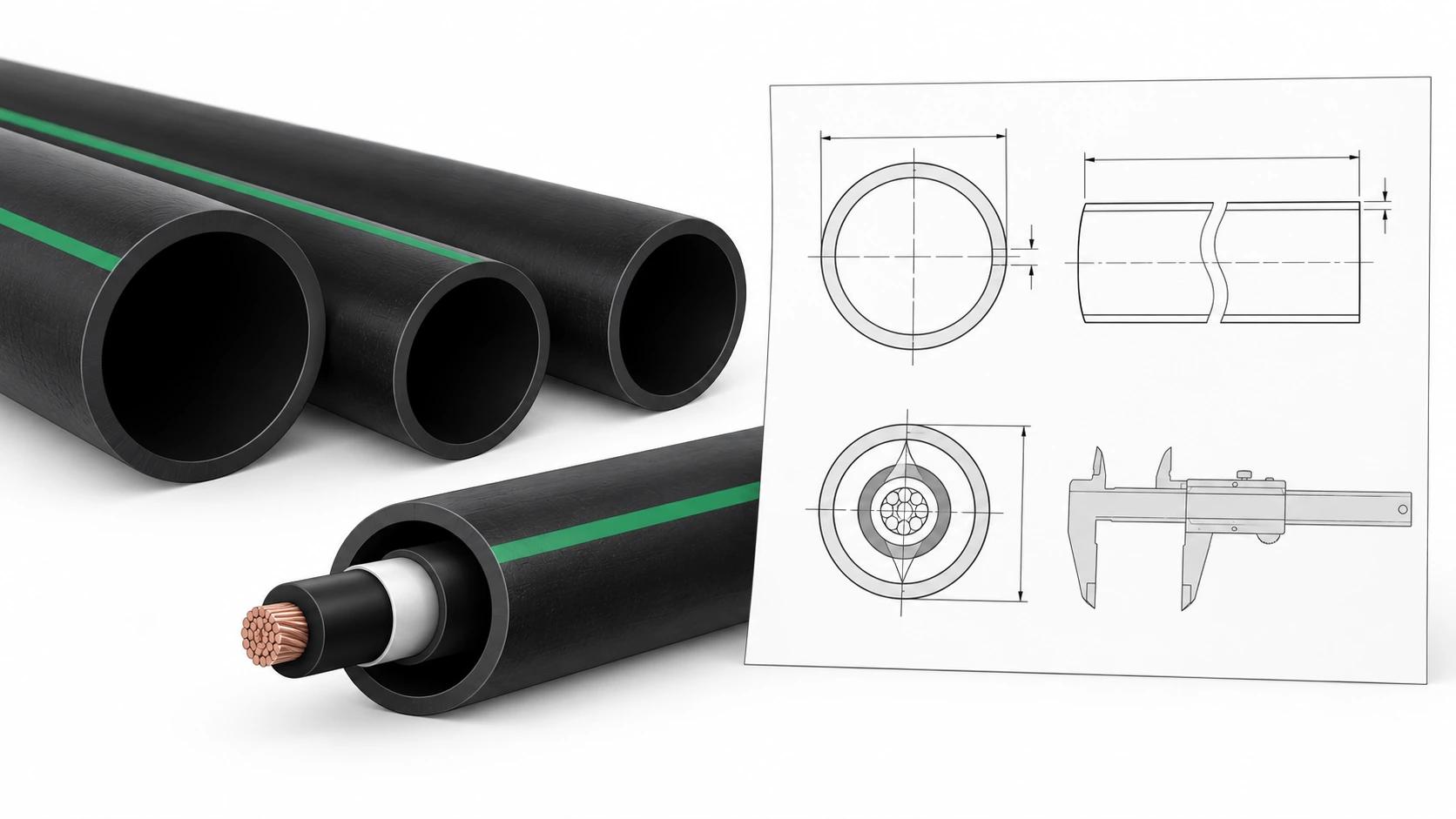
Pipe fittings are the grammar of a plumbing system — the elbows, tees, couplings, reducers, unions, and adapters that turn straight lengths of pipe into a working network. Get the vocabulary right and ordering is precise; get it wrong and the site stalls on parts that don't fit, don't seal, or don't match the pipe material. And "fittings" is really three questions stacked together: what shape does the run need, what material system does the pipe belong to, and how does the joint actually seal? This guide answers all three — every common fitting shape and its job, how fittings differ across PPR, PVC, CPVC, PEX, HDPE, and brass, the joining methods and thread standards, sizing rules, and how to put together a complete fitting order that assembles first time.
Key Takeaways
- Fittings are named by what they do to the run: change direction (elbow), branch (tee/wye), join (coupling), resize (reducer), open for service (union), transition (adapter), close (cap/plug).
- Every pipe material has its own fitting system — PPR fuses, PVC/CPVC cements, PEX crimps or expands, HDPE fuses, brass threads or compresses. They never mix.
- Threads come in two standards — BSP and NPT — that do not interchange.
- Match a fitting on four axes: shape, size/convention, material system, and pressure rating.
- Transition fittings (usually brass) are the only correct way to join two different pipe systems.
- Order pipe + every fitting shape + the joining consumables as one matched kit — mixed-source mismatches cause most callbacks.

The Fitting Shapes and What Each One Does
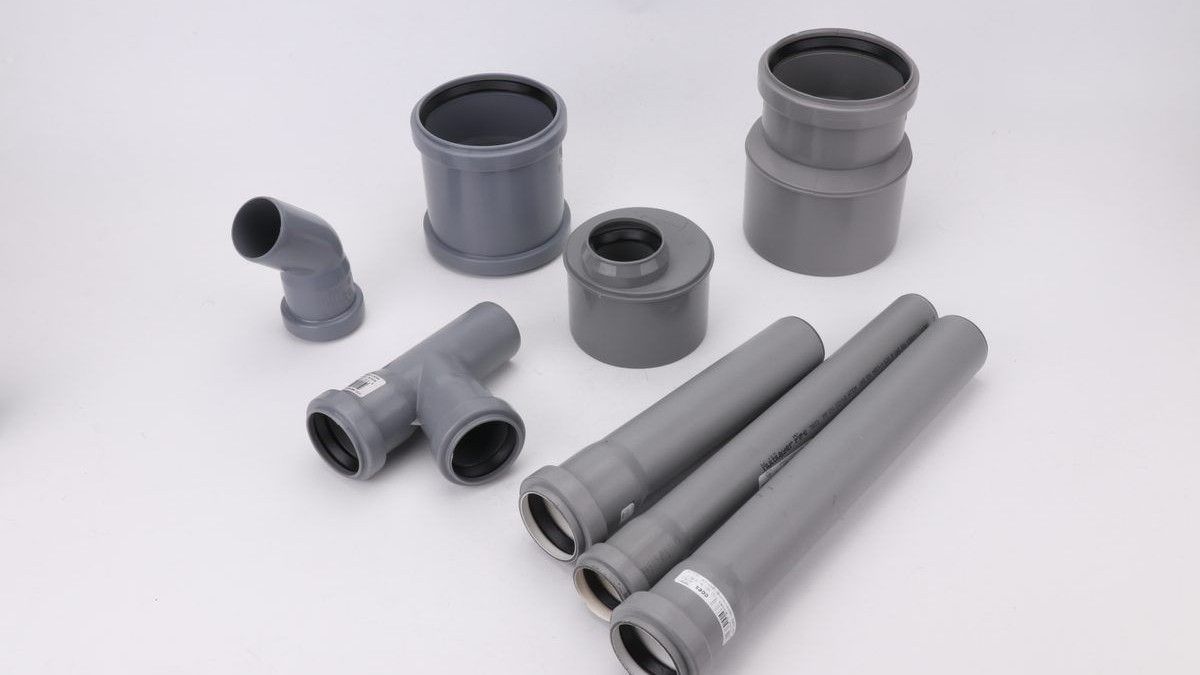
Whatever the material, the shape vocabulary is universal. Learn it once and every catalog in the industry reads the same way.
Couplings deserve a closer look of their own — the seven pipe coupling types and how to specify the right one are covered separately.
| Fitting | What it does | Watch out for |
|---|---|---|
| Elbow (90°, 45°) | Changes direction | Two 45s flow better than one 90 on drainage |
| Tee | Adds a 90° branch | Reducing tees change the branch size |
| Wye (Y) | Adds an angled branch | The drainage branch of choice — smooth flow |
| Coupling / socket | Joins two pipes straight | Slip couplings repair without moving pipe |
| Reducer / bushing | Steps between sizes | Concentric vs eccentric matters on horizontals |
| Union | A joint you can open for service | Place at every serviceable component |
| Nipple | Short male-threaded link | Close nipples leave little wrench grip |
| Adapter | Transitions method or material | The bridge between systems — spec carefully |
| Cap / plug | Closes an end (cap) or port (plug) | Pressure-rate them like any fitting |
| Flange | Bolted joint for large lines | Match drilling pattern and gasket standard |
| Cross | Four-way junction | Rare in supply; check code before using |
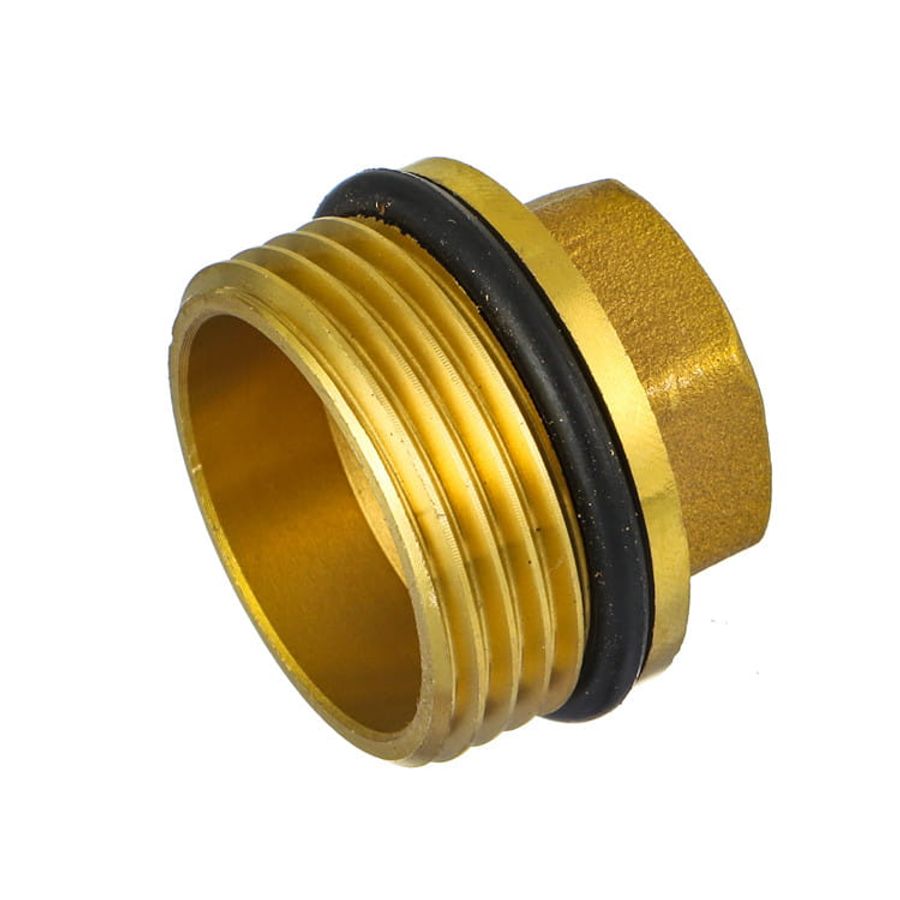
One Shape, Many Systems: Fittings by Pipe Material
Here is the rule that prevents the most expensive mistakes: a fitting belongs to its pipe's material system, not just to a size. A ¾" elbow exists in every material — but the PPR one fuses, the PVC one cements, the PEX one crimps, and none of them fits the others' pipe. Each system has its own guide on this site; the map below is the summary.
| System | How its fittings join | Deep-dive guide |
|---|---|---|
| PPR | Heat fusion — pipe and fitting melt into one piece | PPR fittings guide |
| PVC / CPVC | Solvent weld — each with its own cement | PVC fittings guide |
| PEX | Crimp, clamp, expansion, or push-fit | PEX fittings guide |
| HDPE | Butt fusion or electrofusion | HDPE fittings guide |
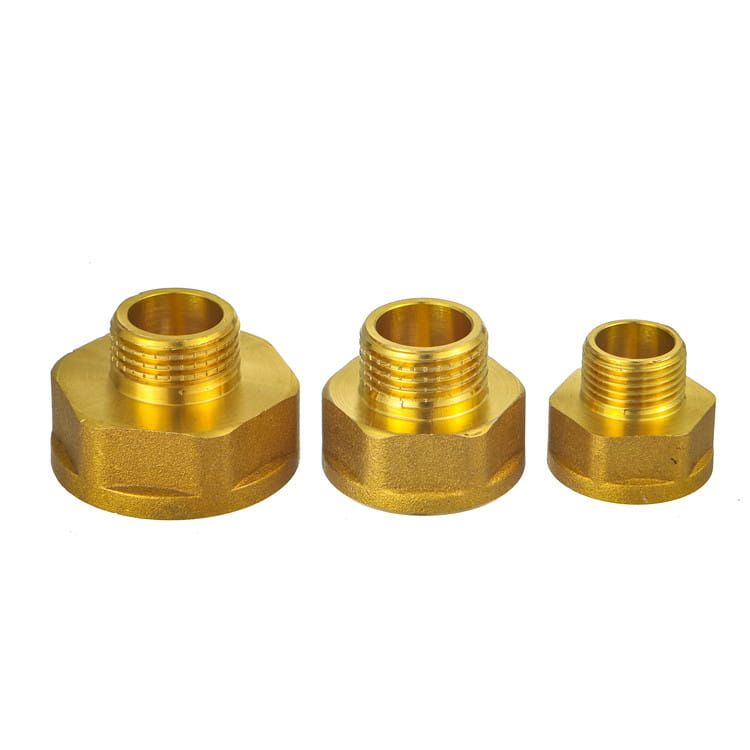
| Brass | Threaded, compression, or push-fit | Brass fittings guide |
Two practical consequences. First, the joining method sets your toolkit: a PPR crew carries a fusion welder, a PVC crew carries primer and cement, a PEX crew carries a crimp or expansion tool. Second, drainage and pressure fittings differ within the same material — a PVC DWV tee has flow-directing sweeps and no pressure rating, while a PVC pressure tee is built to hold it. Same material, same shape name, different part.
What are 10 materials commonly used in plumbing fittings?
Ten cover almost every fitting sold today: five plastics — PVC, CPVC, PP-R, PE/HDPE and PEX — and five metals — brass, copper, stainless steel, malleable (galvanized) iron and ductile iron. Each material has its own product standard, its own joining method and its own pressure-temperature envelope, and a fitting is only "correct" when its marking carries the same standard as the pipe it joins. The table gives the current edition of the standard you should see on the fitting or its datasheet:
| Material | Product standard (current edition) | Working pressure at 20 °C (bar) | Max continuous temp (°C) | Joint |
|---|---|---|---|---|
| PVC (Sch 40/80) | ASTM D1785-21a (pipe); D2466 / D2467 (fittings) | Sch 40 ½": ~41; falls with size | 60 | Solvent weld (ASTM D2564-20(2024) cement) |
| CPVC | ASTM F441/F441M-23 (pipe); F438 / F439 (fittings) | As PVC at 20 °C; derated above | 93 | Solvent weld (CPVC cement) |
| PP-R | ISO 15874-3:2013 + A1:2018 (fittings); 15874-2:2013 + A1:2018 + A2:2022 (pipe) | PN10–PN25 by SDR | 70 (95 short-term) | Heat fusion |
| PE / HDPE | ISO 4427-3:2019 (fittings); 4427-2:2019 (pipe) | PN6.3–PN25 by SDR (PE100) | 40 (potable rating) | Butt / electrofusion, compression |
| Copper & brass (capillary, compression, press) | EN 1254-1 / -2 / -7:2021 | 16 (PN16 class typical) | 110 (typical potable hot-water rating) | Solder/braze, compression, press, thread |
| Stainless steel (cast 304 / 316) | ASTM A351/A351M-24 (CF8 / CF8M castings) | Class 150 (~19.6) to Class 3000 threaded | 400+ | Thread, weld, flange |
Same fitting, three standard families: how to read the marking
This is the part no retail guide explains. The same 25 mm PP-R elbow can be made to ISO 15874, to DIN 8077/8078, or to a GB national standard, and a Sch 40 PVC tee to ASTM D2466 is not the same socket as a PN16 metric PVC tee to ISO 1452 — inch-nominal and metric-OD sockets differ by up to 2 mm and will not solvent-weld together. A compliant fitting carries, moulded or printed: the standard number, the size in that standard's convention (¾" or DN20 or d25), the pressure class (Sch 40, PN16, SDR 11, Class 150), the material grade (PVC 1120, PE100, CW617N) and, for potable use, the certification mark (NSF/ANSI 61, WRAS, ACS, KIWA). When a marking is missing one of those five items, you cannot prove the fitting matches the pipe — which is the buyer's check before a container, not the installer's problem on site. The ISO / ASTM / DIN standards map lists which family each market specifies; the material compatibility guide covers what can and cannot be joined across families.
Threaded Fittings: BSP vs NPT, Male vs Female
Threads deserve their own section because they cross every material and cause the most silent failures. Two standards dominate: BSP (British Standard Pipe — Europe, Middle East, Asia, Africa, Australia) and NPT (National Pipe Taper — North America). Their thread angles and pitches differ, so a BSP male will not seal correctly in an NPT female even when the diameters look close — it binds, or it leaks under pressure weeks later. Within each standard, specify gender (male/external or female/internal) and form: tapered threads seal on the thread itself with tape or compound; parallel threads seal on a washer or O-ring and no amount of tape fixes a missing washer. A complete thread callout reads like "½" BSP female, parallel" — four facts, no ambiguity. On plastics, one more rule: plastic threads crack under metal-thread torque. Hand-tight plus a modest turn is the limit, and molded plastic-to-metal transition adapters beat cutting threads on plastic every time.
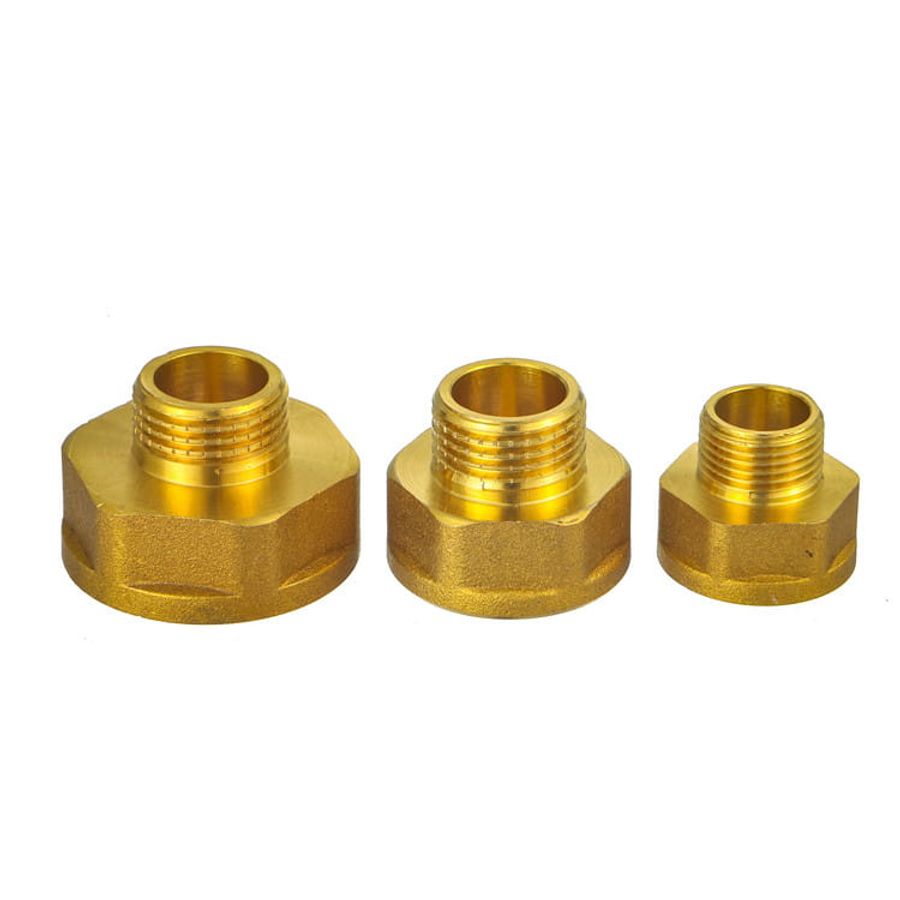
Transition Fittings: Where Two Systems Meet
Real buildings mix pipe systems — HDPE at the boundary, PPR or PEX inside, PVC for drainage — and every junction between systems needs a purpose-made transition fitting, almost always with a brass core. The common ones: a PPR-to-brass insert fitting (a brass thread molded into a PPR body) to connect valves, meters, and appliances; a PEX-to-thread adapter (crimp or expansion one side, BSP/NPT the other); a PVC male/female threaded adapter from solvent-weld to thread; and HDPE stub ends with backing flanges or transition couplings at the service entry. What never works: improvising — cementing unlike plastics, threading into unthreaded sockets, or relying on sealant to bridge a dimensional mismatch. The transition points are also where galvanic and grade rules bite: on potable systems the brass in every transition should be lead-free and dezincification-resistant, matching the valves — one under-spec adapter undermines an otherwise compliant system.
Joining Methods at a Glance
Across all systems there are really five ways a fitting grabs a pipe, and each has a personality. Solvent weld (PVC/CPVC): fast and cheap, chemically fuses into one piece — but it's permanent, needs cure time before pressure, and each material demands its own cement. Heat fusion (PPR, HDPE): the strongest joint of all, pipe and fitting become literally one polymer — at the price of a welder, power on site, and trained hands. Mechanical (PEX crimp/clamp/expansion, compression on copper and some plastics): no chemicals, no heat, instant pressure-readiness, demountable in some forms — but every joint depends on the ring, ferrule, or sleeve being the right part, correctly gauged. Threaded: universal for valves, meters, and equipment, demountable by design — but every thread is a potential leak path that lives on sealant quality and correct torque. Flanged: the serviceable joint for large diameters and pumps — bolted, gasketed, and rebuildable. A practical heuristic: permanent runs favour welded/fused joints; anything you'll ever service gets a union, flange, or mechanical joint on each side. The count of serviceable joints, not the total joint count, is what determines how maintainable the system is ten years in.
Special-Purpose Fittings Worth Knowing
Beyond the standard shapes, a handful of specialist fittings solve specific problems — and knowing they exist saves improvisation. A street elbow has one male and one female end, so it nests directly into another fitting where space is tight, saving a coupling and 40 mm of run. A sanitary tee and a wye + 45 both make a drainage branch, but they are not interchangeable: the sanitary tee suits vertical drops, while horizontal drain junctions want the wye's sweep — codes are specific about which goes where. A dielectric union separates dissimilar metals (copper to steel, for example) with an insulating ring so galvanic corrosion doesn't eat the joint; anywhere two metals meet in water, it's the difference between decades and years of service. Expansion offsets and loops — built from ordinary elbows — absorb the thermal growth of long hot runs so the stress never lands on a fitting socket. And tapping saddles clamp onto an existing main to add a branch without cutting the line, the standard way services join HDPE and PVC mains. None of these appears on a basic schedule until the day the drawing meets a real wall, a real main, or a real water heater — which is exactly when a complete catalog matters.
Metal Fittings Beyond Brass
Two other metal fitting families still matter in the wider "pipe fittings" world, even as plastics dominate new plumbing. Malleable and galvanized iron fittings — the classic banded elbows and tees — serve threaded steel pipe: gas lines, compressed air, legacy water systems, and structural uses like railings. On water duty they inherit steel's corrosion clock, which is why most water-side galvanized work today is replacement rather than new install. Stainless steel fittings (304/316) take over where corrosion, hygiene, or temperature rule out everything else: food and beverage lines, chemical duty, coastal exposure, and high-spec commercial plant. They cost several times a brass equivalent, so they appear where the duty demands them, not by default. For everyday potable plumbing, the practical metal remains lead-free DZR brass — at the valves, meters, and transitions — with iron and stainless reserved for their niches. The material logic is the same everywhere: match the fitting metal to the fluid, the pipe, and the corrosion environment, never just to the thread that happens to fit.
Sizing: the Four-Axis Match
A fitting fits when four axes line up. Size and convention: nominal (inch) and metric-OD systems coexist — a ½" nominal fitting and a 20 mm fitting are not the same part, so order pipe and fittings in one convention. Material system: as above — the fitting must belong to the pipe's family, in the right sub-family (CTS vs IPS in CPVC, PN class in PPR, SDR-matched electrofusion in HDPE). Pressure and temperature rating: the fitting must meet the line's rating at its working temperature; a Schedule 40 fitting on a Schedule 80 line caps the whole run. Standard: the fitting should carry the same product standard as the pipe (ASTM, EN, ISO as your market requires) plus the potable approval where it touches drinking water. Reducers deserve a note: step down through standard increments rather than jumping four sizes in one fitting, and on horizontal drainage prefer eccentric reducers that keep the pipe crown level so air doesn't pocket. When in doubt, the pipe's own maker lists exactly which fittings match — the safest spec is pipe and fittings from one catalog.
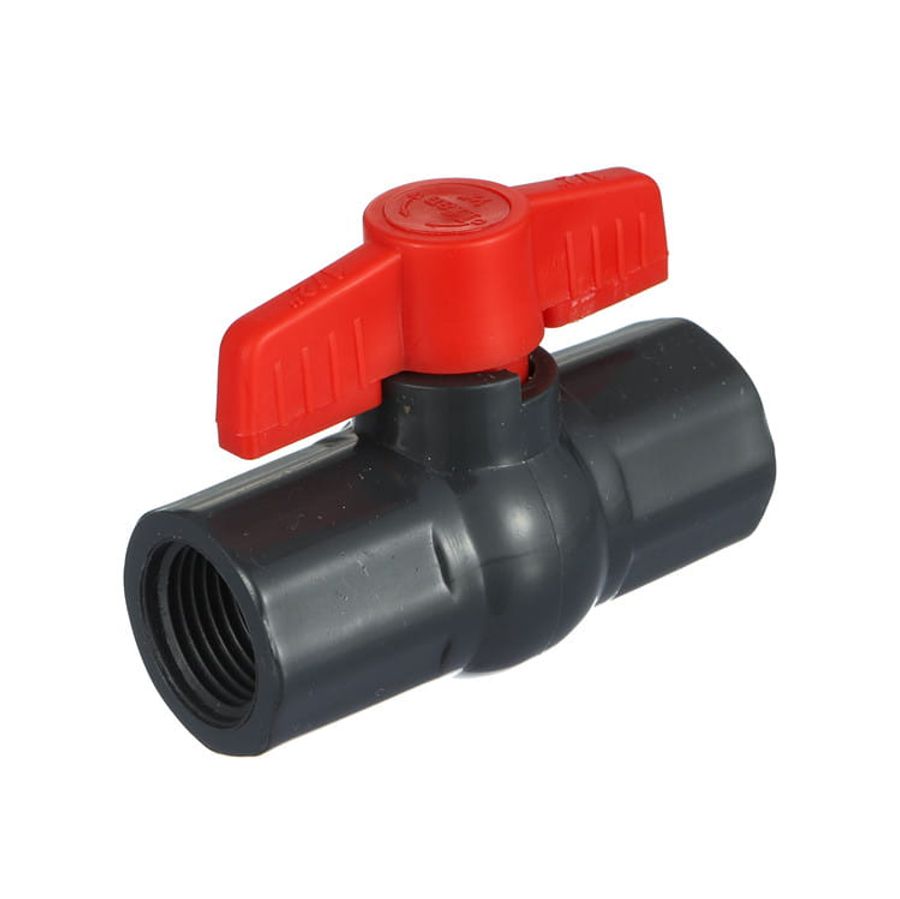
What are the three types of pipe fittings?
Grouped by how they join, there are three: threaded (BSP or NPT, demountable), bonded (solvent-welded PVC/CPVC and heat-fused PP-R/HDPE, permanent) and mechanical (compression, crimp, push-fit, flanged — no heat or chemicals). Every fitting shape in the table at the top of this article exists in all three families; the family is set by the pipe material, not by the shape.
What are the four types of fittings by function?
By what they do to the run: direction (elbows, bends), branching (tees, wyes, crosses), connecting (couplings, unions, adapters, nipples) and sizing or closing (reducers, bushings, caps, plugs). A fitting schedule counted in those four groups is the fastest way to check an order for gaps.
How do I tell if I have PEX or PVC?
PEX is flexible tubing, usually red, blue or white, bends around corners without fittings, and is joined with brass or plastic fittings under a crimp ring or expansion sleeve; its print line reads "ASTM F876/F877" and "PEX". PVC is rigid, white or grey, runs in straight lengths with glued socket fittings at every turn, and is printed "ASTM D1785" (pressure) or "ASTM D2665" (DWV) with a schedule number. Rule for repairs: if the pipe bends by hand, order PEX fittings; if it needs a saw, order PVC fittings and cement — and never the other way round. Size conventions differ too: PEX is copper-tube-size, PVC is iron-pipe-size, so a "½-inch" fitting from one family will not fit the other.
How to Build a Fitting Order That Assembles First Time
Walk the drawing line by line and count events, not guesses: every direction change (elbows — and whether 90° or 2×45°), every branch (tees/wyes, with reducing sizes noted), every size step (reducers), every serviceable component (unions or flanges either side), every system junction (transition adapters), every dead end (caps). Add the joining consumables to the same order — cement and primer per material, crimp rings and the go/no-go gauge, fusion sockets — because a site with fittings but the wrong glue is still stopped. Then add a sane spare margin: 5–10% on high-count small fittings (elbows, couplings), at least one spare of anything that would halt work if broken. The reason to order the whole kit from one manufacturer isn't convenience alone — it's that one catalog guarantees one sizing convention, one standard, and matched sub-families across pipe, fittings, valves, and transitions. That's how IFAN structures its product range across PPR, PVC/CPVC, PEX, HDPE, and brass: the elbow, the pipe it joins, and the valve downstream all come dimensionally matched, which is exactly what removes the "close but won't seal" class of callbacks.
Need a complete fitting schedule quoted?
Send the drawing or the counts — we'll quote every shape, size, and material, with valves and consumables matched, from one source.
Request a QuoteCommon Fitting Mistakes
Mixing material systems. A PVC fitting on CPVC, PEX fittings on the wrong grade, cement across unlike plastics — each looks close and fails. One pipe, one system.
Mixing thread standards. BSP into NPT binds or leaks. State standard, size, gender, and form on every threaded item.
DWV fittings on pressure lines. Drainage fittings aren't pressure-rated. Same shape name, different part.
Improvised transitions. Two systems meet only through a purpose-made (usually brass) transition fitting — never sealant and hope.
Forgetting the consumables. Fittings without the right cement, rings, or gauge stop the site just as surely as missing parts.
Any threaded fitting needs the thread sealed correctly — see the PTFE thread seal tape guide for wrap direction and count.
Frequently Asked Questions
What are the main types of pipe fittings?
By shape: elbows (change direction), tees and wyes (branch), couplings (join straight), reducers and bushings (change size), unions and flanges (serviceable joints), nipples (short threaded links), adapters (transition method or material), and caps/plugs (close ends). Every shape exists in each pipe material — PPR, PVC/CPVC, PEX, HDPE, brass — as its own non-interchangeable system.
Can fittings from different pipe materials be mixed?
No — each material has its own fitting system and joining method (PPR fuses, PVC/CPVC cement with their own glues, PEX crimps or expands, HDPE fuses, brass threads). Where two systems must meet, use a purpose-made transition fitting, usually with a brass core — for example a PPR-to-brass insert or a PEX-to-thread adapter. Improvised cross-material joints fail.
What's the difference between BSP and NPT fittings?
They're the two dominant thread standards — BSP across Europe, the Middle East, Asia, Africa, and Australia; NPT in North America — with different thread angles and pitches, so they do not interchange. A complete thread spec states the standard, size, gender (male/female), and form (tapered seals on the thread with tape; parallel seals on a washer or O-ring).
How do I order pipe fittings for a project?
Walk the drawing and count events: every direction change, branch, size step, serviceable component, system junction, and dead end becomes a fitting line. Add the joining consumables (cement, rings, gauges) to the same order, plus 5–10% spares on high-count items. Order pipe, fittings, and valves from one catalog so sizing convention, standard, and sub-family all match.