
PPR Pipe MOQ: Samples and Payment Terms for One Container

Why PP-R suppliers quote one container, not a piece count — stowage arithmetic for DN20–DN160, what samples settle, and the UCP 600 rules on payment.
You asked a PP-R factory for its MOQ and got back "one container, mixed sizes." It reads like a dodge. You wanted a number per size — 2,000 metres of DN20, 500 elbows — and instead you got a shipping unit, which tells you nothing about what to put in your first order.
It is not a dodge, and this article is about why. For pressure pipe, the minimum order is not a commercial policy a salesman can look up. It is a volume problem set by the geometry of the box, and the honest answer changes with every size mix you propose. What nobody will hand you — but what you can compute in about ten minutes — is the ceiling that mix runs into. Once you have that, the sample question and the payment question both become answerable.
Key takeaways
- "One container" is a real answer, not an evasion. IFAN's published MOQ is one container with mixed sizes, and the same applies to OEM orders. What no supplier publishes is a per-SKU piece minimum, because that number is a function of your mix.
- You can compute your own ceiling. A 20 ft container holds roughly 33 m³. At a conservative square-packing envelope, that is about 82,500 m of DN20, 52,800 m of DN25, or 13,200 m of DN50 — before nesting. The stowage table below runs the whole DN20–DN160 range, and it is also where you find out that 2,000 m of DN110 is three quarters of your box.
- Pipe is bought by the metre, fittings by the piece. That unit mismatch is what breaks quotes, and under a documentary credit it can cost you the payment outright.
- UCP 600 sub-article 30(b) gives you a 5% quantity tolerance — unless your credit states quantity as a piece count. Mixed pipe-and-fitting loads walk into this constantly.
- Samples verify a design, not a batch. What speaks for the container is the per-shipment batch certificate and, if you want it, third-party inspection.
- Sort ISO 15874-2 before the sample leaves the factory. Dimensions, the 2.0 mm fusion wall and marking are desk checks; melt flow, reversion, impact and short pressure runs need a lab; the 1000 h and 8760 h tests only a type-test report can answer.
- Three things IFAN does not publish: per-SKU minimums, how many sample pieces are supplied at no charge or who covers their freight, and payment splits. This page says so plainly rather than inventing them, and tells you how to pin each one down on the proforma invoice.
On this page
- Why no PP-R factory can answer "what is your MOQ?" in one number
- The real floor: what one 20 ft container physically holds
- Building a mixed container: writing a size mix a factory can price
- What a sample round can settle — and what it cannot
- Sample acceptance protocol: ISO 15874-2 checks you can run vs lab tests
- Payment terms: the UCP 600 rules that decide whether you get paid
- What we check, what we publish, and where we stop
Why No PP-R Factory Can Answer "What Is Your MOQ?" in One Number
Search the term and you get minimum order quantity as an inventory-management concept: break-even runs, margin protection, how to negotiate one down. Measured on 11 August 2026, the live top twenty for this query was almost entirely inventory-software marketing — one vendor alone held nine of the twenty positions — and not a single page on the first screen was about PP-R at all.
That literature is not wrong, it is answering a different question. It treats MOQ as a policy: a number the supplier chooses, defends, and occasionally waives. For a moulded product with one SKU and a carton count, that model holds.
Why pressure pipe breaks the policy model
A PP-R supplier is not selling you one SKU. IFAN lists over 3,000 PP-R SKUs across DN20–DN160 in PN12.5–PN25, in green, white, grey or a custom colour, plus elbows, tees, couplings, valves, composite pipe and floor-heating components. A distributor's first container is never one item. It is thirty to eighty line items, and the quantities interact: every metre of DN63 you add removes several hundred metres of DN20 you could have carried.
So a per-SKU minimum would be meaningless on its own. "Minimum 1,000 m per size" is simultaneously too high for a size you want as a trial and too low to be worth extruding as a standalone run. The constraint that actually binds is the one the salesman quoted you: the container has to be full, and it has to be worth shipping.
What "mixed sizes OK" actually transfers to you. It is a concession and an obligation at once. The supplier stops dictating the split — but that means you now own the job of building a mix that fills the box. Most first-time importers underestimate this and send a list that fills 60% of a container, then discover the per-metre price they were quoted assumed a full load.
What this means for the question you actually asked
If you came here for a table of per-SKU minimums, you will not find one here, and you should be sceptical of any page that gives you one for a factory it does not own. IFAN does not publish per-SKU tiers and they are not derivable from any public source, so stating them would mean inventing them. What follows instead is the arithmetic that produces your own ceiling — more useful, because it is specific to the mix you are actually considering.
The Real Floor: What One 20 ft Container Physically Holds
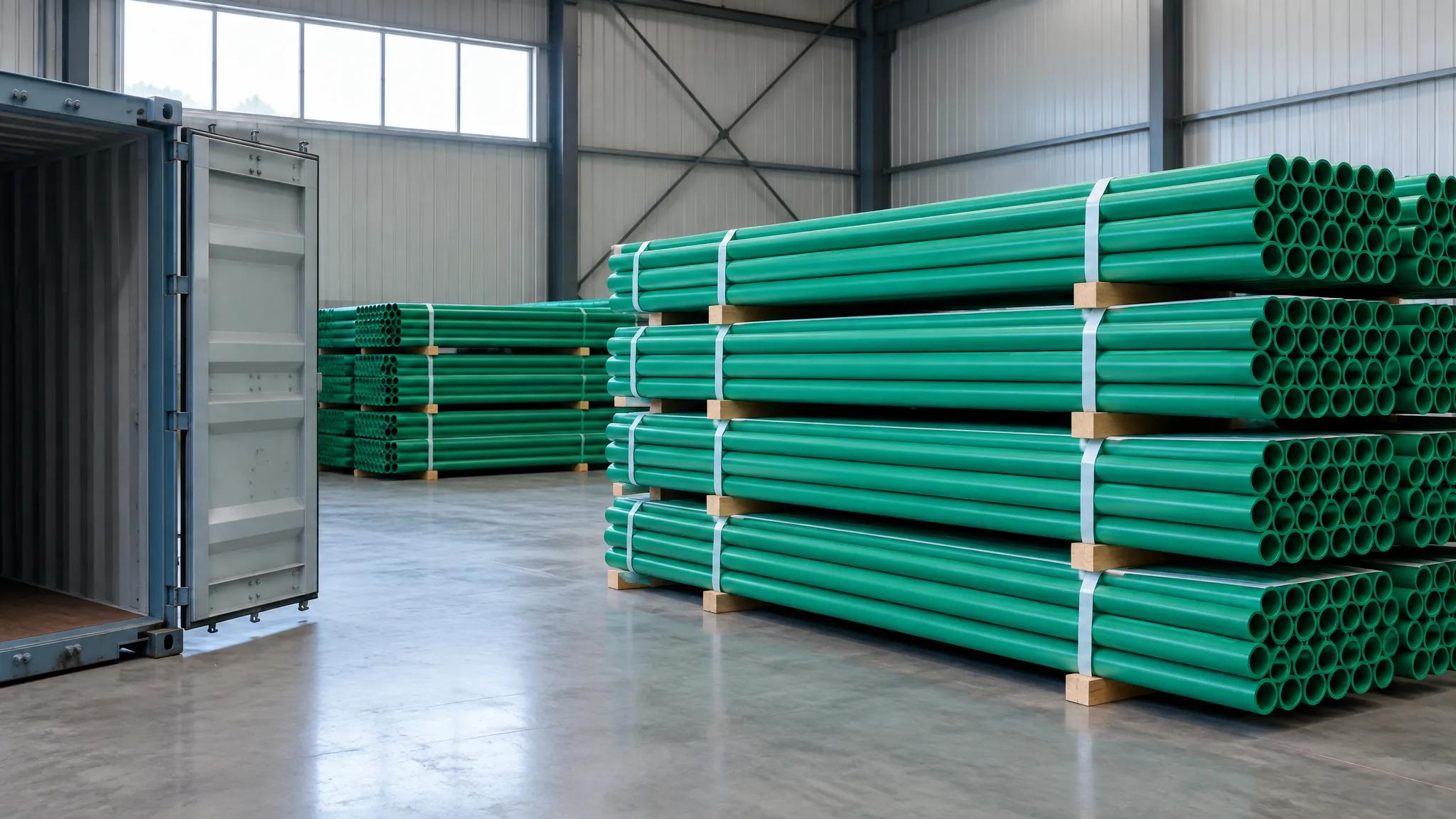
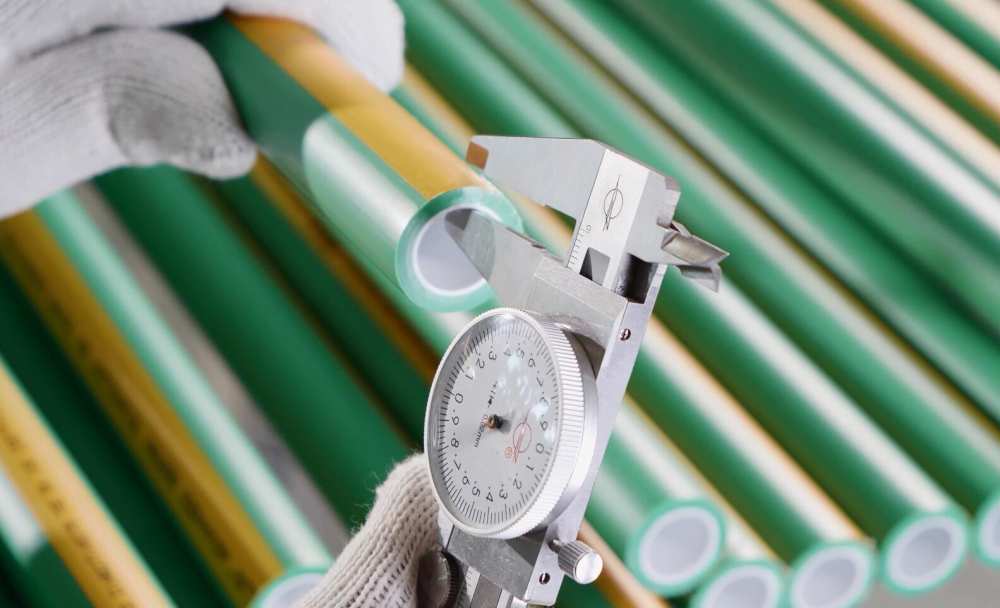
Start with the box. ISO 668:2020 classifies a 1CC — the standard 20 ft unit — at 6,058 mm long, 2,438 mm wide and 2,591 mm high externally. Corrugation, floor and door frame eat into that, and the working internal volume commonly used in the trade is approximately 33 m³. Treat that 33 as a planning figure rather than a classification value; your forwarder's figure for the specific box may differ slightly.
The one calculation that gives you a number
Pipe is a cylinder, but bundled pipe does not stow as a cylinder — it stows in a rectangular footprint. The conservative way to model it is square packing: each metre of pipe of outside diameter dn claims a footprint of dn × dn. For DN25 that is 0.025 m × 0.025 m = 0.000625 m³ per metre, or 0.625 litres. Divide 33 m³ by that and you get roughly 52,800 metres.
Do that across the range and you have your ceiling table.
| Nominal size | Stowage envelope per metre (L/m) | Metres to fill ~33 m³ alone | Share of a container per 1,000 m (%) |
|---|---|---|---|
| DN20 | 0.400 L | ~82,500 m | 1.2% |
| DN25 | 0.625 L | ~52,800 m | 1.9% |
| DN32 | 1.024 L | ~32,227 m | 3.1% |
| DN40 | 1.600 L | ~20,625 m | 4.8% |
| DN50 | 2.500 L | ~13,200 m | 7.6% |
| DN63 | 3.969 L | ~8,314 m | 12.0% |
| DN75 | 5.625 L | ~5,867 m | 17.0% |
| DN90 | 8.100 L | ~4,074 m | 24.5% |
| DN110 | 12.100 L | ~2,727 m | 36.7% |
| DN125 | 15.625 L | ~2,112 m | 47.3% |
| DN160 | 25.600 L | ~1,289 m | 77.6% |
That is IFAN's full published range, DN20 through DN160, so whatever mix you are contemplating, every line on it has a row here. Read the last column before the third. It is the one that matters when you are building a mix, because it converts every line on your list into a percentage of the box. A thousand metres of DN20 costs you 1.2% of your container. A thousand metres of DN63 costs you 12%. That ten-to-one ratio is why large-diameter lines have to be justified rather than added out of habit.
Where the table stops being a planning tool and starts being a warning
Below DN63 the numbers behave the way intuition expects: you can carry tens of thousands of metres, and the size choice is a commercial question about what your market installs. Above it the arithmetic turns hostile fast, because the footprint grows as the square of the diameter while the metres you need usually do not.
DN110 is the line where most first containers come unstuck. It is an ordinary size — riser mains, larger commercial branches — and 2,000 m of it sounds unremarkable next to a 20,000 m DN20 line. It is not unremarkable. At 36.7% per thousand metres, 2,000 m of DN110 is roughly three quarters of your box, and you have not yet loaded a single fitting or a metre of anything else. DN160 is more brutal still: 1,289 m fills a 20 ft container on its own, which means a full coil of it is not a line item in a mixed order, it is the order.
The practical consequence is that a first mixed container and a large-diameter requirement usually do not belong in the same shipment. If your project genuinely needs DN110 and above in quantity, say so at enquiry stage rather than burying it in a list — the answer is often a 40 ft unit, a separate shipment, or nesting the small sizes inside the large ones deliberately rather than hoping the loader thinks of it. What you should not do is discover it after the quote comes back priced against a container the list does not fit.
Why this is a ceiling and not a target
Square packing is deliberately pessimistic, and real loading beats it in two ways. Small pipe nests inside large pipe — DN20 sleeved inside DN63 is standard practice and effectively rides for free. And fittings fill the voids that pipe bundles leave at the doors and in the corners. A well-planned mixed load routinely carries more than this table suggests.
What the table gives you is a sanity check you can apply before you send anything. If your draft list computes to 40% of a container, you are not close, and you will either be asked to add lines or be quoted a price that reflects a part-load. If it computes to 130%, something has to come out, and the last column tells you which line frees the most room fastest.
Do not confuse this with a MOQ. Everything above is physics — what the box holds. It is not IFAN's minimum order quantity and not anyone else's. The published MOQ is one container, mixed sizes. The arithmetic tells you what "one container" means in metres for your mix, which is the part a supplier cannot tell you until you have proposed one.
Building a Mixed Container: How to Write the Size Mix a Factory Can Price
The quality of your first quote is decided by the quality of the list you send, and most first lists are missing something that makes accurate pricing impossible. IFAN's published commitment as a PP-R pipe supplier is a full itemised price list returned within 24 hours against your product list. For importers and distributors building a first size list, that turnaround assumes the list is complete enough to price.
State the pressure class, not just the diameter
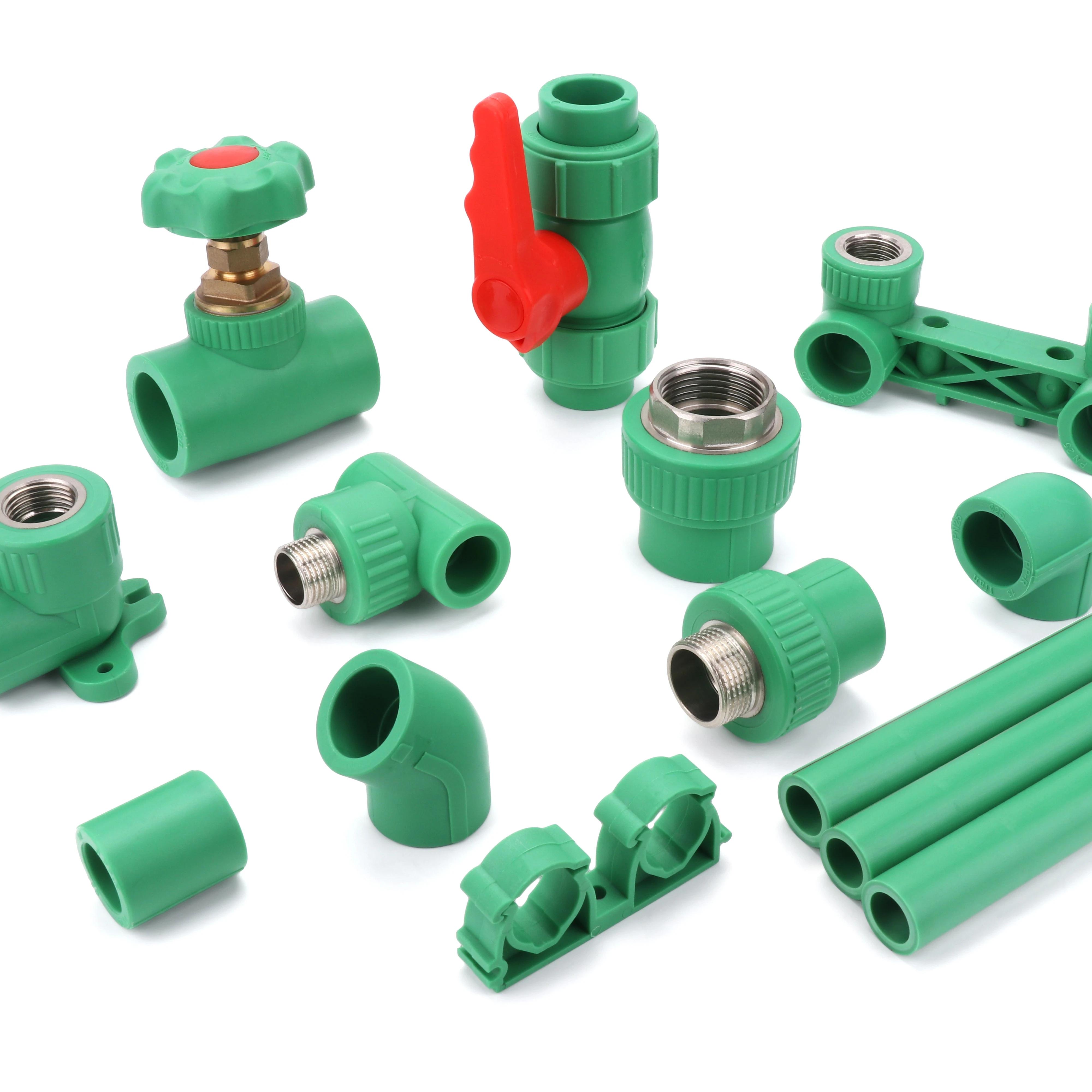
"DN25 PP-R, 5,000 m" is not a priceable line, because DN25 is made in several wall thicknesses and they are different products at different costs. Under ISO 15874-2, a DN25 pipe in series S5 has a minimum wall of 2.3 mm; in S3.2 it is 3.5 mm; in S2.5, 4.2 mm; in S2, 5.1 mm. The heaviest of those carries more than twice the material of the lightest. Series relates to SDR as SDR = 2S + 1, so S5 is SDR 11 and S2.5 is SDR 6 — you will see both notations on datasheets, and quoting either one removes the ambiguity.
If you do not state it, one of two things happens. A careful supplier asks, which costs you a day. A careless one assumes the thinnest wall that fits the description, and you receive a quote you cannot compare against anyone else's. If you want the full derivation of how wall thickness turns into material cost, that is the subject of our PP-R pipe cost structure teardown; for the purposes of this list, just make sure the class is on the line.
The two units problem
Pipe is sold by the metre. Fittings are sold by the piece. Everyone knows this and it still causes trouble, because the two get totalled into one order value and then described in one sentence on a document. Keep them in separate blocks on your list, with the unit stated per line, and carry that separation all the way through to the proforma invoice. The section on payment below explains what happens when this separation collapses inside a letter of credit — it is the most expensive mistake on this page.
A worked container
Here is a mix built for a distributor supplying residential plumbing, sized against the table above. The percentages are the container shares, so they have to sum to something at or under 100 before fittings are nested in.
| Line | Quantity (m or pcs) | Unit | Container share (%) |
|---|---|---|---|
| DN20 PN20 (S2.5), green | 20,000 | metres | 24.2% |
| DN25 PN20 (S2.5), green | 12,000 | metres | 22.7% |
| DN32 PN16 (S3.2), green | 6,000 | metres | 18.6% |
| DN50 PN16 (S3.2), green | 3,000 | metres | 22.7% |
| Elbows, tees, sockets, valves (assorted) | 30,000 | pieces | nested / void fill |
| Pipe subtotal | 41,000 | metres | 88.3% |
The pipe lines come to 88.3% of the square-packed envelope, which leaves headroom for the fittings to ride in the nesting and the voids. That is a list a factory can load, and it is a list you can defend to your bank because every line carries a quantity, a unit and a class.
Notice what the DN50 line costs you. Three thousand metres — a modest number that looks small next to the DN20 line — eats 22.7% of the box, the same as twelve thousand metres of DN25. If this container came back over volume, that is the first line to cut.
What to send with the list
- Destination port and country. It determines which regional approvals apply — SASO, SONCAP or NOM are arranged on request, and they have to be arranged before production, not after.
- Colour. Green, white and grey are standard; custom colour is a different production decision.
- Whether the sizes must be one brand or one series throughout, since that constrains what can be substituted if a size is short.
- FCL or LCL. Both are supported, and LCL changes the whole calculation above — if you are not filling a box, say so at the start rather than sizing to a container you do not need.
What a Sample Round Can Settle — and What It Cannot
IFAN's published policy is headed "Sample First, Order Later": physical product is evaluated ahead of any container commitment, so the quality is tested in your own hands first. That is the right sequence, and you should hold every supplier to it. But be precise about what it proves, because sampling is routinely oversold and a misplaced confidence here is expensive.
What a sample genuinely settles
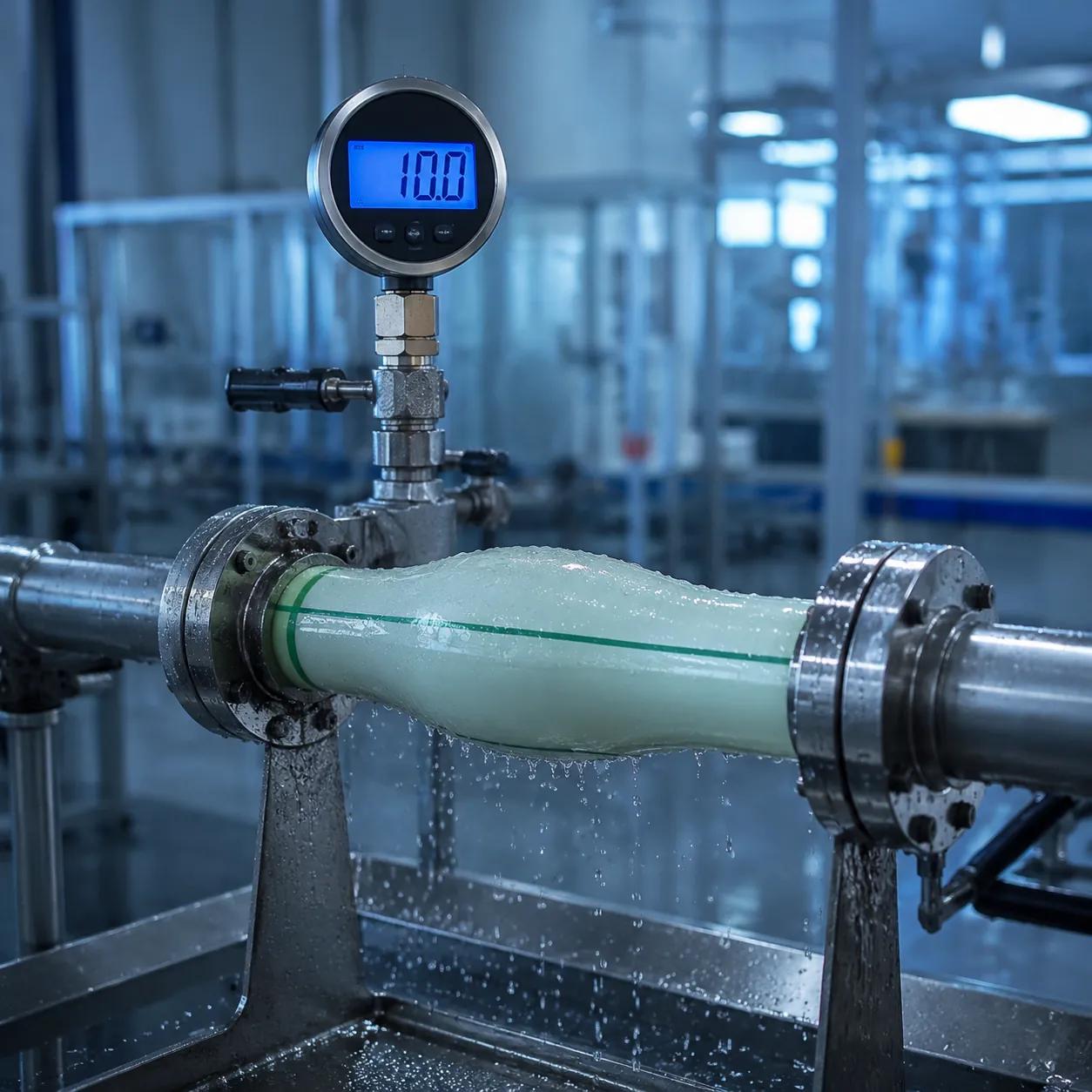
- Dimensions. Put a caliper on it. Outside diameter and wall thickness against the ISO 15874-2 figure for the class you ordered is a five-minute check that catches underweight pipe immediately.
- Fusion behaviour. Weld two pieces with the iron your market actually uses. This is the one test that predicts installer complaints.
- Marking and print quality. What is printed on the pipe is what your customer's inspector will read.
- Fit with the fittings you already stock, if you are adding a supplier rather than starting fresh.
What it cannot settle, and what covers the gap
A sample is a handful of pieces, quite possibly from a different production run than the one that will fill your container. It cannot tell you the batch consistency of the resin, it cannot demonstrate long-term pressure behaviour (the test regimes behind pressure classes run for thousands of hours), and it cannot prove that what was sampled is what gets extruded in three weeks' time.
What covers that gap is documentary, not physical. IFAN states 100% virgin PP-R with batch certificates issued per shipment, and publishes that every container includes batch test certificates, with third-party SGS or BV inspection available. Those are the instruments that speak for the goods you are actually paying for. A sample round that ends without you also agreeing what certificates travel with the container has verified the design and left the delivery unverified.
An open gap, stated plainly. IFAN publishes the sampling policy but not how many pieces come at no charge, nor who covers the courier, and inventing a number here is exactly what you would discover was wrong at the worst moment. Settle four points before the pieces move (how many, which sizes, who pays the courier, whether the cost is credited), then have them land on the proforma invoice as a zero-value sample line rather than staying in the email thread. A supplier who agrees all four and then leaves them off the PI is telling you something.
Sample Acceptance Protocol: ISO 15874-2 Checks You Can Run Yourself vs Checks That Need a Lab
The section above says what a sample can and cannot prove. This one turns it into a protocol you agree with the supplier before the pieces leave the factory. Most buyers ask a lab to "test to ISO 15874". Depending on who reads that instruction, it buys either too little or six weeks of waiting.
Get the scope right first, because three standards get blended here. ISO 15874 covers polypropylene piping for hot and cold water installations within buildings, drinking water and heating alike. Part 2 is the pipe itself: ISO 15874-2:2013 with Amendment 1:2018 and Amendment 2:2022, confirmed by ISO in 2023 and now marked for revision.
Part 5 covers fitness for purpose of the assembled system, so it is not the test set for a length of sample pipe. DIN 8077 and DIN 8078 are the German dimension and testing standards for the same materials. IFAN builds to both families, but if your tender names DIN 8078, test to its clauses rather than mixing them with the ISO rows below.
| ISO 15874-2 requirement | Test method | Test run time (h) | Where it gets decided | Verdict at sample stage |
|---|---|---|---|---|
| Mean outside diameter and wall thickness | ISO 3126 | Minutes | Your desk, with a caliper | Decide on the sample |
| 2.0 mm minimum wall for fusion-jointed pipe | ISO 3126 | Minutes | Your desk, with a caliper | Reject on sight if thinner |
| Appearance and marking | Visual, without magnification | Minutes | Your desk | Decide on the sample |
| Opacity, only if declared opaque | ISO 7686 | Bench test | Third-party lab | Decide on the sample |
| Melt flow rate, pipe and compound | ISO 1133-1 | Bench test | Third-party lab | Decide, if granules are supplied |
| Longitudinal reversion at 135 °C | ISO 2505, method B | 1 to 4 | Third-party lab | Decide on the sample |
| Impact at 0 °C, dn 25 mm and below | ISO 9854-1 and -2, Charpy | Bench test | Third-party lab | Decide on the sample |
| Impact at 0 °C, dn 32 mm and above | ISO 3127, round-the-clock | Bench test | Third-party lab | Decide on the sample |
| Hydrostatic strength at 20 °C | ISO 1167-1 and -2 | 1 | Third-party lab | Decide on the sample |
| Hydrostatic strength at 95 °C, short runs | ISO 1167-1 and -2 | 22 and 165 | Third-party lab | 22 h fits; 165 h adds a week |
| Hydrostatic strength at 95 °C, long run | ISO 1167-1 and -2 | 1000 | Supplier's type-test report | Accept the report, not a new run |
| Thermal stability at 110 °C | Hoop stress, water-in-air | 8760 | Supplier's type-test report | Cannot fit any sample round |
Source: ISO 15874-2:2013 clauses 5, 6 and 10, Tables 10 and 11, with Amendment 2:2022 for the impact rows (read 2026-09). Run times are the standard's own test durations and exclude lab queue and courier time.
| Test | Reversion, 135 °C (h) | Hydrostatic strength (h) | Thermal stability, 110 °C (h) | Test time (days) |
|---|---|---|---|---|
| Reversion 135 °C, wall ≤ 8 mm | 1 | — | — | — |
| Reversion 135 °C, wall > 16 mm | 4 | — | — | — |
| Hydrostatic 20 °C, 16.0 MPa | — | 1 | — | — |
| Hydrostatic 95 °C, 4.3 MPa | — | 22 | — | — |
| Hydrostatic 95 °C, 3.8 MPa | — | 165 | — | 6.9 |
| Hydrostatic 95 °C, 3.5 MPa | — | 1000 | — | 41.7 |
| Thermal stability 110 °C, 1.9 MPa | — | — | 8760 | 365 |
The pass line for each row is set out in our PP-R counterfeit detection checks. What this table adds is the sorting: three rows you decide in minutes, seven that need a lab but fit a sample round, and two no sample can answer.
Four lines to write into the sample agreement
- The edition. Put "ISO 15874-2:2013 + Amd 1:2018 + Amd 2:2022" on the proforma invoice's sample line and on the lab request. Amendment 2 moved impact testing to the ISO 3127 round-the-clock method for dn 32 mm and above, and renumbered the tables after it. A report citing Table 11 for melt flow rate is using the pre-2022 numbering.
- Enough pipe, cut to the lab's list. Part 2 calls for three test pieces for melt flow rate, three for reversion and three per hydrostatic condition. Lengths come from the test methods, so get the lab's cut list before the courier is booked; a caliper-check sample is too short for a pressure rig. Photograph each piece's print line so the report stays tied to one production period.
- Compound granules from the same batch. Pipe melt flow rate is judged against its own compound as well as an absolute ceiling. Without granules the lab checks only the ceiling, and skips the half that catches over-processed material.
- A lab whose scope names the method. ISO/IEC 17025:2017 is the competence standard for testing laboratories, and each accreditation lists the methods it covers. Check that ISO 1167-1 and ISO 1133-1 are on that list, not only that a certificate exists.
What the lab half does to your lead time
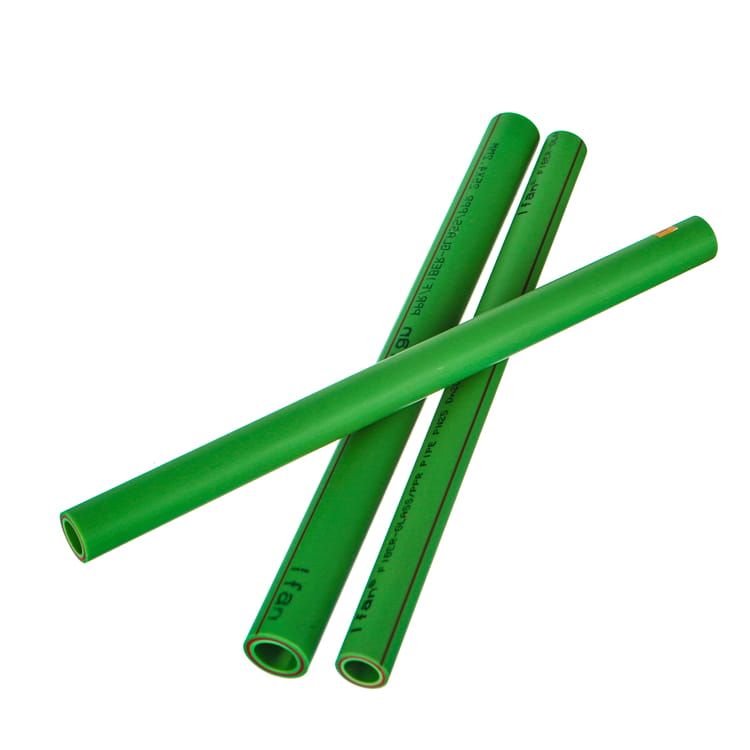
Desk checks cost nothing on the calendar. Bench tests and the 1 h and 22 h pressure runs add the lab's queue and two courier legs, which no standard sets, so get the lab's turnaround in writing before anything ships. The 165 h run adds about seven days of test time. The 1000 h run at 95 °C is 41.7 days alone: insist on it for your own sample and the order date moves six weeks or more. Thermal stability, at 8760 h, is a full year. For those two rows, ask for the supplier's existing type-test report with the lab's name, the report date and the compound grade.
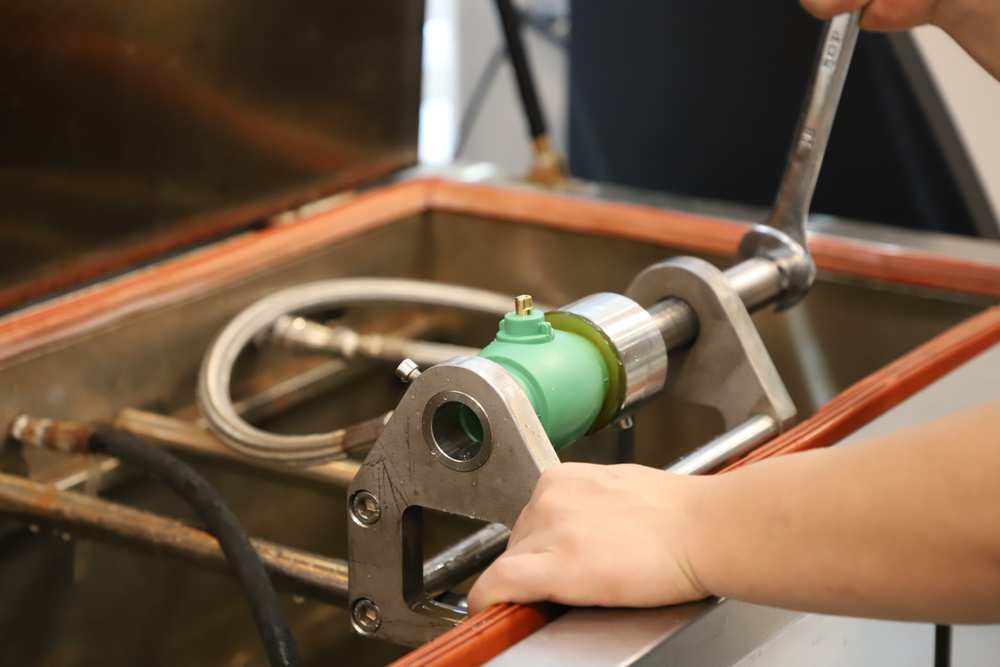
ISO/TS 15874-7:2018 separates type tests, which prove a product is capable of conforming, from batch release tests, which a batch must pass before release. IFAN publishes an in-house ISO testing lab and batch certificates per shipment, but not which rows above run on every batch. Ask any supplier, us included, to mark each row type test or batch release test on the quotation; that shows which results travel with your container. Wait for the sample verdict. Then set the proforma's latest shipment date, and leave the post-shipment side to the per-shipment QC report.
Payment Terms: The UCP 600 Rules That Decide Whether Your Container Gets Paid
This is the section where first-time importers lose money, and almost never because they picked the wrong instrument. They lose it on document mechanics, under rules that are public, stable and specific. If you are opening a letter of credit, the governing text is the ICC's Uniform Customs and Practice for Documentary Credits, UCP 600 (ICC Publication No. 600, in force since 1 July 2007), and four of its articles do most of the damage.
Which instrument to open in the first place — and what a credit, a deposit or a documentary collection each actually protects — is a separate decision, worked through in our guide to payment terms for a first pipe container.
The trap that is built for mixed pipe orders
Sub-article 30(b) allows "a tolerance not to exceed 5% more or 5% less than the quantity of the goods" — provided the credit does not state the quantity in terms of a stipulated number of packing units or individual items, and provided the drawings do not exceed the credit amount.
Read that proviso against the order you just built. Your pipe lines are in metres, which is a measurement, so they get the 5% latitude — useful, because extrusion does not land on an exact metre count and neither does what fits in the box. Your fittings line is in pieces. A piece count is a stipulated number of individual items, and the tolerance is gone for that line. Ship 29,900 elbows against a credit calling for 30,000 and you have a discrepancy, on a shortfall of one third of one percent.
The same article gives a separate rule worth knowing: under 30(a), the words "about" or "approximately" against a quantity or amount are read as allowing 10% either way. That is a deliberate drafting choice available to you at the point the credit is opened — not something to discover afterwards.
The clock, and who is holding it
Two deadlines run against a presentation, and they are unforgiving because they are mechanical.
Under sub-article 14(c), a presentation including original transport documents must be made no later than 21 calendar days after the date of shipment, and in any event not later than the credit's expiry date. Under 14(b), each bank in the chain — nominated, confirming, issuing — has "a maximum of five banking days following the day of presentation" to decide whether the presentation complies. Banking days, not calendar days, so a run of local holidays at either end genuinely moves the date.
If documents are found discrepant, sub-article 16(c) requires the refusing bank to give a single notice stating that it is refusing, listing each discrepancy, and saying what it is doing with the documents. That single-notice rule cuts both ways: it protects you from a bank drip-feeding objections, and it means the objections you receive are the complete set — deal with all of them at once. And under 16(b), if the issuing bank goes to the applicant for a waiver, that does not extend the five-day window.
The invoice line that has to match
Sub-article 18(c) requires that the description of the goods in a commercial invoice correspond with the description appearing in the credit. Sub-article 18(a) adds that the invoice must be issued by the beneficiary, made out in the name of the applicant, and in the same currency as the credit — though it need not be signed.
This is where mixed containers get punished for careless drafting. If the credit says "PPR PIPES AND FITTINGS AS PER PI NO. 2026-XXX" and the invoice itemises forty lines, that correspondence is usually accepted because the reference ties them. If the credit itemises all forty lines and the invoice merges two of them, it does not. The fix is upstream: keep the goods description short and tied to a proforma invoice number, and keep the itemisation on the PI where it belongs.
Before anyone opens a credit
- Pin the goods description to a PI number and make sure the PI itself carries the full line detail with units.
- Decide whether piece-count lines should be stated as piece counts at all in the credit, given that doing so forfeits 30(b) tolerance on those lines.
- Check the expiry date against the 21-day presentation rule, not just against the shipment window.
- Confirm partial shipment and transhipment permissions match how the goods will actually move.
- Agree who pays which bank charges, in writing, before issuance.
On the choice of instrument itself: a documentary credit puts a bank's undertaking behind the transaction and imposes the discipline above, while a telegraphic transfer is faster and cheaper and puts the risk management on the relationship instead. Which fits depends on your bank, your market and how much you have transacted with the supplier before. IFAN does not publish a payment-terms schedule — no deposit percentage, no balance trigger — so treat any figure you see attributed to a Chinese pipe factory on a third-party blog as market colour rather than as this supplier's terms, and get the actual terms in writing on the proforma invoice.
What We Check, What We Publish, and Where We Stop
This page is published by one of the suppliers you might be evaluating, so the last section is where we say which of our own numbers you can rely on and which we do not disclose. Apply the same split to every supplier on your list.

Published, and checkable
Every batch is extruded from 100% virgin PP-R 100 grade and tested in the in-house ISO lab, with batch test certificates issued per shipment and third-party SGS or BV inspection available on request. The range those checks cover is DN20–DN160 at PN12.5–PN25, built to DIN 8077/8078 and ISO 15874 across 3,000+ PP-R SKUs from a 120,000 m² plant operating since 1993. Where we stop is equally specific: we do not publish per-SKU minimums, sample-piece allowances or payment splits, and the table below marks that line.
| What you can take as given | The published position |
|---|---|
| Minimum order | One container, mixed sizes — including for OEM and private-label orders |
| Range | DN20–DN160, PN12.5–PN25; green, white, grey or custom; 3,000+ PP-R SKUs |
| Material | 100% virgin PP-R 100 grade, batch certificates per shipment |
| Standards | DIN 8077/8078, ISO 15874, CE, SGS; SASO/SONCAP/NOM arranged on request |
| Sampling | Sample first, order later — physical samples before committing to a container |
| Quotation | Full itemised price list within 24 hours against your product list |
| Shipping | FCL and LCL, full export documentation, customs clearance support, 120+ countries |
| Channel | Strictly B2B wholesale — no retail marketplace sales |
Not published — and where each one gets pinned down
Four things this article deliberately does not give you a number for, because IFAN does not publish one and inventing it would be worse than the gap. For each, the useful part is not "ask" — it is which line of the proforma invoice the answer has to end up on. The PI is the one pre-shipment document that is simultaneously the supplier's offer, the basis your bank drafts the credit from, and the reference your commercial invoice must later agree with. An email thread is none of those.
- Per-SKU minimum piece counts inside a mixed container. Compute your ceiling from the stowage table above and propose the mix; the quote tells you what needs adjusting. What must reach the PI is the settled result — one line per SKU, each with quantity, unit and pressure class. If a line comes back merged, substituted or with its quantity moved, that is the factory's real per-SKU floor, disclosed the only way it ever gets disclosed.
- How many pieces are supplied at no charge, and who covers their courier. Agree the count and the sizes, then have them appear on the PI as a zero-value sample line naming the courier account party, with a note on whether the cost is credited against this order. That line is what stops sample pieces being invoiced later as stock.
- Payment splits. No deposit percentage or balance trigger is published. The PI has to carry the deposit percentage, the event that releases the balance — copy B/L, inspection, or the documents themselves — and the bank-charge split. Get all three on it before you approach your bank, because the PI is what the bank turns into the credit's terms; an unstated trigger becomes their default rather than yours.
- Lead time in days. The published position is that lead time depends on order size, customisation and stock, and that the production and shipping schedule is confirmed with the quotation. So take it in dates, not a range: a latest shipment date on the PI, which is also the field your credit's own latest shipment date should be set from rather than guessed.
That is the same document the payment section kept pointing back to — goods description tied to a PI number, itemisation on the PI, metre and piece lines separated there. A supplier who agrees all four and then sends a PI carrying none of them has told you how the shipment will go.
If you are still deciding whether this supplier belongs on your list at all, that is a different exercise with its own public checkpoints — our pipe supplier shortlist framework sets out the nine criteria and the register you can check each one against, including where we score badly. If you are building the size list itself, the product catalogue is the place to assemble it.
Conclusion
The question "what is your MOQ?" has a better version, and it is "here is my size mix, what does it cost and what will you not ship?" The first question invites a number that cannot be accurate. The second one is answerable in 24 hours.
Before you send a first enquiry, work through this:
- Compute your container share line by line from the stowage table, and get the pipe subtotal into the 85–95% band before nesting.
- Put a class on every pipe line — S-series or SDR or PN, any of the three, but one of them.
- Separate metres from pieces on the list and keep that separation onto the proforma invoice.
- Fix the sample terms onto the PI — count, sizes, freight payer, credit against the order, as a zero-value line.
- Agree which certificates travel with the container, because that is what verifies the goods a sample could not.
- If you are opening a credit, check the goods description against the PI, the expiry against the 21-day rule, and think hard before stating fittings as a piece count.
Do those six and your first container is an ordinary commercial transaction rather than an experiment. Skip the last one and you can be entirely right about the pipe and still not get paid — which is the failure mode this article exists to prevent.
Frequently Asked Questions
What is the MOQ for PP-R pipe?
IFAN's published minimum is one container, mixed sizes, and the same applies to OEM and private-label orders. There is no per-SKU piece minimum published, because the binding constraint is filling the container rather than any single line.
How many metres of PP-R pipe fit in a 20 ft container?
On roughly 33 m³ and a conservative square-packing envelope: about 82,500 m of DN20, 52,800 m of DN25, 13,200 m of DN50, 2,727 m of DN110 or 1,289 m of DN160 shipped alone. Real mixed loads beat this, because small pipe nests inside large.
Can I mix different sizes in one PP-R container?
Yes — mixed sizes are the norm, and IFAN states mixed containers from a one-container MOQ. You own the job of building a mix that fills the box; the stowage table on this page lets you check before sending the list.
Who pays for PP-R samples and the courier?
IFAN publishes a "sample first, order later" policy but states neither how many pieces come at no charge nor who covers the courier. Agree both up front and put them on the proforma invoice as a zero-value sample line: piece count, sizes, courier payer, and whether the cost is credited.
Which ISO 15874-2 tests can I run on a PP-R sample before ordering?
Dimensions, the 2.0 mm fusion wall floor, appearance and marking at your desk; melt flow rate, reversion, impact and the 1 h and 22 h hydrostatic runs in a third-party lab. The 1000 h hydrostatic and 8760 h thermal stability tests are too long for a sample round, so ask for the supplier's type-test report instead.
What payment terms do PP-R factories accept?
IFAN publishes no payment schedule, so terms are agreed per order on the proforma invoice. Whatever instrument you use, get the deposit, the balance trigger and the bank-charge split in writing before your bank issues anything.
Does a letter of credit allow a quantity tolerance on pipe?
UCP 600 sub-article 30(b) allows 5% more or less on quantity — but not when the credit states quantity as a stipulated number of packing units or individual items. Pipe in metres keeps it; fittings as a piece count lose it.
How long does a bank have to check documents under a credit?
Under UCP 600 sub-article 14(b), each bank has a maximum of five banking days following the day of presentation. Separately, 14(c) requires presentation within 21 calendar days of the shipment date and before the credit expires.
What is IFAN's lead time for a PP-R container?
No fixed number is published. The stated position is that lead time depends on order size, customisation and stock, with the production and shipping schedule confirmed alongside the quotation — so ask for it in dates.