
PVC Pipe Price Philippines: How to Read the List
There is no government price for PVC pipe in the Philippines. Read a list by PNS, wall thickness and length, then build a per-metre project rate.
The Philippines has no official price for PVC pipe. DTI’s 2025 construction-materials price monitoring, covering 17 regions, carries no PVC pipe line at all, so every figure you meet is a brand or dealer list quoted per length. The index that does track the category, PSA’s Construction Materials Retail Price Index for NCR, put plumbing materials at 0.9% year on year in August 2026, against 2.0% for all construction materials.
So any list needs three steps before it means anything: match the pipe to its Philippine National Standard and read the marked wall thickness, convert the per-length price into a per-metre rate, and add the fittings, cement, compliance and freight the list leaves out. This guide works through each step for contractors, estimators and hardware distributors.
Key Takeaways
- No government price: DTI’s 2025 monitoring file has no PVC pipe line; lists are brand-issued, per length.
- PSA: plumbing materials rose 0.9% year on year in August 2026; all construction materials 2.0%.
- Potable uPVC pipe falls under PNS 65:1993; PVC-U soil and waste pipe inside buildings under PNS 1950:2003.
- No PS mark or ICC sticker means no legal distribution in the Philippine market.
- Per metre = price per length ÷ length; a 20 m run takes 7 lengths of 3 m or 10 ft pipe.
- IFAN: one container, mixed sizes; 45 days from order confirmation for uPVC drainage.
For a short look at how PVC pipe and fittings are told apart before any price enters the picture, this explainer is a useful start.

Where Philippine PVC Pipe Prices Come From
Two government sources are worth checking before trusting any list, and they answer different questions. DTI monitors prevailing retail prices of construction materials under the Price Act and posts the results to its e-Presyo file store. Its 2025 construction-materials file covers cement, steel bars, plywood, GI roofing sheets, nails, steel wire, lamps and switches. Across all 17 regional sheets it carries no PVC pipe line, so there is no DTI suggested retail price to hold a dealer to.
PSA measures movement, not pesos. Its Construction Materials Retail Price Index for NCR (2012=100) reports plumbing materials as a separate group, and Table 1 shows the last four readings.
| Month (2026) | All construction materials, YoY (%) | Plumbing materials, YoY (%) | Read from PSA release of |
|---|---|---|---|
| May | 1.8 | 0.8 | 15 July 2026 |
| June | 1.8 | 0.7 | 15 July 2026 |
| July | 2.1 | 0.9 | 14 August 2026 |
| August | 2.0 | 0.9 | 15 September 2026 |
If you hold a dealer list and want an import comparison for the same sizes, send the size list on WhatsApp.
Read the table as a check on repricing. With plumbing materials rising under 1% a year through mid-2026, a list that jumps by several times that rate between two quotes is not tracking market inflation, so ask what else changed: brand, series, wall thickness or length. The index is NCR retail only. It says nothing about a provincial dealer’s freight margin or an importer’s landed cost.
How to Read a PVC Price List, Line by Line
Philippine lists are laid out by brand, application, size and length, and many add a trade series label such as “Series 1000” or “S600” for sanitary pipe. Those labels are not the series in the standard. The DTI-BPS marking list gives PNS 65:1993 potable pipe as series 5, 7, 8 and 10, and requires PNS 1950:2003 soil and waste pipe to print its minimum wall thickness. A brand label with no standard and wall thickness behind it cannot be compared across lists, and neither can a 10 ft piece against a 3 m piece until both are put into metres.
| Column on the list | What to check | Governing reference | Verdict for a project buyer |
|---|---|---|---|
| Application | Potable, sanitary or conduit | PNS 65:1993, PNS 1950:2003, PNS 14:1983 | Compare prices only within one application |
| Series or class label | Series number or nominal pressure (MPa) marked on pipe | PNS 65:1993 marking | Ask which series sits behind the trade label |
| Nominal size | Outside diameter in mm, not inch trade size | PNS 65:1993 marks OD in mm; PNS 1950:2003 nominal size | Convert inch sizes to mm before comparing |
| Wall thickness | Minimum wall thickness printed on the pipe | PNS 1950:2003 marking | Thinner wall at the same price is the weaker offer |
| Length | 3 m or 10 ft (3.048 m) per piece | The list itself | Convert to a per-metre rate first |
| PS mark or ICC sticker | Mark on the pipe itself | DTI-BPS mandatory certification | No mark: do not stock or install |
The wall-thickness row does the most work. Two sanitary pipes in the same nominal size can carry different prices for a sound reason, and the marking is how you find it. Sizing background for drainage lines is in our PVC drainage pipe sizes guide.
Turning a Per-Length Price Into a Project Rate
Lists price the piece; projects are measured in metres. The conversion is one division: per-metre rate = price per length ÷ length in metres. A 10 ft length is 3.048 m, not 3 m, so two lists with the same price per piece differ by about 1.6% per metre when one quotes 10 ft and the other 3 m.
That settles the two questions buyers type most often. One metre costs the list price divided by the length. A 20 m straight run needs 7 lengths whether the list quotes 3 m or 10 ft pipe, because 20 ÷ 3 = 6.67 and 20 ÷ 3.048 = 6.56, both rounded up, and the offcut belongs in the cost.
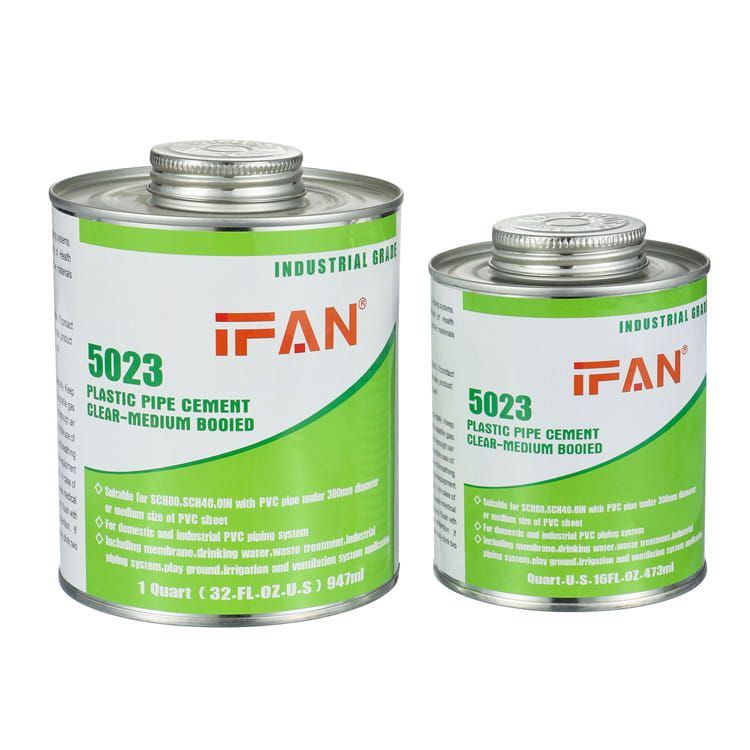
The pipe price is also only one line of the project rate. A drainage bill of materials carries fittings, solvent cement and primer, each priced separately. Take those lines from the same maker as the pipe: socket depth and taper tolerances vary between manufacturers even within the same nominal standard, and a cheap pipe joined to another brand’s fittings is where slow leaks start.
For an importer the same logic runs one layer deeper. The project rate becomes the ex-works price, freight, duty, ICC testing and inland delivery, each on its own line. Our PP-R cost structure teardown lays out that sheet, and the method carries over to PVC unchanged.
PS Mark, ICC Sticker and What Compliance Adds
Three PVC pipe products sit on the DTI-BPS list of products under mandatory certification: uPVC pipe for potable water, uPVC rigid electrical conduit, and PVC-U pipe for drain, waste and vent. The rule on the BPS PS and ICC marks page is plain. Covered products, whether made locally or imported, must bear the PS mark or ICC sticker before being distributed in the Philippine market. The mark normally goes on the product itself, and the scheme covers 87 products and systems in all.
Who carries that cost depends on the route. A PS licence goes to a manufacturer, local or foreign, whose factory meets PNS ISO 9001 and whose product meets the product standard. An ICC certificate goes to an importer whose shipment passes inspection and testing by the BPS Testing Laboratory or a BPS-recognized laboratory. The ICC application is built from shipment papers:
- packing list and commercial invoice;
- bill of lading or airway bill;
- a summary of batch or serial numbers;
- the import entry, needed before the certificate is released.
For a price comparison, a dealer’s shelf price already carries its PS or ICC cost, and an ex-factory import quote does not. Put ICC testing, and the days it takes, on the landed-cost sheet as a separate line, and ask the supplier to print batch numbers on the packing list from the start. The wider document set is in our pipe import documents checklist.
What to Ask an Importing Supplier: Price Structure, MOQ and Lead Time
A usable import quote answers six questions per size. Ask them in one message so the replies line up, and compare suppliers on the answers before the prices.
Add one more number to the request: kilograms per metre for each size. Resin is bought by weight, so two quotes for the same nominal size that differ in price often differ in wall thickness, and kg/m shows it before a sample arrives. A supplier who will not state it is asking you to compare prices without the one figure that explains them.
| Ask the supplier | Why it changes the unit cost | IFAN’s published answer |
|---|---|---|
| Price per length and per metre, one Incoterm | Mixed Incoterms hide freight and insurance | Quoted per project schedule; no public price list |
| Standard and minimum wall thickness per size | Decides the PNS test outcome and the weight | EN 1401, EN 1329, ISO 4435 on batch documents |
| MOQ, and whether sizes can mix | A high minimum forces stock you cannot sell | One container, mixed sizes and product families |
| Lead time from order confirmation | Carrying cost and project schedule | 45 days for uPVC drainage |
| Samples before order | Lets you run your own dimension check | Available before the order is placed. |
| Documents and batch numbers | Needed for the ICC file | Batch certificate issued per shipment |
Classify the goods before comparing landed costs. Rigid PVC pipe falls under HS 3917.23.00 in the Tariff Commission’s Philippine Tariff Finder, where the MFN rate and each trade-agreement rate for that code can be looked up, including ACFTA for pipe shipped from China. Use the rate the finder shows on the day you quote, not a figure from an old list.
Lead time depends on more than the extrusion queue. Ask whether every size and series is on the maker’s current list, whether the pipe needs custom print to a PNS, and when the goods are ready to load, then count ICC testing on arrival as a separate step. Our guide to FOB versus CIF for pipe imports shows which freight lines each term includes.
Where IFAN Fits, and Where We Stop
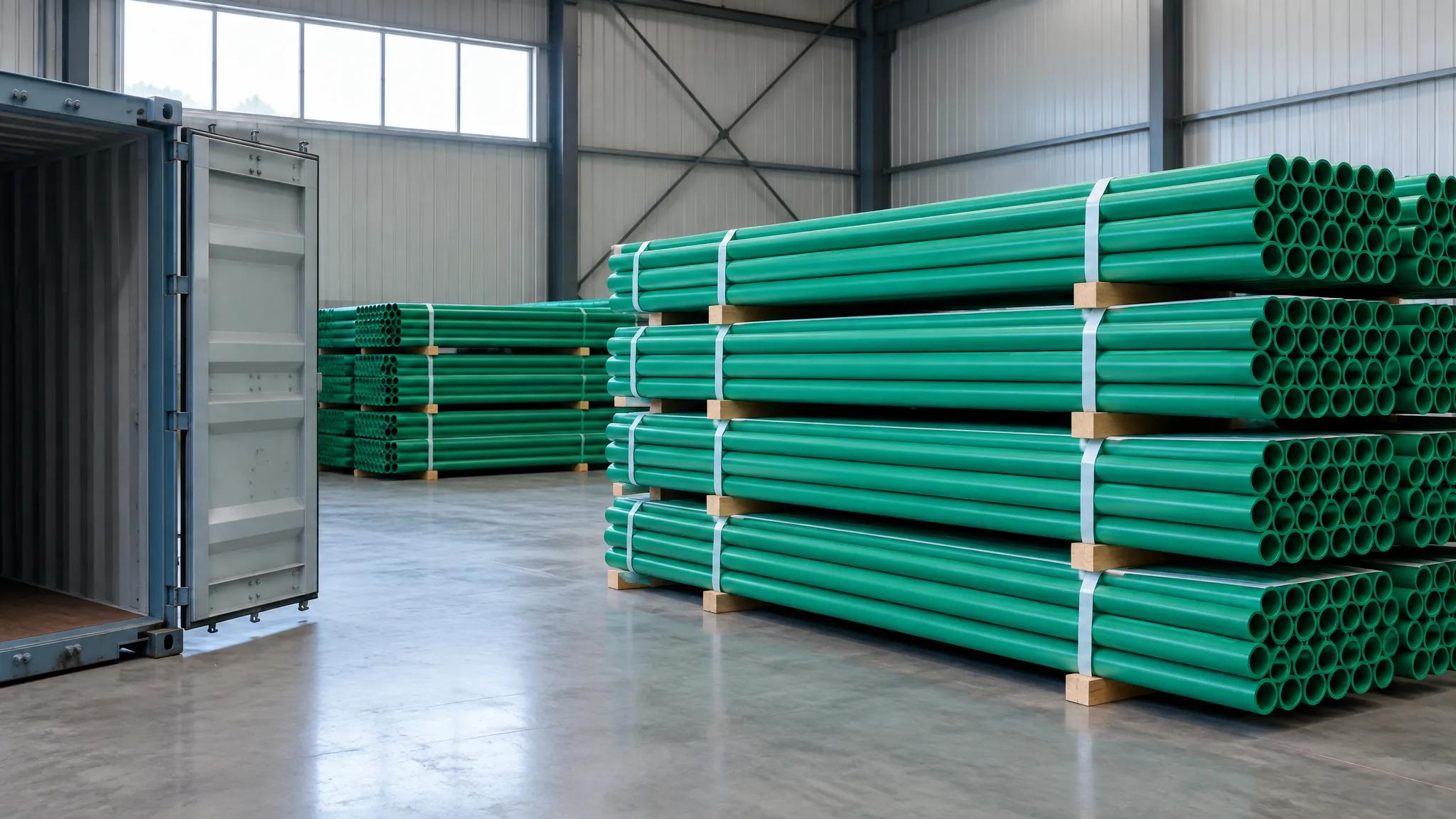
IFAN extrudes uPVC drainage pipe from 110 to 315 mm (110, 160, 200 and 315 mm) with fittings, traps, wastes, bends, wyes and stacks, plus rigid uPVC electrical conduit, and quotes matched solvent cement and primer with the schedule. Confirm the current diameter and stiffness-class list against your drawing before ordering. The range is on the PVC drainage and conduit page, and our product catalogue lists the PP-R, HDPE and brass lines that can share the same container.
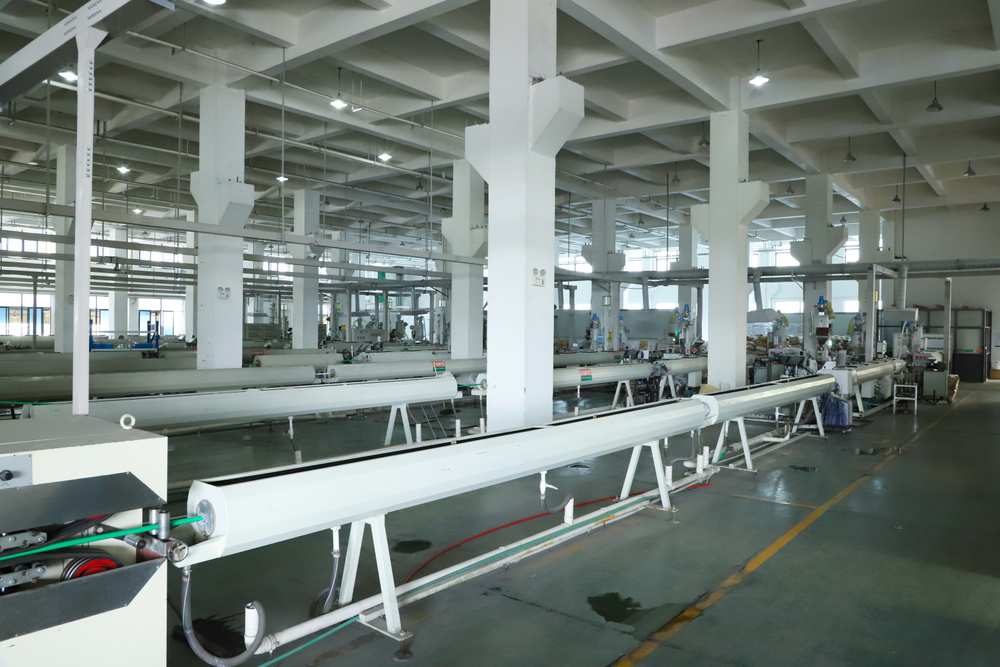
The pipe runs on 30+ automated extrusion lines at a 120,000 m² plant in Zhuji, Zhejiang, in operation since 1993. Plant output is about 2,000 tonnes a month across all product lines, not uPVC alone, and batches are tested in a CNAS-accredited in-house laboratory under ISO 9001:2015.
Two limits matter for a Philippine buyer:
- Standard. IFAN documents this line to EN 1401, EN 1329 and ISO 4435, not to PNS 1950:2003 or PNS 65:1993. An importer should plan ICC testing against the PNS and ask us to confirm dimensions against it before ordering.
- Order size. IFAN sells B2B wholesale only: one container, mixed sizes, 45 days from order confirmation, with no stock in the Philippines. A contractor who needs ten lengths this week is better served by a local dealer’s list, read with Table 2.
Conclusion
Before comparing any two PVC pipe prices, run each line through five checks:
- Application and its PNS: PNS 65:1993, PNS 1950:2003 or PNS 14:1983.
- Series or minimum wall thickness marked on the pipe, with the size in mm.
- Length used to quote, 3 m or 10 ft (3.048 m), converted to a per-metre rate.
- PS mark or ICC sticker on the pipe itself.
- Fittings, solvent cement and primer from the same maker, priced as their own lines.
For an import quote, add the Incoterm, MOQ, lead time and ICC step before the number means anything.
Frequently Asked Questions
How much does 1 meter of PVC pipe cost in the Philippines?
Divide the list price per length by the length in metres. Lists quote per piece, commonly 3 m or 10 ft (3.048 m); no government price exists, as DTI's 2025 monitoring carries no PVC pipe line.
How many PVC pipes do I need for a 20 meter run?
Seven lengths whether the list quotes 3 m or 10 ft pipe: 20 ÷ 3 = 6.67 and 20 ÷ 3.048 = 6.56, both rounded up, before fittings.
Which standard applies to PVC pipe in the Philippines?
PNS 65:1993 for uPVC potable water pipe, PNS 1950:2003 for PVC-U soil and waste pipe inside buildings, and PNS 14:1983 for uPVC electrical conduit. All three need a PS mark or ICC sticker.
Are PVC pipe prices rising in the Philippines?
Slowly, on PSA's index. Plumbing materials in the NCR Construction Materials Retail Price Index rose 0.9% year on year in August 2026, against 2.0% for all construction materials.